

Qysar Ul Islam Shah
farhaanqysar@gmail.com
“The prevelance of plastic in daily life,while convenient has significant environmental and potential health considerations”.
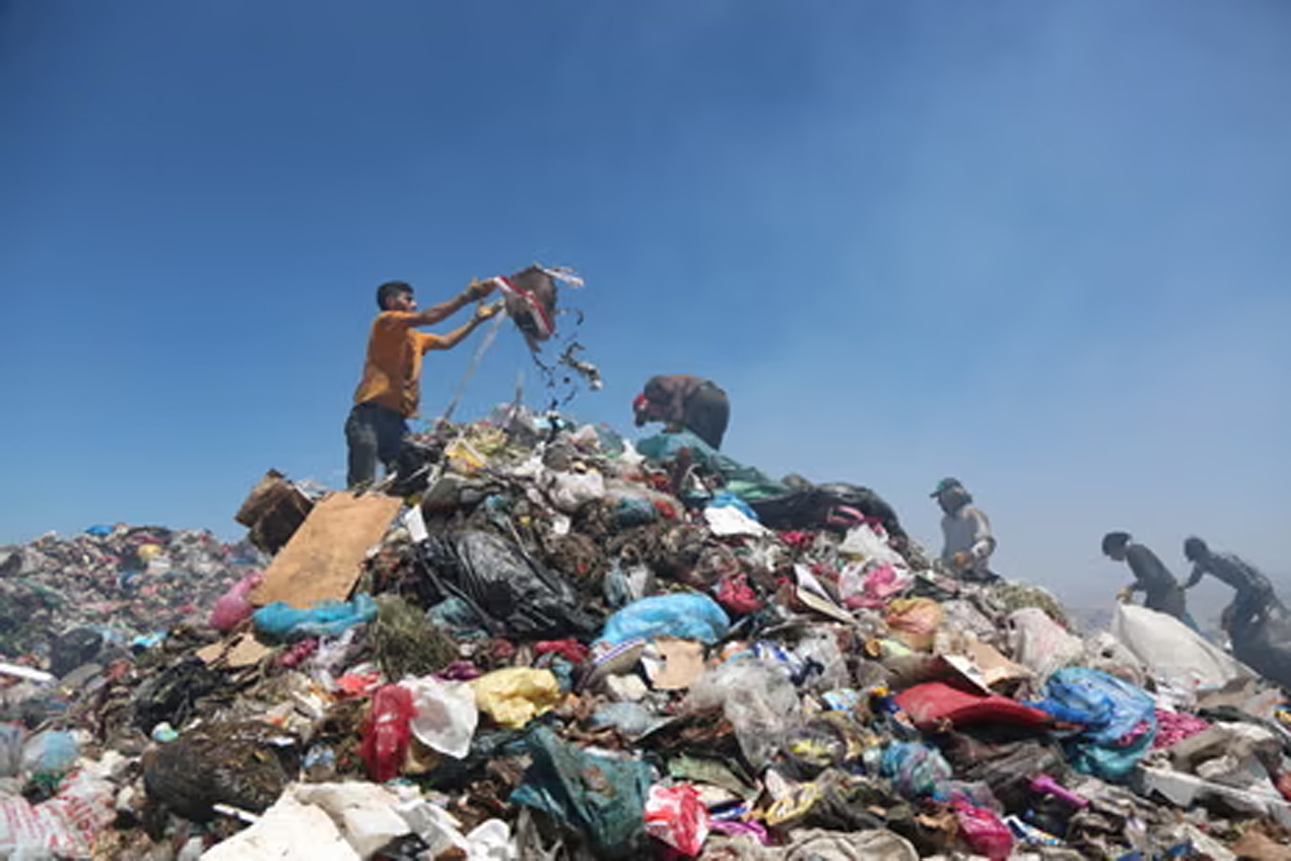
You may not always see them,but that doesn’t mean there aren’t there.Microplastics—choking our environment and increasing at alarming rate not only due to its massive production but because of mismanagement of it as a material especially when it becomes a waste product.It is the widespread global contimnation referred to as tiny plastic particles that arouse both environmental and potential health risks.Its long-term effects on human health are still being researched.It aches internal mechanism and disrupts one’s metabolism.Consuming food packets excessively in every household becomes a common practice.It has become one of the pressing environmental issues as increasing disposable plastic products is being witnessed everywhere particularly at public places, hospitals ,schools,playfields,and health resorts. People are unwittingly throwing plastic garbages in streams, roadside,parking places to invite innumerable type of diseases which further led to dilution of water bodies,associating water borne diseases.Though it has added much value to our lives because of it’s cheap, versatile, and sterile material including home appliances, medical instruments, toys, and food packing. It’s mismanagement has depicted tonnes of plastic accumulation in oceans, lakes etc thus affecting wildlife and ecosystem.
The rapidly increasing levels of plastic pollution impacts on social, economical and health dimensions of sustainable development.People and communities across the world eventually waking up to the fact that plastic pollution affects everything.It is found in water we drink,the food we eat,the air we breathe,and even inside our body.Schools and colleges act as crucial agents to create awareness among students about plastic menace carrying placards to highlight it’s repercussions.Teachers can make significant impact by also organising clean-up events hoisting educational talks on plastic pollution and incorporating sustainability into the curriculum through creative projects.By cultivating sustainable behaviours and eco-conscious habits can be incorporated.
How do microplastics get into the environment?They get released into the environment when people use products laced with the particles.And one of the main known points of entry into the environment is wastewater, residential, commercial.Reasearch have shown they can move through the food web, through soil,water etc . Plastic contamination causes serious damage to biota living within and reduces economic productivity.It inflicts immense damage to fisheries which is the main source of protein in many countries.Many rural people also earn their livelihood from the fisheries .According to World Health Organization greater than 170 million people’ don’t get any portable water near their homes and 850 million rural people are without safe water.
Microplastic dilution has even disturbed the life-span of flora and fauna.One can’t spare the transition of urbanization that too has effected the environment.The metabolism of the city increases resulting in higher generation of metabolic byproducts such as wastewater,non-degredable items,noise and other pollutions.
The various factors of well developed city of fairly a large size density of buildings,height of buildings,size of human population, breadth or roads and streets,open inbuilt spaces, heaps of polythene products,level of industrial development, nature and amount of pollutants –modify the climatic condition of a city and thus generate a typical urban climate.The release of chemicals can cause long lasting ecological and harmful impact of plastics on environment.Its waste can threaten the ecosystem in tropical coastal waters endangering first,seabirds, turtles that can easily fall victim to it.
Notably it’s reduction can only be visible if it is being replaced with gunny bags or eco friendly bags.Its impact on productivity is quite explicit because it clogs waterways,and harms soils fertility and pollutes.Other major uses of plastic products include constructional pipes, interiors, medical applications like syringes and other purposes— which led to major and silent impact on the health, keeping in view it’s negative aspect microplastics are found in human body,food and can cause cellular damage and health issues.Not only humans, animals also become entangled in plastic debris.Their life span had been quite disturbed due excessive usages of polythene bags.They not only die but their sustainability seems to cease.
Underlying it’s severity poly-products is not only biodegradable and can persist in environment for hundred of years breaking down into micro and nano plastics that accumulate everywhere from the deepest water bodies to agricultural soils.Do we know who suffers more children and infants in the womb are most venerable to the harmful effects of plastics due to early stages of human development being particularly sensitive to hazardous chemicals in the environment . Exposure to plastics has been found to increase the risks of birth complications,lung growth and childhood cancer.Plastic production is a complex problem that requires immediate attention and action.
Notwithstanding plastics are not strange to common man rather we eat,drink,carry and pack the essentials in poly made products that can have sever repercussions on the entire health of all the living bodies.The prevelance of plastic in daily life ,while convenient has significant environmental and potential health considerations.The adverse impact of plastics are particularly acute children in the womb and young ones—with increased risk of prematurity , stillbirth,birth defects of the reproductive organs, impaired lung growth, and childhood cancer. Researchers also revealed that microplastics can harm our health and act as vessels for pathogens to enter our system, increasing the spread of diseases.While you cannot completely avoid microplastics—it shouldn’t be your job to do so there are actions you can take to reduce the amount you are exposed to every day.A recent study found that consumers who drank bottle water instead of tap water ingested substantially more microplastics every year.People who drink beverages in plastic packing are also more likely to have higher levels of microplastics in their stool,so it be would be wise to avoid such beverages when possible.Compaigns against microplastic pollution have clearly gained momentum especially in the past few years.Although enhanced recycling can help to address the larger issue of plastic production.There are many ways to reduce plastic waste in your daily life.One of the most effective ways is to avoid single – use plastics drinking straws, plastic bags instead opt for reusable such as cloth bags, gunny bags for shopping and daily purposes eventually curbing dangerous contaminations of microplastics.
Qysar Ul Islam Shah Researcher, GLT Teacher hails from Lolab.
 Follow our WhatsApp channel
