

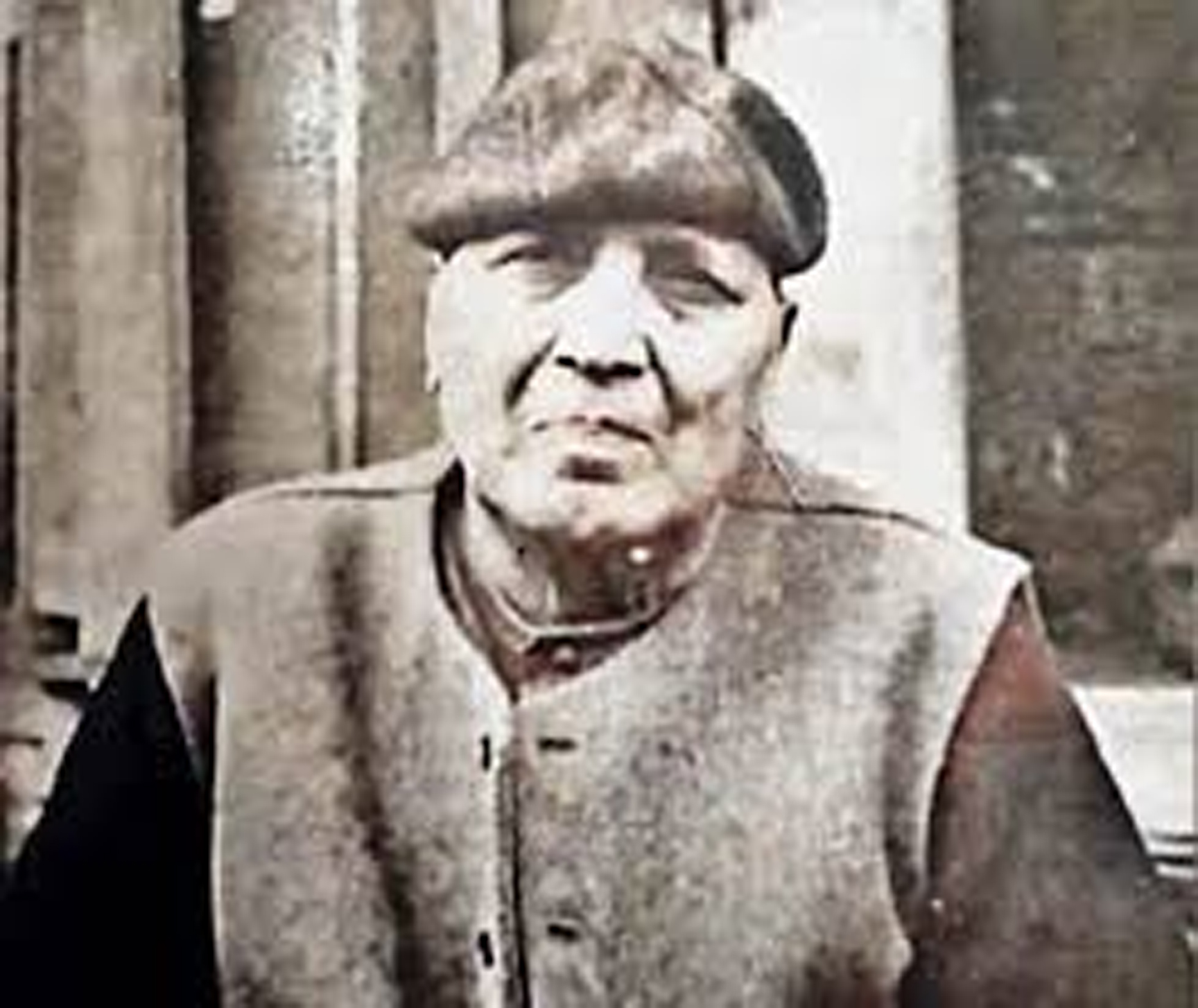
Remembering Kashyap Bandhu
Avtar Nehru
Many stalwarts and scholars within the Kashmiri Pandit community privately concede that Pandit Kashyap Bandhu was among its greatest figures for much of the twentieth century. He was widely respected as a public intellectual and, importantly, was deeply networked with the leading minds and institutions of his time. His stature was formally acknowledged when he was included among the “75 Personalities” commemorated during Azadi Ka Amrit Mahotsav (AKAM), marking seventy-five years of India’s independence in 2023.
Yet, paradoxically, there is not even a primary school named after him in Kashmir, let alone any regular memorials or institutional recognitions. His memory-and with it the folk knowledge of his contributions and legacy-has all but vanished. That so few have attempted to study or preserve his work points to a troubling cultural trait: instead of enriching its own history and learning from it, the community has allowed it to fade into neglect.
A self-made man, Pandit Kashyap Bandhu took a conscious decision to withdraw from public life after his release from prison in 1958. According to his family, he relocated to his native village of Geru (Tral), where he lived until his death on December 18, 1985. This period of more than three decades-spent by a disciplined man of letters who remained intellectually active until his last days-should have been immensely productive. He subscribed to leading periodicals from across India (so voluminous was his correspondence that a dedicated post office was reportedly set up to handle his mail), received a constant stream of visitors including from outside the state, and had voluntary assistants even on his deathbed. It is inconceivable that he did not leave behind a wealth of letters, diaries, notes, and manuscripts capable of being curated into insightful works. Yet, almost nothing of this appears in the public record.
His house was among the properties set on fire during the early years of militancy in the 1990s. Relatives have stated that had he been alive at the time, he too would likely have been targeted-such was his public persona and his command over narrative-setting. His evolved interest in developmental administration, and his passion for practical solutions in rural development and flood control in Sonawari, make him an especially compelling subject for serious research even today.
One of the enduring fallacies of our education system-particularly in the context of the former state and now Union Territory of Jammu and Kashmir-is the tendency to evaluate historical figures almost exclusively through the prism of political affiliation. As a result, the substantive contributions of many great men and women have been excluded from textbooks. This has led to two damaging outcomes: first, children grow up unaware of these figures; and second, by the time students reach higher education or doctoral research, they already carry a bias that such personalities are either marginal or unworthy of serious scholarly engagement.
In Bandhu ji’s case, neglect has been two-fold-by the state as well as by the community itself. While the role of the state is undeniably important, the greater failure lies with a community that has lived in exile for over three decades across Jammu and other parts of India and the world, and yet has collectively forgotten him. A close look at the few community icons who have survived such neglect reveals a common factor: their families took the lead in preserving their memory through sustained efforts and commemorations. Whatever limited initiatives community organizations have undertaken have failed to scale into a broader narrative that emphasizes the importance of building and sustaining community through scientifically tested, structured engagement.
While the Kashmiri Pandit community has consistently contributed to the workforce, academia, professional practice, literature, the arts, and innovation, its inability to develop an inward-looking “marketplace” for aggregating and nurturing its own intellectual and cultural assets has been a critical missing link.
Increasingly, many within the community are beginning to acknowledge that it may have crossed an existential threshold of decline. The transition from lamentation to writing epitaphs is evident. The so-called “last bridge generation” feels completely disempowered, while the youth remain largely disconnected. Yet, no serious, scientific study has been undertaken to understand the underlying causes. Such an inquiry might identify a few critical factors which, if addressed, could help restore vibrancy and meaningful engagement.
One of the most frequently cited criticisms of Pandit Kashyap Bandhu is his perceived silence on the land reforms initiated first by the National Conference Government under Sheikh Mohammad Abdullah and later by the Mir Qasim Government. What is rarely discussed, however, is how figures like him were deliberately sidelined from the very community platforms they had helped catalyze after his return from Lahore following the July 13, 1931 killings and riots. The growing influence of leftist and communist ideology-arguably the equivalent of contemporary “wokeism”-was significant, even if its actual followers were few in number.
Sections of the Kashmiri Pandit elite resented individuals like Bandhu ji not because of the substance of his work, but because his ideas unsettled their entrenched positions and threatened their autocratic ways. That resentment eventually found expression in his quiet disowning. An ecosystem emerged that effectively erased his public memory.
His revolutionary advocacy for replacing the traditional pheran with the “Indian” sari transformed the social position of women in Kashmir. Ironically, the very pheran has since been repackaged by the same ecosystem as a token of cultural identity-divorced from the emancipatory intent that once challenged it.
 Follow our WhatsApp channel
