

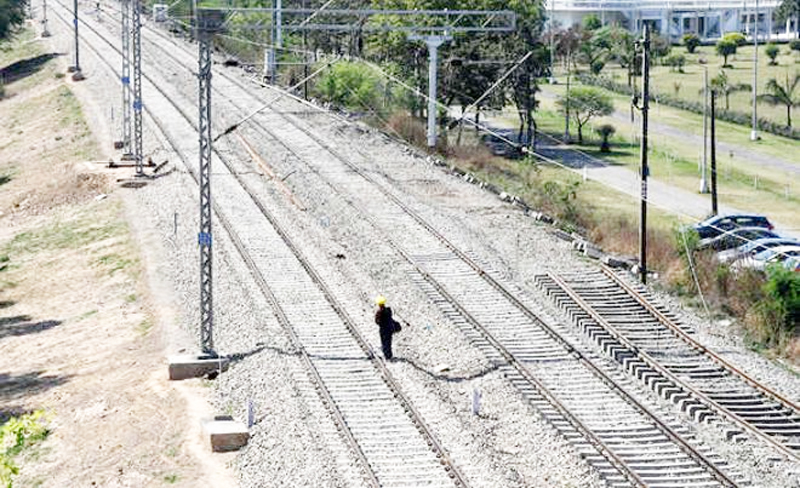
The stalled progress on the Bhanupli-Bilaspur-Manali-Leh railway corridor is not merely an administrative setback-it is a strategic concern for the nation. At the heart of the delay lies the Himachal Pradesh Government’s inability to meet its committed share for the Bhanupli-Bilaspur-Beri stretch, where Rs 1,843 crore remains unpaid. This financial shortfall, along with slow land acquisition and delayed clearances, is impeding the project. For a line designated as “strategic” by the Ministry of Defence, such delays have far-reaching implications. The 489-km Bilaspur-Manali-Leh railway is expected to transform defence logistics for Ladakh, providing year-round, weather-independent access to one of India’s most sensitive frontiers. It will supplement the Government’s broader push for all-weather connectivity-alongside the Shinku La tunnel, upgraded highways, and strengthened air mobility. In this context, even a delay on a 63 km stretch becomes a bottleneck that threatens the pace and sequencing of the entire project.
Railways, by mandate, rely heavily on States for timely land acquisition, compensation processing, forest permissions, utility shifting, and law-and-order support at worksites. While this interdependence is natural in a federal structure, the present situation underscores how one State’s inaction can slow down a nationally critical project. Every State aggressively pursues new rail lines for its own socio-economic upliftment, and rightly so-rail connectivity transforms regional development. Yet when commitments are not honoured, it jeopardises not just regional aspirations but national priorities.
The Himalayan rail projects come with inherent challenges: unstable geology, steep gradients, massive tunnelling requirements, and limited weather windows. These constraints already compress working periods and elevate costs. Delays caused by administrative bottlenecks only compound the difficulty and inflate the financial burden. When thousands of crores have already been invested, slowing down at this stage is neither prudent nor acceptable. The Centre has repeatedly conveyed its readiness to fast-track construction, but without corresponding urgency from the Himachal Government, execution remains hamstrung. This is not the time for political brinkmanship or bureaucratic inertia. The strategic importance of Ladakh, the need to strengthen supply chains to forward areas, and the imperative of building resilient infrastructure demand a unified approach. High-level intervention-by both the State and the Centre-is now essential. National security must stand above party lines, regional politics, or fiscal hesitations. The Manali-Leh rail line must be expedited with top priority and collective resolve.
 Follow our WhatsApp channel
