

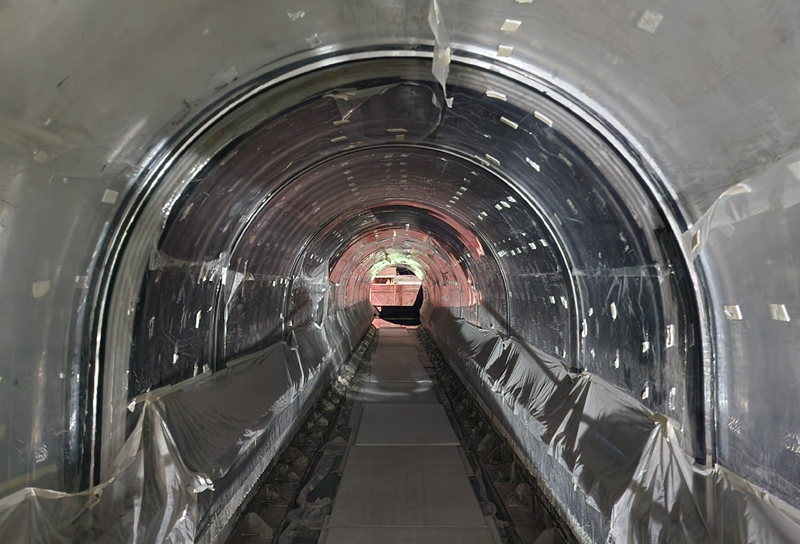
The incomplete Oceanarium at Bagh-e-Bahu now stands as the latest symbol of Jammu’s chronic project mismanagement-a Rs 19-crore structure nearing civil completion but without the very marine life that defines its purpose. It is difficult to fathom how a project could be conceived, sanctioned, funded and physically executed, yet the most essential component-procurement of marine species and the department responsible for long-term upkeep-remains completely undecided. This is not merely an administrative oversight; it is a systemic failure that raises troubling questions about planning culture, bureaucratic accountability and public financial management in Jammu.
The facts are staggering. A DPR was approved, contracts were awarded, and civil works progressed almost to completion. Yet no one-neither the project designers nor the executing agencies nor the Board of Directors of Jammu Smart City Limited-bothered to consult the Fisheries Department at the planning stage to ascertain whether it possessed the expertise to manage a saltwater marine ecosystem. Only now, after crores have been spent, has the department conveyed what should have been obvious from day one: maintaining a marine aquarium is not within its domain. As a result, the project remains suspended in ambiguity. Who will procure the marine species? Who will transport them? Who will maintain the ecosystem, the water chemistry, the filtration systems, and the long-term health of species like sharks? No one knows.
This is not an unfortunate oversight-it is a shocking failure of due diligence. Accountability for such lapses must be fixed, not brushed aside in internal correspondence. The Oceanarium now joins a growing list of Jammu’s ill-conceived or half-implemented projects that have consumed public money but yielded negligible public benefit. Residents do not need reminders: the musical fountain at Bagh-e-Bahu was installed with a generator backup that was incompatible with the load, rendering the entire attraction dysfunctional; the much-touted JDA Bus Stand became an oversized, underutilised property without serving its intended purpose; Jammu Haat lies largely abandoned; and the city is still waiting for the completion of the once-celebrated artificial lake project-years after deadlines lapsed. Even the ropeway between Peerkho and Bawe Wali Mata temple remains inoperational despite crores spent, with reasons unknown. Across these cases, a consistent pattern emerges: projects are launched with fanfare, funds are released, structures are built, but basic planning, inter-departmental coordination and post-completion operational clarity are missing. Public money becomes locked in limbo, while authorities express surprise at problems that were predictable from the outset.
The Oceanarium debacle is perhaps the most glaring instance so far because the very soul of the project-marine species-was never planned for. The underwater glass tunnel may soon stand as an empty, hollow attraction if decisive action is not taken. Outsourcing operations to a private firm, as tentatively explored earlier, is no substitute for sound planning. Every commercial tourism project demands a clear assessment of capital costs, operating expenses and projected revenues to sustain itself. None of this appears to have been worked out.
For Jammu, the implications extend beyond one project. With the Delhi-Katra Expressway coming up, most trains now go directly to Katra, and Kashmir increasingly becoming the primary tourism draw, Jammu requires strong, uniquely appealing projects to retain tourist footfall. Yet what we witness is complacency, hollow announcements, and projects that exist only on paper or in incomplete structures. Construction alone does not create tourism; functionality does.
The Government must urgently revisit Jammu’s tourism strategy. A culture of making announcements without ensuring feasibility, sustainability, or long-term operational planning must end. The Oceanarium still has immense potential. It can position Jammu on India’s marine tourism map and become a major attraction for families, students, and visitors from across the region. But for that, swift, coordinated, and technically sound decisions are needed right now. Agencies must stop passing files and start taking responsibility. Repeating the same mistakes serves no one. The Oceanarium should not become yet another monument to administrative paralysis. Jammu cannot afford another white elephant. A way out has to be found for procurement, ecosystem design, and long-term maintenance. The onus lies with the Government to resolve this issue.
 Follow our WhatsApp channel
