

Iqbal Ahmad
Iqbal61@yahoo.co.in
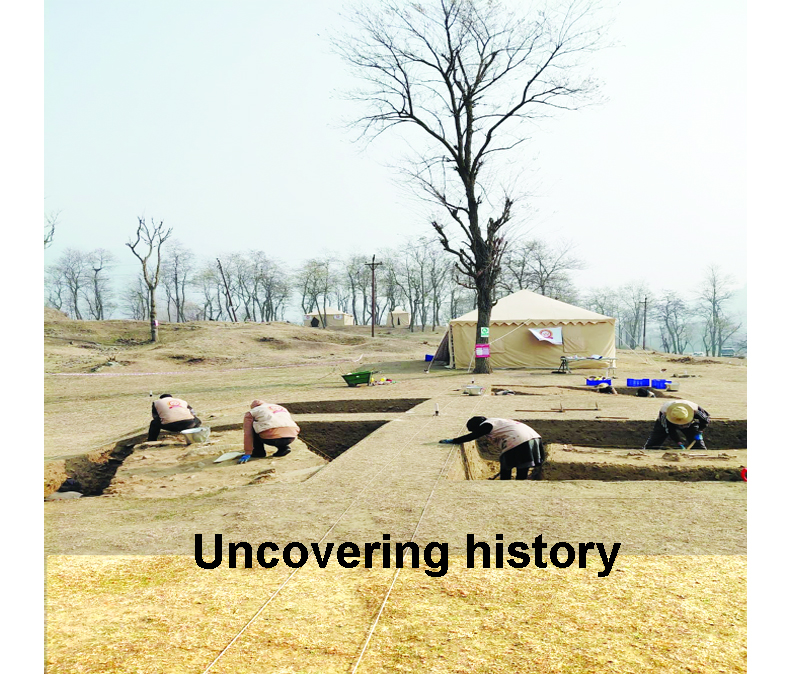
In fact it is first time in the archaeological history of Jammu and Kashmir that after several decades of wait we are watching the live demonstration of a systematic excavation being carried out in the mounds of Zahenpora Baramullah.
The administrators, archaeologists and researchers are all set to uncover one more hidden chapter of our archaeology history, from the mounds of this identified archaeological site. The long-awaited archaeological excavation project has finally been taken up for execution and well-planned systematic excavations have resumed at this already surveyed archaeological site. The site is expected to lift the lid from one more period of cultural history.
The project is the outcome of a joint venture held between the Department of Archives, Archaeology, and Museums (DAAM) and Kashmir University’s Central Asian Studies (CCAS) department. In this regard MOU has been already signed by Director Archives Archaeology and Museums and the Registrar of Kashmir University.
Apart from uncovering any specific period of history, the excavations at the site shall also provide a platform to the students and researchers to watch practically various aspects of scientific methods of excavations.
In fact with the introduction of advanced scientific dating and evolution of excavation technology in Archaeology discipline, the archaeological investigations and interpretations have turned easy and more result oriented.
The most significant archaeological sites of Burzhom and Semithen excavated during seventies and eighties are quite non-religious sites which have revealed a habitational, economic, social and cultural data of prehistoric and historic Kashmir. These are well known as secular habitational sites and have nothing to do with any religious beliefs and practices.
Indeed during the years there have been few trial digs and scientific clearances undertaken at few sites but it is first time since Burzhama (1960-1970) and Semithen (1978-83) excavations that a systematic and scientific-based excavation has been initiated at this site located in an archaeologically rich area of north Kashmir. The region has already revealed magnificent archaeological sites and artifacts of Kushan era at Ushkar and Kanishpora on the outskirts of Baramullah town.
The preliminary examination of site is expected would also reveal the artifacts of Kushan, pre-Kushan and post-Kushan era, but before it is excavated and studied we should not jump to conclusions and should not attribute it with Buddhist faith and declare it as a Buddhist site. In fact when it is properly investigated and studied then we can give it any proper name but in terms of its timeline not in terms of any faith.
In fact during the post-independence period the first well planned and systematic excavations were carried at the plateau of Burzahom during the years of 1960-70 AD. These excavations were undertaken by Archaeological Survey of India under the supervision of T.N. Khazanchi. The excavations then revealed the transition from the subterranean and ground level housing features of the Neolithic people to the mudbrick structures of the Megalithic people. The large cache of tools and implements made of bone and stone found at the site were then taken to Delhi and housed in the strong rooms of ASI at PuranaQilla Museum. Fortunately the contributor in the year 2020 had also a chance to have glimpses of this wonderful treasure as I figured in two member committee constituted by the government to prepare a list of the representative series of Burzhom artifacts to be displayed at the designated spaces of SPS Museum at Srinagar. The bone and stone tools which I handled there in the strong room were amazing and spoke of very high craftsmanship which in no way looked of any Neolithic age. These are not tools but exquisite artifacts of any advanced civilisation but these artifacts are scientifically dated and belong to Neolithic ages which means even the Neolithic people of Kashmir had been very high skilled. During my handling of few of these tools I observed their finish and softness, most of the artifacts still carried tags duly signed by T.N. Khazanchi.
These antiquities indicate that the prehistoric people of the Burzahom had been advanced and had established contact with Central Asia and South West Asia and also had links to the Gangetic plains and peninsular India. The interaction of local and foreign influences is demonstrated by the art, architecture and customs, demonstrated by some engravings on pottery and other artifacts.
After Burzhom, one another systematic excavation was undertaken at SemithenBijbehara during the years 1977-81.
The site (anciently known as Chakradhara) is situated on a Karewa plateau on the left bank of the Jhelum river, near the modern town of Bijbehara. It consists of several mounds, some reaching 18 meters in height, commanding a panoramic view of the valley.
The main archaeological work was conducted by the Archaeological Survey of India (ASI), with major excavations occurring between 1977 and 1981, and subsequent discoveries in later years. The site has revealed a continuous cultural sequence spanning from the pre-NBPW (Northern Black Polished Ware) period (around 700 BCE) up to medieval times (post-13th century CE). The site is crucial for bridging gaps in the region’s historical record and demonstrating external influences, including Hellenistic culture.
The most remarkable discoveries included the ancient Indo-Greek, Indo-Scythian and Punch Marka coins and Terracotta artifacts of these periods.
The remarkable feature of Burzhom and Semithen excavations lies in this fact that these are non-religious sites which revealed a habitational, economic, social and cultural data. These are known as secular sites and have nothing to do with religious beliefs and practices.
These were the result-oriented excavations which uncovered several ancient periods of Kashmir history particularly the remains and artifacts of Neolithic, Mauryans, Indo-Greek, Indo-Scythian and Kushan era.
Since things changed and unfortunately then turmoil soon enveloped the peaceful environment of this land, the security, law and order became the main concern of the authorities. Still then the micro archaeological works continued and little archaeological investigations, trial diggings and necessary conservation works also continued.
This time it is after about five decades that any major archaeological excavation project has been undertaken by the government which is aimed to uncover the mounds of Zahenpora. Since the site is learnt to have been already explored during colonial ages and its archaeological significance has also been established but could not then be excavated due to unknown reasons, but now wait is over and this archaeological site is being excavated on modern scientific lines.
Indeed leaving turmoil period aside, this land has got a rich tradition of archaeological researches and excavations. The systematic archaeological excavations have very long and interesting history which evolved from early 20th century and have brought a revolutionary breakthrough in Indian archaeology particularly in this part of the country. Earlier the Indian ancient and medieval history was mostly shadowed by mythical and folklore stories. The Indian history has been made a mythological story rather than a historical account.
The first archaeological researches and excavations conducted on scientific bases by European archaeologists lifted the lid from the treasure troves and brought to light the evidences of several hitherto unknown empires. For example, the archaeological, numismatic and epigraphic evidences of three major Hellenistic empires were encountered in the north western parts of then India. These included Indo-Greeks, Indo-Scythians and Indo-Parthians now known to Indian history as Younas, Shakas and Pahlavas which existed in north western parts of the Indian subcontinent, included parts of Jammu and Kashmir territory.
The updated archaeological and numismatic data made available by the researchers revealed the evidences of Hellenistic empires were ruled by several Indo-Greek kings, Scythian kings and Parthian rulers. These rulers spanned from circa 2nd century BC to 1st century AD. Many of these kings are primarily known through their coins and epigraphs.
The first initiative in terms of this research was undertaken by several European experts, which included Sir Alexander Cunningham, James Prinsep, C.J. Rodgers, W.R. Whitehead and Sir Mark Aurel Stein. These experts not only explored the Indian cultural past but also identified, deciphered and conserved it for generations to come. They introduced the scientific investigation of its archaeological sites and uncovered the hidden history of this country by introducing archaeological, numismatic and epigraphic research studies.
The result was that the difficult questions bearing on old studies were addressed well. The book, ‘Greeks in Bactria and India’ by local Indian historian N.K. Narain opened up new phases of research in Indian parts of Greek occupation. The reputed numismatists like Dr. David Macdowel, Dr. P.L. Gupta, Michel Mitchiner, Osmund Bopearachchi besides deciphering these coins have done a systematic study of these coins and documented their find spots. It was because of these researches based on scientific approach that the Indo-Greek, Indo-Scythian and Indo-Parthian history and chronology was established, besides a rich trove pertaining to these ages was also unearthed. And more than thirty-three Bactrian-Greek and Indo-Greek rulers were identified to have ruled over the north-western parts of India (which included parts of Punjab and Kashmir) during 2nd and first century BC. Taxila in Punjab and Semithen in Kashmir are major archaeological sites which revealed plenty of Indo-Greek and Indo-Scythian evidences.
The fresh studies and excavations of Zehanpora is also expected would unearth certain interesting evidences of this land’s cultural past and uncover one more archaeological treasure.
But we shall abstain to affiliate this site with any religion and give it any religious name. Indeed we can name it to any particular historical period and shall also not jump to conclusions.
(The writer is a senior archaeologist and author)
 Follow our WhatsApp channel
