

Chand Kishor Sharma
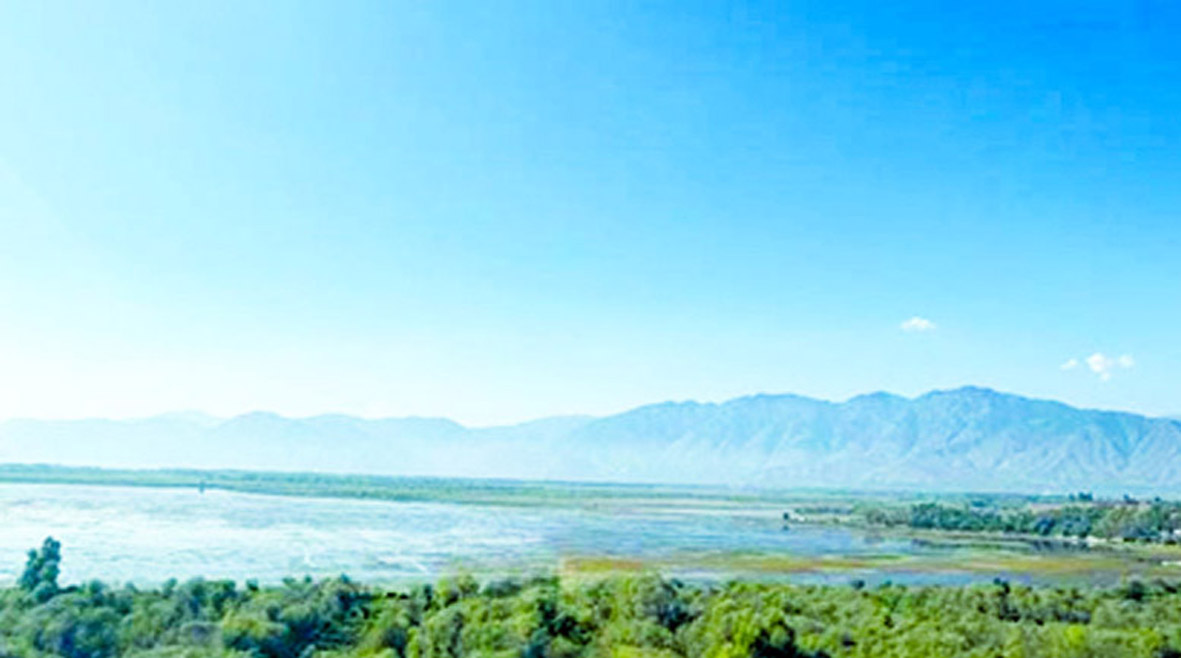
Wular lake, also known as Wolar in Kashmiri is the largest freshwater lake in India and the second largest in Asia, situated on the foothills of Haramukh Mountain. This lake is located in Bandipora district (between towns of Sopore and Bandipora) of Jammu and Kashmir, north of Srinagar. This expansive body of water is renowned not just for its overwhelming beauty, but also for its remarkable ability to transform with the seasons. Golden rays of the setting sun on the vast sheet of water present a most fascinating scene. The lake is irregular in shape and shallow on the sides but sufficiently broad and wide.
The lake is a popular tourist destination known for its serene view and various activities viz., boating etc.
The lake size varies seasonally from 30 to 189 square kilometers covering almost 16 km in length while its width is 9.6 km. The surface area of the lake is 1580 metre (5180 ft) and maximum depth is 14 metre (46 feet). The Jhelum river flows into it and emerges through the town of Sopore. This lake is a natural flood absorption basin for the valley. Lake’s basin is formed by tectonic activity. There is quite a seaside feeling here. Often there is a fresh cool breeze. Like most lakes in the vicinity of mountains, the Wular is liable to sudden storms and the wind rushes down the gorges of Arin and Bandipora, churning up the smooth surface into foam and raising a sea of rolling waves which are a terror to the boatmen.
The best time to visit Wular lake is from April to June for pleasant weather, beautiful flora and enjoyable outdoor activities like boating and birdwatching. June to August is also ideal, offering comfortable conditions for water sports and sightseeing when the lake is at its most vibrant. The lake is easily accessible by road about 40 km from Srinagar. The nearest airport is at Srinagar from where cabs can be hired to reach Bandipora to see this largest lake. Now a days Vande Bharat train also connects Katra railway station with Kashmir valley.
This lake also has a small artificial island in its centre called the “Zaina Lank”. The Kashmiri sultan Zain ul-Abidin is reputed to have ordered the construction of this artificial island in fifteenth century and this had temples and palaces on it but all of them are now in ruins. On the top of a hillock, overlooking the lake, is a peaceful and scenic shrine of Baba Shakur-ud-din.
Wular lake is considered a remnant of Satisar lake that existed in ancient times. This lake is known for its rich biodiversity which is a crucial ecosystem in the Kashmir valley.
This lake is one of the 90 plus Indian wetlands designated as Ramsar site.It was declared a Ramsar site (wetland of international importance) in 1990. These sites recognized for their international importance are wetlands that promote the conservation and wise use of wetlands and their resources.
The vibrant ecosystem of wular lake is a magnet for diverse birdlife, drawing nature lovers,photographers and adventure seekers from various parts of India and abroad. Terrestrial birds observed around the lake include the black-eared Kite, Eurasian sparrow hawk,short-toes eagle, Himalayan golden eagle, Himalayan Monal, Chukar patridge, and many others. It also welcomes a wide range of migratory birds that visit the region every year from Northern Europe, Siberia and Central Asia. Wular lake is an important fish habitat, the main species being the common carp, rosy barb, mosquitofish and various snowtrout species. Fishing from this lake make up a significant part of the diet for a large number of people living on its shore and elsewhere in the Kashmir valley.
Many aquatic plants, such as the grass Phragmites and the waterlily like Nymphoides, from the lake are used for human consumption and animal fodder.
Conservation efforts are underway to manage soil erosion and develop the catchment area. Wular-Manasbal Development Authority (WMDA) has been involved in projects to restore the lake’s ecosystem and restoration efforts have shown positive results such as the emergence of lotus flowers.
Wular lake stands as an ideal retreat-a place where you can escape into nature’s embrace and connect with the unique, ever-changing rhythm of this captivating region.
( The author is Joint Director J&K EDI )
 Follow our WhatsApp channel
