

Dr. Jasbir Singh Sarna
jbsingh.801@gmail.com
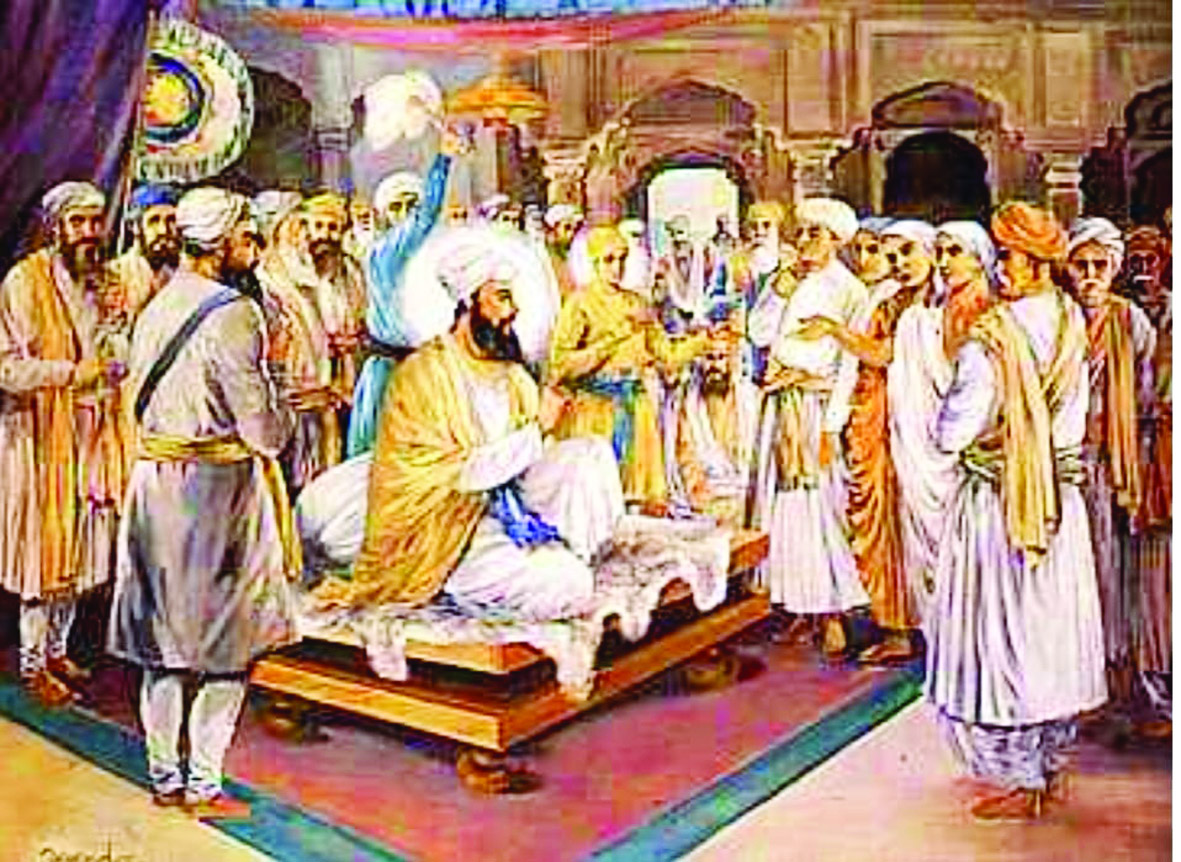
The martyrdom of Guru Tegh Bahadur in 1675 stands as a monumental episode in world history, symbolizing the defense of religious freedom and the protection of the oppressed. In 17th-century India, under the Mughal Emperor Aurangzeb, religious persecution intensified. Aurangzeb sought to enforce Islam across India, particularly targeting Hindu intellectuals in Kashmir-the Pandits-through forced conversions, temple demolitions, and the imposition of jizya tax. Recognizing the looming threat to their faith, a delegation of sixteen Kashmiri Pandits, led by Bhai Kirpa Ram Dutt of Mattan, approached Guru Tegh Bahadur Ji at Anandpur Sahib, seeking protection.
Guru Tegh Bahadur Ji’s response was both courageous and transformative. He understood that defending the rights of others to practice their religion was a moral imperative. Though offered rewards and positions by Aurangzeb to embrace Islam, the Guru refused, asserting that true religion cannot coexist with tyranny. He explained that Guru Nanak Dev Ji had opposed dogma and oppression, not individual faiths, and emphasized the need to uphold human dignity and freedom.
Bhai Kirpa Ram Dutt, a scholar of Sanskrit and scion of the respected Dutt Brahmin family of Mattan, led the delegation, pleading for Guru Ji’s intervention against forced conversions in Kashmir. The Guru accepted that the protection of their faith required the ultimate sacrifice. Sikh tradition records that upon hearing their plight, the Guru declared that only the sacrifice of a mah?puru?-a great soul-could halt the injustice. At this moment, the young Gobind Rai is said to have asked, “Who is greater than you, O Father?”. Guru ji instructed the Kashmiri Pandits to convey to Aurangzeb that the Guru’s conversion would secure theirs-a testament to his principled commitment.
On 12 July 1675, Guru Tegh Bahadur Ji, along with companions Bhai Mati Das, Bhai Sati Das, and Bhai Dayal Das, was arrested at Malikpur Rangharan and eventually brought to Delhi. Aurangzeb offered the Guru three choices: perform a miracle, convert to Islam, or face death. The Guru rejected the first two, choosing martyrdom for the defense of righteousness and religious freedom. Witnessing the brutal execution of his companions, he maintained steadfast resolve, affirming the moral and spiritual foundation of Sikhism.
Bhai Kirpa Ram returned to Anandpur Sahib and later became Bhai Kirpa Singh Dutt, taking Khande di Pahul under Guru Gobind Singh Ji in 1699. He served as a teacher to the young Guru, instructing him in Sanskrit and other classical languages, and participated valiantly in battles defending Sikh sovereignty. Alongside his brother Sanmukh Singh, Bhai Kirpa Singh attained martyrdom in the Battle of Chamkaur on 7 December 1705, demonstrating the enduring legacy of courage and sacrifice.
The historical context of these events underscores the significance of Guru Tegh Bahadur Ji’s martyrdom. Aurangzeb’s policies aimed to transform India into Dar-ul-Islam by weakening Hindu social, religious, and intellectual structures. Kashmir, as a center of Sanskrit and Vedic scholarship, was particularly vulnerable. The Pandits’ appeal to Guru Tegh Bahadur Ji reflected their recognition of the Sikh Guru’s moral authority and the Sikh movement’s capacity for resistance.
Primary Sikh sources-including Bhat Vahi, Guru Kian Sakhian, Bachittar Natak, and contemporary Sikh historiography-highlight the interactions between Guru Tegh Bahadur Ji and the Pandits, his steadfast opposition to tyranny, and his philosophical reflections on justice, freedom, and duty. The Guru’s own bani in Sri Guru Granth Sahib and the Ardas composed by Guru Gobind Singh Ji celebrate his courage and the spiritual principles underpinning his sacrifice.
The martyrdom of Guru Tegh Bahadur Ji had profound political and spiritual consequences. It inspired the founding of the Khalsa by Guru Gobind Singh Ji in 1699, establishing a disciplined and principled community committed to justice, defense of the oppressed, and spiritual sovereignty. Bhai Kirpa Singh Dutt’s role exemplifies the vital contribution of devoted Sikhs in sustaining this legacy, both as protectors of faith and as educators of the next generation of Sikh leadership.
Guru Tegh Bahadur Ji’s act of self-sacrifice transcends religious boundaries, exemplifying interfaith solidarity and the universal defense of human rights. His martyrdom is recognized not only as a milestone in Sikh history but also as a global symbol of courage against oppression. By placing the welfare of others above his own life, the Guru set a precedent for ethical leadership and moral resistance.
Bhai Kirpa Singh Dutt’s lineage further underscores the deep ties between Kashmir and Sikh history. His ancestors had maintained connections with the Sikh Gurus for generations, beginning with Pandit Brahm Das, who became a disciple of Guru Nanak Dev Ji. The Dutt family continued to serve the Gurus, contributing both spiritually and militarily to the defense of Sikh principles. These historical links highlight the interwoven nature of Sikhism with the broader cultural and religious fabric of India, particularly in Kashmir.
The martyrdom of Guru Tegh Bahadur Ji and the subsequent actions of Bhai Kirpa Singh Dutt illustrate the Sikh principle that true spirituality entails active engagement in defending justice, freedom, and human dignity. The foundation of the Khalsa Panth institutionalized these ideals, providing a structural and spiritual framework for resistance against oppression. Even today, this legacy continues to inspire movements for human rights, religious liberty, and ethical leadership worldwide.
In conclusion, the collaboration between Guru Tegh Bahadur Ji and Bhai Kirpa Ram Dutt stands as a timeless testament to courage, moral clarity, and interfaith solidarity. Their actions demonstrate that faith without action is incomplete, and that defending the oppressed is a fundamental ethical obligation. From the harrowing events of 17th-century Mughal India to the enduring memory of the Khalsa Panth, this episode remains a beacon of humanistic ideals and a call to uphold freedom, justice, and dignity for all.
 Follow our WhatsApp channel
