

Maj Gen Sanjeev Dogra (Retd)
Sanjeev Dogra (@sanjeev1dogra)
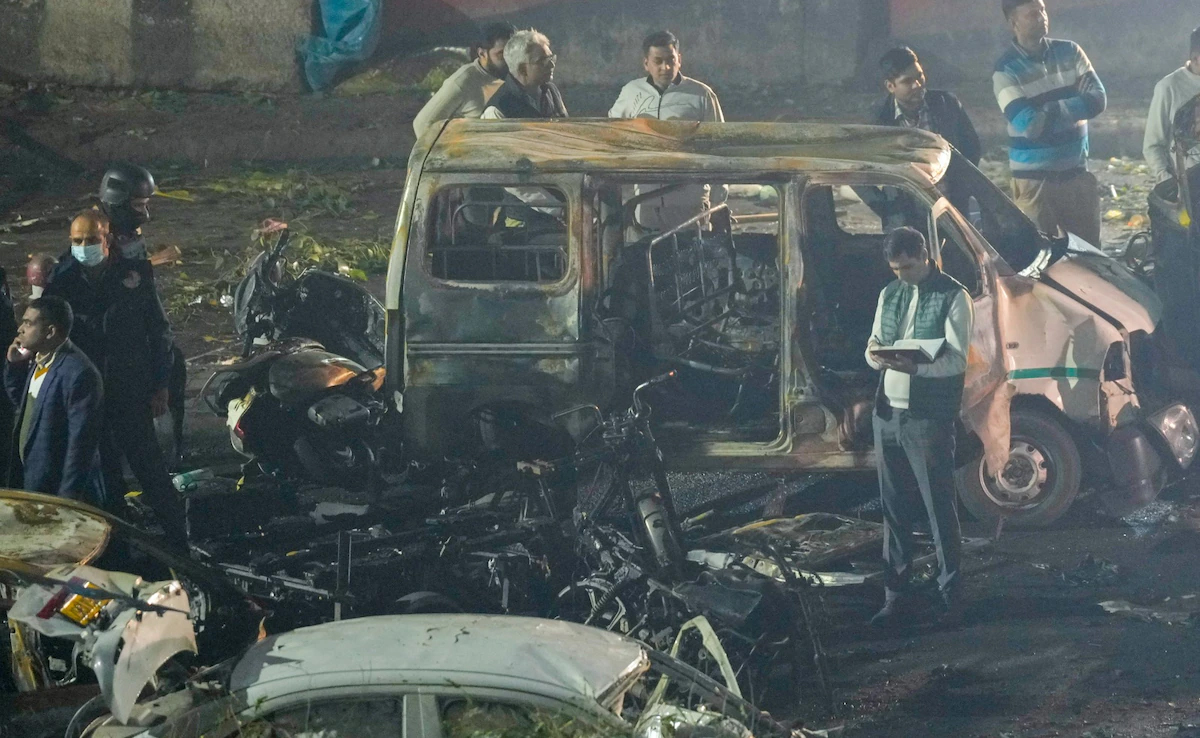
The first sound was a thunderclap that tore through the familiar hum of Delhi. A roar of metal, dust, and shattered lives near the ancient walls of the Red Fort. The silence that followed on November 10th was more profound than any siren; it was a collective gasp, a prelude to a complex geopolitical reckoning. The attack, which claimed 13 lives and scarred many more, was not a random act of violence. It was the violent, desperate culmination of two parallel narratives racing towards a fatal intersection.
One was being written in the clandestine safe houses of a terror network spanning from the valleys of Kashmir to the suburbs of Haryana. The other was being debated in the shadowy corridors of power in Islamabad, where a proposed constitutional amendment, the 27th that threatens to formally anoint the Pakistani military as the nation’s supreme, unaccountable authority. To view these threads as separate is to misunderstand the modern nature of conflict. The Delhi blast is a direct tremor from a state restructuring itself for perpetual hostility, and India’s response must be as integrated, strategic, and resilient as the threat it faces.
The Constitutional Fortification of a Deep State
In Pakistan, a profound and alarming transformation is being advanced under the guise of legislative process. The proposed 27th Constitutional Amendment represents far more than political tinkering; it is the potential codification of a “constitutional coup,” a move to formally anoint the Army Chief as the nation’s supreme military authority. This proposed role, envisioned as a Chief of Defence Forceswould, analysts warn, be endowed with sweeping powers, legal immunity, and ultimate veto over security and foreign policy, effectively institutionalizing the deep state.
The implications for India are grave and direct. Should this amendment pass, it would do more than reshuffle power in Islamabad; it would legally insulate the very engine of cross-border terrorism. This is the logical culmination of a long-standing reality, formally transforming the Pakistani military from a state within a state into the state itself. The civilian government, perennially a puppet, would find its strings severed, leaving the generals as the sole architects of a policy where terrorism remains a core strategic tool. This legal shield would surgically remove the last vestiges of deniability, placing the army above the law it claims to uphold and emboldening it to pursue its adversarial agenda against India with renewed and unchecked impunity. The Delhi blast, therefore, cannot be seen in isolation, it is a potential preview of a future where such aggression is not just sponsored, but constitutionally sanctioned.
The Unraveling of a White-Collar Terror Web
The chain of events that would culminate in the Delhi blast began not with an explosion, but with the chilling discovery of an AK-47 rifle in a doctor’s locker at a hospital in Anantnag. This was among the earliest leads of a terrifying new reality: a “white-collar terror ecosystem” where extremism hid behind professional credentials.
That initial clue ignited a frantic, multi-state investigation. The trail led from the Kashmir hospital to a residential building in Faridabad, where authorities uncovered a plot of staggering scale, a massive cache of 2,900 kg of ammonium nitrate and sophisticated bomb-making equipment. The architects were not traditional militants, but individuals using their social standing as a perfect cloak, operating from the very heart of our communities.
The net began to tighten. As security forces conducted coordinated raids and arrests on November 10th, the cell began to implode under the pressure. In a final, desperate act, a cornered operative triggered a vehicle-borne explosive in Delhi. The blast was not a precision strike, but the violent, premature finale of a network being dismantled in real-time. A spider lashing out as its web was destroyed.
The operational DNA of this network, from the doctor’s weapon to the suburban bomb factory, points directly to the support of Pakistan-based terror outfits. The proposed 27th Amendment in Pakistan, which would constitutionally shield its military command, threatens to transform this terror pipeline. It would elevate the military from a sponsor that can be plausibly denied to a legally protected guardian of terror, emboldening it to cultivate more such deadly ecosystems with absolute impunity
A History of Emboldenment: From Zia’s Playbook to Munir’s Potential
To understand the grave implications, one must listen to the ghosts of past wars. This playbook is not new; it is a cherished heirloom in the Pakistani military’s arsenal. In the 1980s, General Zia-ul-Haq launched Operation Tupac (later known as Operation Gibraltar’s ideological successor), a deliberate, long-term strategy to inflict a “thousand cuts” on India by fueling insurgency in Punjab and Kashmir. It was a cold, calculated policy of using asymmetric warfare to bleed a larger adversary, setting a precedent that has defined decades of conflict.
A decade later, General Pervez Musharraf, then Army Chief, greenlit the Kargil misadventure, a reckless gamble that saw Pakistani soldiers and militants infiltrate across the Line of Control, bringing the two nuclear-armed nations to the brink of all-out war. Like the proposed amendment, Kargil was an operation conceived and executed by the military, with the civilian leadership kept deliberately in the dark. It was a stark demonstration of how a militarized decision-making process, unconstrained by political oversight, can hurtle a region towards catastrophe.
Today, an empowered military command, potentially shielded by a constitutional amendment, would be far more emboldened. The deep state would no longer need to manipulate a civilian facade; it could act with direct, legally-sanctioned authority. The tools of hybrid warfare, the deniable proxies, the drone swarms, the cyber-attacks, and the radicalization of white-collar professionals would not be instruments of policy, but the policy itself. The abetment of terrorism would transition from a covert act to a sovereign right, protected by the nation’s highest law.
The Imperative for a Unified National Response
The sophisticated, hybrid nature of the threat we facefrom constitutionally-emboldened adversaries to radicalized professionals in our midst demands a response that is equally integrated and resilient. India’s answer cannot be confined to a single ministry or security agency; it must be a unified national endeavor, a seamless fusion of state capability and societal strength. The Delhi blast is a grim reminder that our security architecture must evolve from a collection of independent pillars into a single, fortified fortress. This requires decisive action on three interconnected fronts, transforming policy from reactive to proactive, and citizens from bystanders to sentinels.
For the Government and Security Apparatus, the response must be both legally precise and strategically uncompromising. A swift, watertight NIA investigation is paramount, presenting irrefutable evidence that resonates in domestic courts and the court of global opinion. But evidence alone is insufficient. Our diplomacy must pivot to a sustained offensive, explicitly linking atrocities like the Delhi blast to Pakistan’s constitutional power-grab, exposing its military as the true author of this tragedy. Concurrently, the doctrine of deterrence-by-punishment must be visibly reaffirmed. Any military response should be a precise, calibrated strike on terror infrastructure, a message delivered not in rhetoric, but in the rubble of jihadist camps, establishing that India holds the Pakistani military command personally and institutionally accountable for any aggression emanating from its soil.
This national strategy must be anchored locally through revolutionary civil-military fusion. District Fusion Rooms must evolve from concept to operational reality, becoming nerve centers where civilian and military leaders co-locate during crises, fusing local intelligence with national strategy in real-time. Simultaneously, we must strategically leverage our vast reservoir of veteran expertise through a formal Veteran-Citizen Corps, channeling ex-servicemen to train community watch groups, harden critical infrastructure, and build local resilience. This secures the vulnerable “last mile,” transforming society from a soft target into a participatory defense network.
Ultimately, citizens must evolve from bystanders to active sentinels. This demands Community Preparedness through security drills, Digital Vigilance against online radicalization, and above all, Social Cohesion is our ultimate armor against division. A resilient citizenry that stands united denies terrorists their primary victory, raising the cost of aggression beyond any adversary’s means. This is the blueprint for an India that doesn’t just respond to threats, but anticipates and neutralizes them through the collective will of its people.
A Thought for the Future: The Fortress and the Will
The path ahead is fraught with the volatility of a changing Pakistan and the persistence of ancient hatreds. The Delhi blast, viewed through the lens of the proposed 27th Amendment, marks a definitive end to ambiguity. We are no longer dealing merely with a rival state, but with a potential military junta that seeks to weaponize its very constitution. The challenge is formidable, but India’s strength has always lain in its unity and democratic resilience. By fusing the capabilities of our government, the courage of our security forces, the wisdom of our veterans, and the vigilant will of a billion citizens, we can transform from a target into a fortress. The blueprint for security is clear; it requires not just the might of the state, but the determined, unbreakable resolve of its people, standing together as the ultimate guardians of the nation’s safety, dignity, and future.
 Follow our WhatsApp channel
