

The vast, mesmerising expanse of Ladakh, nestled high in the Himalayas, is both a strategic frontier and a symbol of resilience. Yet, for decades, its people have been at the mercy of weather and terrain. Each winter, when snow blankets the mountain passes, Ladakh effectively becomes an island-cut off from the rest of India. The Srinagar-Leh and Manali-Leh routes, lifelines in fair weather, turn treacherous and impassable in extreme cold. This seasonal isolation has long defined life in the region: curtailed access to healthcare, disrupted education, halted tourism, and logistical nightmares for civilians and soldiers alike.
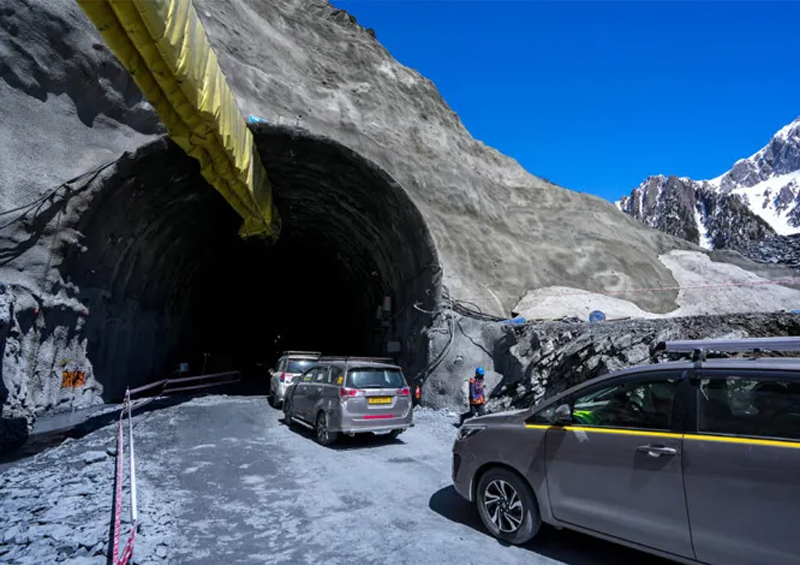
In recent years, however, India’s approach to infrastructure development, especially in border regions, has undergone a transformational shift. No longer are the Himalayan frontiers seen merely as remote, inhospitable outposts-they are now viewed as zones of opportunity, connectivity, and strategic assertion. The Government’s sustained focus on creating all-weather, year-round connectivity is rewriting Ladakh’s developmental narrative, and the BRO stands at the forefront of this change. The ongoing construction of the 298-kilometre Nimu-Padam-Darcha road-envisioned as the third and shortest all-weather route between Manali and Leh-is a testament to this new mindset. Once completed, it will offer a seamless, strategic, and scenic corridor through the Zanskar Valley, bypassing the traditional passes that remain snowbound for months. The key feature of this route will be the Shinkun La Tunnel, currently under construction across the Zanskar Range, where work on both portals has already begun. When completed in three to four years, this engineering marvel will ensure uninterrupted connectivity between Himachal Pradesh and Ladakh-an unprecedented feat in India’s high-altitude infrastructure history.
The development is of strategic importance. Following the border clashes with China in eastern Ladakh, the need for dependable, multi-route connectivity has become critical. The army’s presence in the region demands a robust logistical backbone that can sustain troop movements, supply chains, and emergency deployments throughout the year. In this context, the Shinkun La Tunnel and NPD road are components of a larger national security framework. BRO rightly termed the third route a “game-changer” for its dual civilian and military significance.
Yet, the implications extend far beyond defence. Ladakh’s social and economic life has long been constrained by its geographical isolation. For locals, winter has meant migration-families moving to Jammu, Himachal, or Delhi to escape the severe cold and shortages of essentials. Schools close, tourism halts, and livelihoods stagnate. The new road corridor promises to reverse this decades-old cycle. Once the NPD route is operational, there will be new opportunities in tourism, trade, and local enterprise. Indeed, the economic potential is immense. Ladakh’s limited industrial options make tourism its primary economic engine. With reliable winter access, the region could reposition itself as a niche destination for extreme-weather tourism-offering visitors a chance to experience the stark beauty of the Himalayas at minus 40 degrees. The road itself will spur micro-economies along its route, from homestays to service centres, benefiting local youth. Infrastructure here is not just a physical asset-it is a catalyst for social transformation.
The BRO’s contribution to this transformation is monumental. The organisation has embraced modern technology and empowered contractors with advanced machinery to expedite work in high-altitude zones. Despite the geographical disadvantage of building on steep, snow-laden Himalayan slopes-unlike China’s flatter Tibetan plateau-India is rapidly closing the gap in border infrastructure. The Shinkun La Tunnel and the proposed Takling La link to eastern Ladakh are both bold declarations of intent that India’s borders will no longer be defined by inaccessibility.
Ultimately, the vision behind these efforts is not merely strategic but deeply human. Connectivity is empowerment, and in Ladakh, it is the bridge between isolation and integration. As the Government and BRO continue their determined march towards all-weather connectivity, Ladakh stands on the threshold of a new era. The mountains will still test endurance, but soon they will no longer define limitation. All-weather connectivity, once a distant aspiration, is now the promise of a transformed future for Ladakh-strategically secure, economically vibrant, and forever linked with the rest of India.
 Follow our WhatsApp channel
