

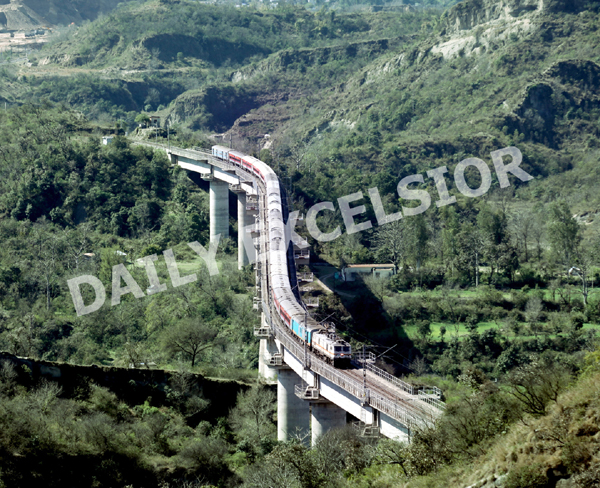
Northern Railway’s announcement of the continued cancellation of 22 trains till March-April 2026, along with the short-term termination of 16 others, has come as a severe blow to Jammu and Katra’s fragile economy and connectivity. The prolonged disruption-stretching well into the next year-highlights both the magnitude of destruction and the gaps in preventive planning and infrastructure resilience. Several key bridges were damaged-particularly Bridge No. 17 between Kathua and Madhopur, Bridge No. 137 between Ghagwal and Hiranagar, Bridge No. 163 between Udhampur and Chak Rakwal, and Bridge No. 232 near Pathankot. The flash floods not only undermined bridge foundations but also washed away embankments, ballast, and signalling equipment at multiple locations. For the first few days following the deluge, all train operations were suspended. Gradual restoration began only after extensive inspections and emergency repairs, but the scars left by nature’s fury were too deep for quick recovery. By mid-October, about 28 trains had resumed operations, yet many remained suspended. For a region so heavily dependent on rail connectivity, this prolonged paralysis has created a multidimensional crisis.
The timing could not be worse. The Jammu-Lakhanpur highway, the primary alternate route, is already under tremendous strain due to the ongoing construction of the new expressway. Frequent traffic jams, long detours, and delays have made road travel unpredictable and exhausting. With trains being the only reliable and affordable mode of transport for lakhs of pilgrims and traders, the present situation has effectively choked Jammu’s lifeline. The cumulative impact of poor road connectivity and suspended train services has been disastrous for both pilgrims and the local economy.
Jammu and Katra’s economic ecosystem revolves almost entirely around pilgrimage tourism. Every year, over one crore devotees visit the Shri Mata Vaishno Devi shrine, most of them arriving by train. The cancellation of direct trains has sharply reduced pilgrim inflow. Hoteliers, transporters, small vendors, and service providers are reporting a visible slump in business. For Katra, where the economy depends almost exclusively on pilgrims, the slowdown is already hurting livelihoods. Jammu city, too, which serves as the gateway for religious and leisure travellers, is also witnessing declining occupancy rates and footfall in markets.
The social consequences are equally serious. People with medical emergencies, students travelling for examinations or admissions, and families attending weddings are finding it increasingly difficult to get confirmed tickets. The few trains still operational are heavily overbooked, pushing travellers to unreliable and costly road transport. The logistics and trade sector has also taken a hit. Inbound goods-construction material, industrial supplies, and consumer commodities-are arriving late, while outbound items like rice, horticultural produce, and handicrafts are struggling to find timely dispatch. Transport costs have risen, eating into traders’ margins and eroding the competitiveness of local products.
From the railways’ perspective, the challenges are immense. Repairing multiple damaged bridges across the hilly terrain, while keeping partial traffic open for essential movement, is a technical and logistical ordeal. However, the prolonged timeline-stretching till April 2026-suggests systemic bottlenecks. What is particularly worrying is that some of these bridges, like the one near Chakki Bank, had shown signs of distress earlier. Portions of the structure had fallen off previously, yet necessary preventive maintenance was not carried out before the monsoon. This neglect has now resulted in a crisis of avoidable proportions. This season’s floods have exposed the vulnerability of Northern Railway’s infrastructure to extreme weather events. It is important for the Railways to evolve a new disaster-resilient strategy-one that prioritises pre-monsoon structural audits, early warning systems, and advanced strengthening of bridges and embankments in flood-prone zones.
At the same time, the Railways must expedite ongoing repair works by deploying additional resources. Prolonged suspension of vital routes not only causes economic loss but also erodes public confidence in the system. While the fury of nature cannot be prevented, the fallout of infrastructural neglect can-and must-be avoided in the future. The current crisis should serve as a wake-up call for the Railways: to build stronger, act faster, and plan smarter-so that the region’s lifeline is never again brought to such a standstill.
 Follow our WhatsApp channel
