

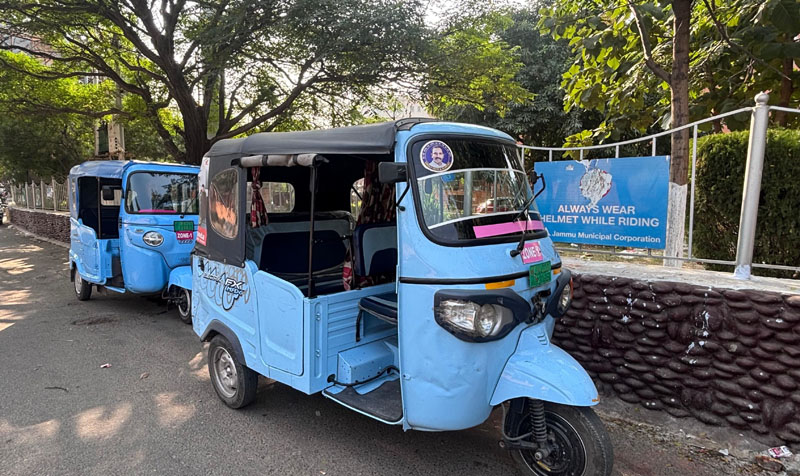
This is trial period, we are open for suggestions: RTO Jammu
Nishikant Khajuria
JAMMU, Nov 1: The introduction of a colour-coded zonal system for e-autos, e-rickshaws and e-carts in Jammu district has sparked confusion and anger among commuters as well as drivers, triggering long waits, forced transfers on short routes and even protests at some points across the city.
Follow the Daily Excelsior channel on WhatsApp
The regulation, rolled out by the district administration, Traffic Police and Regional Transport Office Jammu this week, restricts each e-auto to operate only inside its assigned zone and bans inter-zone movement except at a handful of designated crossings.
Several passengers and operators have described the move as chaotic. Commuters travelling short distances that cross an invisible zone line are being made to alight and change vehicles – sometimes twice on journeys that earlier had been direct, resulting in longer door-to-door travel times, higher effective fares and overcrowding at transfer points, particularly at Jewel Chowk.
“From Gummat to the Railway Station, just three kilometres, a passenger will now have to change autos mid-way. It makes no sense,” said a driver. Similarly, he added, a patient travelling from Gandhi Nagar to GMC Jammu, is forced to change the auto at Jewel Chowk.
According to the public notice issued by the district administration, vehicles must show colour-coded identification (painted strips and plates) and operate only on the earmarked routes that range roughly from 2.5 km to 5 km. Further, these e-autos have been barred from flyovers and highways within district limits, and vehicles registered outside Jammu are forbidden to operate in the city.
The impact has been immediate and visible. Morning and evening peaks saw frustrated passengers at zone boundaries, unwilling or unable to board a second auto because of overcrowding or lack of clarity. Particularly for elderly passengers, people with luggage and those carrying small children, the change as burdensome. Some office-goers said they were late for work after being forced to change vehicles twice on routes that previously took them directly.
Most of the drivers of these e-autos said that the policy has hit their daily income. They claimed that they were not consulted before implementing the policy and now face fewer fares per shift because each trip must end at a zone limit. At several locations, these e-auto drivers staged protests and demanded either revocation or immediate modifications to the scheme.
Majority commuters have also urged the administration to withdraw the controversial order and instead focus on coordinated efforts to streamline traffic on Jammu city roads, particularly by regulating the movement and stoppage of mini-buses.
On the other hand, petrol-auto drivers welcomed the move on e-autos, saying the measure will protect their dwindling business from the rapid influx of e-autos.
The administration has defended the decision as a traffic-management and safety measure to prevent congestion, improve discipline and make the growing e-vehicle fleet manageable on Jammu City roads.
According to RTO Jammu, Jasmeet Singh, unregulated, city-wide operation of thousands of the e-vehicles had led to chaotic stoppages, dangerous overtaking and blockages on major junctions.
“This system has been implemented initially on trial basis and we are open for all suggestion. If required, the system will be reviewed after the trial period,” he told the Excelsior and asked drivers and commuters for patience while teething problems are resolved.
With the zonation order in effect and Civil Secretariat opening from Monday following resumption of the Darbar Move, the coming days will test whether the measure eases long-term congestion in Jammu City without creating an untenable short-term burden for daily travellers and small-vehicle operators.
 Follow our WhatsApp channel
