

Excelsior Correspondent
JAMMU, Nov 1: Model Institute of Engineering and Technology (MIET), Jammu, inaugurated a two-day seminar, titled “Exploring Artificial Intelligence through Dogri: Opportunities for Language, Culture, and Local Development in Jammu & Kashmir”, under the Vibrant Advocacy for Advancement and Nurturing of Indian Languages (VAANI) scheme of AICTE.
The seminar brought together distinguished academicians, researchers, and professionals to deliberate on the intersection of Artificial Intelligence (AI) and regional language empowerment, with a focus on Dogri.
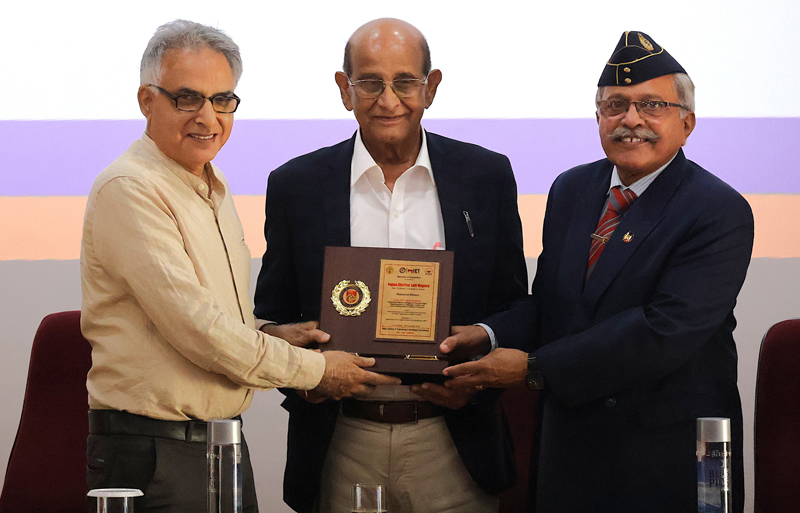
The event featured six eminent speakers including Padma Shri Prof Lalit Magotra; Maj Gen (Retd) S K Sharma; Prof Devanand, Dean Academic Affairs, MIET; Prof Pawanesh Abrol, University of Jammu; Nipun Padha, CEO MoMagic and Neha Sharma, Journalist at Duggar Malaati.
Maj Gen (Retd) S K Sharma, in his welcome address, reaffirmed MIET’s commitment to promoting Artificial Intelligence in regional languages such as Dogri, calling it “the foundation of Jammu and Kashmir’s cultural identity.”
The first session was conducted by Prof Lalit Magotra, who shared valuable insights on empowering Indian languages through technology and highlighted the significance of bringing Dogri into the digital domain. He opened the seminar by emphasizing the importance of integrating Dogri into modern digital ecosystems.
The next two sessions were led by Prof Pawanesh Abrol, who delivered two insightful talks titled “Foundations of Artificial Intelligence (AI) – Explained in Dogri” and “Natural Language Processing and Speech Technology for Dogri.” He highlighted the scope of Natural Language Processing (NLP) and Speech Recognition for regional languages, stressing the need to build Dogri text corpora and open datasets to foster research and innovation in vernacular language technologies.
The final session of the first day was conducted by Neha Sharma on the theme “AI for Cultural Preservation: Digitizing and Promoting Dogri Heritage.” She shared valuable perspectives on leveraging AI to digitize folk literature, archive oral traditions, and promote Dogri art and narratives globally.
The day concluded with an open-house discussion where participants explored ways to build a Dogri-centered AI ecosystem through collaborative projects and community engagement. Day 2 of the seminar will feature sessions by Nipun Padha, Prof Devanand, and Maj Gen (Retd) S K Sharma on AI applications for regional development, industry perspectives, pedagogical innovation, and future directions for developing a Dogri-based AI framework.
 Follow our WhatsApp channel
