

Vivek Koul
vivekkoul2013@gmail.com
As the golden hues of autumn sweep across India and the fragrance of festivity fills the air, the nation once again prepares to celebrate the auspicious festival of Dhanteras 2025, a day that marks the beginning of the grand five-day Diwali celebration. Dhanteras, also known as Dhanatrayodashi or Dhanvantari Trayodashi, is deeply rooted in India’s spiritual, cultural, and economic ethos. Observed primarily in the northern and western parts of the country, this festival radiates the essence of prosperity, health, and well-being – ideals that form the foundation of Hindu philosophy and tradition. The very name of the festival carries profound meaning. The word “Dhan” translates to wealth, while “Teras” or “Trayodashi” refers to the thirteenth day of the Krishna Paksha, the waning phase of the moon, in the sacred Hindu month of Kartik – a time that usually falls between October and November. In 2025, Dhanteras will be celebrated with renewed joy and fervor, continuing the age-old customs that bind generations together through devotion, faith, and hope for prosperity.
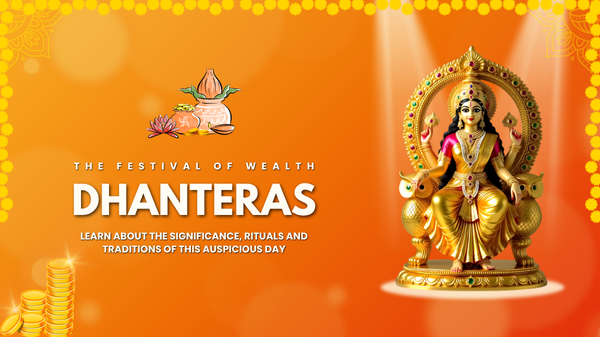
As twilight descends on Dhanteras, homes across India will glow with the warm radiance of earthen lamps. It is a sight that transforms ordinary evenings into moments of divine beauty. The flickering diyas symbolize the triumph of light over darkness and knowledge over ignorance, inviting the blessings of Goddess Lakshmi, the embodiment of wealth, fortune, and prosperity. It is believed that on this sacred evening, Goddess Lakshmi emerged from the cosmic ocean during the churning of the milky sea (Samudra Manthan) – holding a pot of gold and nectar, bestowing health, riches, and auspiciousness upon her devotees. Alongside Lakshmi, Hindus also worship Lord Dhanvantari, the divine physician and the harbinger of Ayurveda, who appeared from the ocean with the sacred nectar of immortality. Thus, Dhanteras not only symbolizes material prosperity but also signifies good health and longevity — a perfect harmony of physical, mental, and spiritual well-being. In modern times, this message holds even greater relevance, as health has become the true wealth in an increasingly fast-paced world.
The evening rituals on Dhanteras are an enchanting blend of devotion and artistry. Families clean their homes meticulously, decorate their courtyards with vibrant rangoli and alpana designs, and light rows of lamps to guide the Goddess into their abodes. The sound of temple bells mingles with the rhythmic chants of aarti as hymns are sung in praise of Goddess Lakshmi and Lord Kubera, the celestial treasurer and guardian of wealth. Offerings of sweets, fruits, and coins are made with utmost devotion, as prayers seek blessings for prosperity and abundance in the coming year. One of the most enduring traditions of Dhanteras is the ritual of purchasing precious metals — gold, silver, or even new utensils — which is considered highly auspicious. This act is believed to bring good fortune and financial stability throughout the year. In 2025, as economic optimism rises in India’s post-pandemic landscape, this ancient custom has also taken on a modern form. While many continue to visit jewelers to buy ornaments or silver coins, a growing number of people are turning toward digital gold and online investment platforms — blending tradition with technology. The spirit, however, remains unchanged: the desire to honor the Goddess of Wealth and invite prosperity into one’s life.
For the business community, Dhanteras holds exceptional importance. Shops, markets, and business establishments witness an upsurge in activity as people invest in assets, launch new ventures, or make significant purchases. The streets bustle with excitement, illuminated with dazzling lights and adorned with festive decorations. The air is filled with anticipation, as people exchange smiles, greetings, and good wishes. It is not just a festival of wealth but a celebration of faith, renewal, and the hope for brighter days ahead. The festival is also intertwined with a fascinating legend that underscores its deeper meaning. According to ancient scriptures, King Hima’s sixteen-year-old son was fated to die from a snake bite on the fourth day of his marriage, as predicted in his horoscope. His clever and devoted wife, however, refused to surrender to destiny. On the night foretold, she placed all her gold and silver ornaments, along with heaps of coins, in a glittering pile at the entrance of their chamber and lit dozens of lamps around them. She then engaged her husband in storytelling and songs to keep him awake through the night. When Yama, the God of Death, arrived in the form of a serpent, he was dazzled by the brilliance of the lamps and the gleaming gold. Unable to enter the chamber, he sat atop the heap of treasures, mesmerized by the glow and the melodies. As dawn broke, he departed quietly, sparing the prince’s life. Since that miraculous night, the day has been celebrated as Dhanteras — a day when light and wisdom conquer darkness and death.
This story, though mythological, beautifully encapsulates the festival’s essence — the triumph of intelligence, devotion, and positivity over fear and misfortune. It reminds humanity that true wealth lies not merely in gold or silver but in courage, love, and the will to defy adversity. The following day, observed as Naraka Chaturdashi or Chhoti Diwali, carries forward the energy of Dhanteras. On this day, lamps are lit throughout the night in honor of Lord Yama, a ritual known as Yamadeepdaan. It is believed that lighting these lamps ensures protection from untimely death and misfortune. This continuity of worship from Dhanteras to Diwali symbolizes the eternal cycle of life — from health and prosperity to enlightenment and liberation. In 2025, as the world becomes more conscious of sustainable living and eco-friendly practices, the celebration of Dhanteras is also witnessing a meaningful shift. More people are choosing to light traditional clay diyas instead of electric lights, opting for biodegradable decorations and locally made artifacts instead of plastic items. This thoughtful approach not only honors tradition but also reflects responsibility toward the environment — a value deeply ingrained in Hindu philosophy, where wealth is meant to be shared and nature revered.
Beyond the rituals, Dhanteras in 2025 stands as a celebration of human resilience and unity. It is a time when families come together, communities reconnect, and faith is rekindled. The festival reminds people that wealth is not just material but emotional and spiritual — found in the love of family, the blessings of elders, and the harmony of shared joy. As diyas illuminate every corner of homes and hearts, they bring with them a silent message of hope: that just as light dispels darkness, faith dispels despair. Thus, Dhanteras 2025 will not merely be an observance of ancient customs but a living testimony to India’s timeless values — gratitude, prosperity, and renewal. Whether one buys a gold coin, lights a single lamp, or simply folds hands in prayer, the essence remains the same — to welcome abundance, dispel negativity, and embrace the light of happiness. As the night of Dhanteras unfolds, shimmering with devotion and joy, it marks not only the beginning of Diwali but also the reaffirmation of the eternal truth — that where there is light, there is life, and where there is faith, there is unending wealth.
 Follow our WhatsApp channel
