

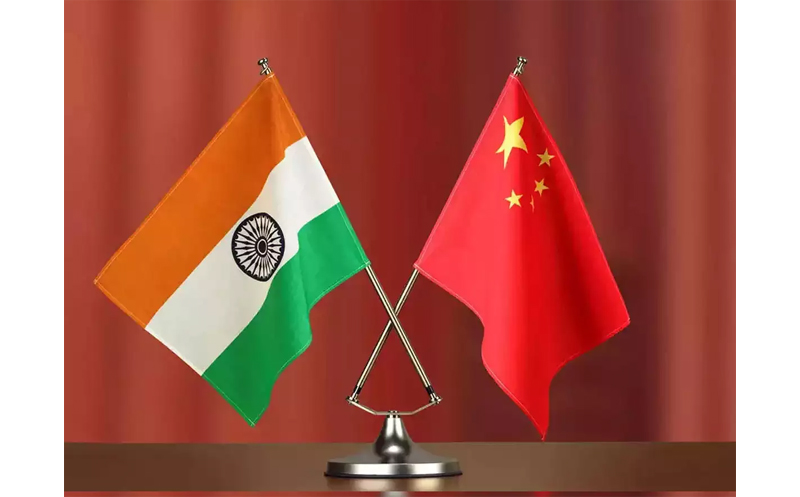
The resumption of India and China direct flights from October 26 after a hiatus of five long years is far more than a logistical development. It represents another significant step in rebuilding confidence between two of the world’s most consequential nations. The reopening of air routes between these Asian neighbours sends an unmistakable signal – that both sides are now willing to look ahead, not back. Practically, India and China occupy a unique position in the world. They are not just geographical neighbours but civilisational powers, home to over 3 billion people – more than one-third of humanity. Both nations have rich histories, immense human potential, and growing economic capabilities. Their shared border, stretching over 3,400 kilometres, has been a source of both connection and contention through the decades. Yet, despite the differences, the sheer weight of their population, markets, and influence makes their relationship central to the stability and prosperity of Asia and, by extension, the world.
PM Modi’s meeting with Chinese President Xi Jinping on the sidelines of the SCO Summit in Tianjin appears to have provided the much-needed impetus for thawing relations. The decision to resume direct air services is a product of several months of back-channel discussions and technical-level deliberations between the civil aviation authorities of both countries. The move is a part of the gradual normalisation of relations between the two countries – an expression that carries both diplomatic restraint and quiet optimism. Earlier, both sides had shown a willingness to rebuild engagement through smaller but meaningful steps. The decision to restart the Kailash Mansarovar Yatra – a pilgrimage of immense spiritual significance to Indian devotees – was one such gesture that demonstrated an effort to separate cultural and humanitarian ties from political tensions. On the military front, progress has also been achieved in the disengagement process in Eastern Ladakh, where the two armies were locked in a tense face-off for more than four years.
India and China must both recognise that no conceivable conflict between them can ever result in a real victory for either side. Both are nuclear-armed powers with global ambitions, deeply integrated into the world economy. A confrontation would only drain resources, destabilise the region, and derail the aspirations of nearly a third of the global population. Peace and dialogue are, therefore, not just desirable – they are imperative. As the world grapples with shifting alliances, tariff wars, and economic decoupling, the ability of these two nations to work together could bring much-needed equilibrium to the global system. Both are major players in manufacturing, trade, technology, and infrastructure, and both are striving for leadership in renewable energy, artificial intelligence, and space exploration. Instead of viewing each other solely through the lens of rivalry, India and China can choose to complement their strengths – India’s innovation, democratic dynamism, and service-sector leadership blending with China’s efficiency, scale, and industrial expertise.
The resumption of direct flights, therefore, goes beyond convenience. It represents a symbolic restoration of normal people-to-people contact. Businesspersons who earlier had to rely on indirect routes to visit the other country can now travel directly, saving both time and cost. Even during the most strained years, bilateral trade between India and China remained surprisingly strong, exceeding $100 billion annually. This resilience reflects the economic pragmatism on both sides. Indian businesses continue to import machinery, electronic components, and raw materials from China, while Chinese firms view India as one of the largest potential consumer markets. The new air links will make these commercial exchanges smoother and faster, encouraging greater interdependence and cooperation.
More confidence-building measures are likely to follow in the days ahead. Across-the-table dialogue remains the most effective way to resolve outstanding issues, from boundary disputes to trade imbalances. Peaceful coexistence between India and China is not just a regional necessity but a global responsibility. If both nations continue to nurture this spirit of engagement, the skies opening between them today could well become a metaphor for a brighter, more interconnected tomorrow – one in which India and China, together, lead Asia toward a century of cooperation rather than confrontation.
 Follow our WhatsApp channel
