

Maj Gen Sanjeev Dogra (Retd)
Prologue: The Runner and the Wound
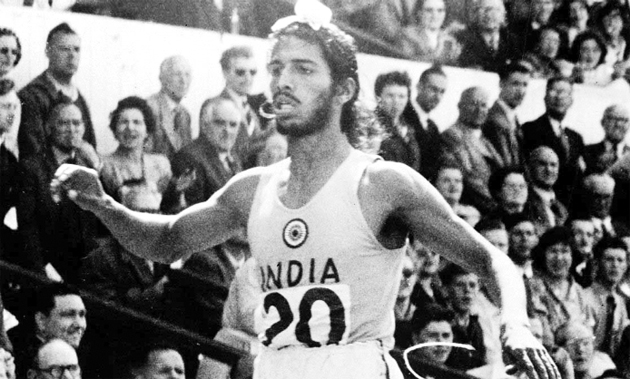
When Milkha Singh walked into the roaring cauldron of Gaddafi Stadium in Lahore in 1960, he was not just an athlete stepping onto a track. He was a vessel, overflowing with the hopes of a young republic and the searing pain of a personal tragedy. Every beat of his heart echoed the collective pulse of a nation still finding its footing on the world stage. Earlier that year, in Rome, he had run the race of his life, finishing fourth in the 400 meters by the slimmest of margins, a mere 0.1 seconds, yet breaking the world record in the process. To a country yearning for icons, Milkha was more than a sprinter; he was a living testament to resilience. He was the proof that a boy, orphaned by the horrors of Partition, who had fled for his life on blood-stained trains, could through sheer grit stand tall and force the world to acknowledge his nation’s spirit.
Beneath the glory, however, lay scars that time had failed to erase. The invitation to run in Pakistan was not an opportunity; it was a confrontation with a ghost. “How can I run on the same soil where my family’s blood was spilled?” he asked, his refusal a raw, understandable reaction shared by millions for whom Partition was not a chapter in a history book but a living, aching memory. It was then that Prime Minister Jawaharlal Nehru, with the quiet persuasion of a statesman, offered a larger perspective. “You are not going there for yourself,” he told the Flying Sikh. “You are going there for India.” Nehru understood a profound truth: that sport possesses a unique, apolitical vocabulary capable of building bridges where diplomacy often fails. It was a lesson in carrying the nation’s flag not as a banner of war, but as an emblem of grace under pressure.
The race itself was the stuff of legend. Against Pakistan’s sprint king, Abdul Khaliq, the “Flying Bird of Asia,” Milkha trailed for most of the 200 meters. But in a final, breathtaking surge, he tapped into a reservoir of strength that was both physical and profoundly spiritual. He flew past the finish line, a victor. What happened next transcended the sport. Pakistan’s President, General Ayub Khan, stepped onto the track, clasped the hand of the Indian athlete, and said in their shared Punjabi tongue, “Milkha, you did not run today, you flew.” In that gesture, the Flying Sikh was born, a title that symbolized not division, but shared humanity; not bitterness, but breathtaking sportsmanship. His victory was measured not in meters and seconds, but in the healing of a tiny fracture in a wounded subcontinent. He had represented India not by ignoring its pain, but by rising above it with impeccable dignity.
The Principled Stand: When Not Playing was the Greatest Victory
If Milkha’s story represents the power of competing with grace, then India’s decision in 1974 represents the profound power of principled refusal. The nation’s tennis team, led by the charismatic Amritraj brothers, Vijay and Anand, had scripted a fairytale run to the Davis Cup final. They had dismantled Japan, stunned a powerhouse Australian team, and overcome the Soviet Union. The entire nation was captivated, waiting with bated breath for what seemed a destined, crowning moment in Indian sports history.
But waiting for them in the final was South Africa, and with it, the specter of apartheid. The regime’s brutal policy of racial segregation was a blight on humanity, condemned worldwide. The final was scheduled for Johannesburg. The choice was stark: play for almost certain glory, or refuse to lend legitimacy to a racist government.
The decision was unanimous. The Indian government and the All-India Lawn Tennis Association (AILTA) decided India would not go. Proposals for a neutral venue were dismissed; no compromise could be made with injustice. Imagine the heartbreak of the players, Vijay and Anand Amritraj, who had dedicated their lives to this moment, their dreams of holding the Davis Cup aloft shattered by a force larger than tennis. Yet, they understood. They later reflected that while their hearts broke as athletes, their chests swelled with pride as Indians. South Africa was awarded the cup by default, but India won something far more enduring: the moral high ground and the respect of the global community. It was a clear, unambiguous statement: some trophies are too tarnished to touch. The spirit of sport, in this instance, lay not in victory on the court, but in the courage to walk away from it.
The 2025 Conundrum: The Tightrope Between Emotion and Obligation
The events of September 2025 placed India in a murky middle ground between these two clear precedents. The nation was reeling. The cowardly terror attack in Pahalgam had claimed out 22 innocent lives, leaving a nation grief-stricken and furious. The military response, Operation Sindoor, had exacted its own solemn price in blood along the borders. The government’s abrogation of the Indus Water Treaty and the Prime Minister’s firm declaration that “blood and water cannot flow together” resonated with a public mood that was raw and unequivocal: no engagement with Pakistan. Not in trade, not in talk, and certainly not in sport.
The air was thick with the demand for a complete boycott. Yet, the intricate web of international sporting commitments, fixtures, contracts, and the institutional framework of bodies like the ICC pulled in another direction. The decision was made: India would play.
This was the tightrope. Once the decision was taken, the expectation should have shifted. The mandate for the team would no longer be about whether to play, but how to play. They were now tasked with a dual responsibility: to acknowledge the national sentiment while upholding the dignity of the sport and the nation on a global stage. They were to be warriors, not just cricketers; diplomats in whites, representing the complex, grieving, yet proud spirit of India.
What unfolded, however, was a performance muddled in its symbolism. India played. India won. But the victory was overshadowed by a palpable air of hostility, most notably the absence of the customary handshakes and the visible lack of camaraderie. It was a victory on the scoreboard, but a failure in spirit. To the world, it projected an image of unresolved anger and petulance. To the grieving nation at home, it felt like a hollow, tokenistic gesture. A betrayal of the sacrifices made at Pahalgam and along the border. They had wanted either a full boycott, in the style of 1974, or a triumphant, graceful victory that would showcase Indian fortitude, in the style of Milkha Singh. This was neither. It was an awkward, unsatisfying middle path that pleased no one and diminished both the victory and the principle.
In the second Asia Cup clash, the situation deteriorated further. Pakistani players themselves indulged in provocative and unsporting gestures. Haris Rauf taunted Indian fans with a “6-0” hand signal, referencing political claims about downing Indian aircraft during Operation Sindoor, and even mimicked a crashing plane near the boundary rope. Sahibzada Farhan marked his half-century with an “AK-47” style gesture, which was widely condemned and prompted the BCCI to lodge a formal complaint with the ICC. Shaheen Afridi attempted verbal provocation of Indian batsmen, while Haris Rauf clashed heatedly with Indian opener Abhishek Sharma, forcing the umpire to intervene. These actions inflamed an already tense atmosphere. Although the Indian players largely responded with their bats rather than retaliatory gestures, the post-match decision once again to avoid handshakes amplified the controversy. What could have been a moment to rise above politics through sport was reduced to theatre, where provocation replaced sportsmanship and gestures overshadowed the game itself.
A Global Mirror: How the World Navigates the Sports-Politics Nexus
History offers a rich tapestry of how other nations have navigated this complex intersection of sport, politics, and principle. The examples provide a crucial context for India’s dilemma.
The Rebuke of Ideology (1936, Berlin): Adolf Hitler intended the Berlin Olympics to be a global showcase for Aryan supremacy. Instead, an African-American athlete, Jesse Owens, won four gold medals in track and field. His stunning victories, achieved under the Führer’s gaze, were a powerful rebuke to Nazi racial theories and a testament to how an athlete’s excellence can shatter hateful propaganda.
The Silent, Powerful Protest (1968, Mexico City): During the medal ceremony for the 200 meters, American sprinters Tommie Smith and John Carlos bowed their heads and raised black-gloved fists in a silent protest for human rights and against racial discrimination in the United States. It was a moment that shook the world, demonstrating that the podium could be a stage for peaceful, powerful protest without violating the essence of athletic competition.
The Collective Boycott (Apartheid Era): The international sports boycott of South Africa throughout the apartheid era is perhaps the most direct parallel to India’s 1974 decision. It wasn’t the action of a single athlete but a collective, global stance that isolated the regime and amplified the moral condemnation of its policies, proving that sometimes, exclusion from play is the most powerful statement of all.
These moments, like Milkha’s run and India’s Davis Cup withdrawal, share a common thread: clarity of purpose. Whether through participation, protest, or boycott, the action was definitive and carried out with conviction.
The Path Forward: Clarity, Conviction, and Consistency
The lesson for India is therefore not about choosing between playing and boycotting. Both are valid instruments of national policy when applied with clarity and principle. The lesson is to avoid the ambiguous middle ground that serves neither national interest nor national image.
We must strive for consistency. If the national policy, informed by grave circumstances, is to sever sporting ties, then let it be a decisive, principled, and permanent boycott. The message must be clear, unified, and unwavering, as it was against apartheid South Africa. The government, sporting bodies, and public must stand as one.
Conversely, if the decision is to play, then we must empower our athletes to do so as true ambassadors. They must be encouraged to compete with the wholehearted sportsmanship and grace that Milkha Singh embodied in Lahore. This does not mean ignoring the context or the pain; it means transcending it through superior skill and impeccable conduct. It means understanding that a firm handshake after a hard-fought game is not a sign of weakness, but a mark of unshakeable confidence and dignity. It is a display of the very values we claim to defend.
The muddled approach of 2025, playing but without spirit, winning but without grace satisfies no one. It leaves the athletes in an impossible position, caught between their duty to the sport and the angry sentiment at home. It projects a confused image to the world, one of a nation that cannot decide what it stands for.
Epilogue: The Enduring Image
Sport is never just a game. For a nation like India, it is a ritual, a passion, and a powerful narrative tool. Our athletes are not merely players; they are carriers of our national identity. Every run scored, every point won, every handshake offered or withheld is scrutinized and woven into the story we tell the world about who we are.
The victories and defeats on the field are temporary; the images we project are enduring. Milkha Singh, running with the ghosts of his parents beside him, chose the high road of sportsmanship and gave us a moment of timeless grace. The Amritraj brothers, on the cusp of immortality, chose principle and gave us a lesson in moral courage. In 2025, our cricket team, through no fault of its own alone, became a symbol of national ambivalence. The provocative gestures and antics by Pakistani players in the second Asia Cup clash only added fuel to this fire, making the contest a stage for political taunts rather than a celebration of cricket.
The challenge now is to learn from this. India, a civilization that prides itself on resilience, dignity, and courage, must ensure that the next time we step onto the global stage, whether we choose to run, to play, or to stand aside, we do so with a clarity of purpose that the world cannot mistake. We must do it with the conviction that comes from knowing our values, and the grace that makes those values worth respecting. Only then will the world not just see our scoreboard, but truly recognize the spirit of India.
(The author is a motivational speaker and an expert in Decision Sciences.)
 Follow our WhatsApp channel
