

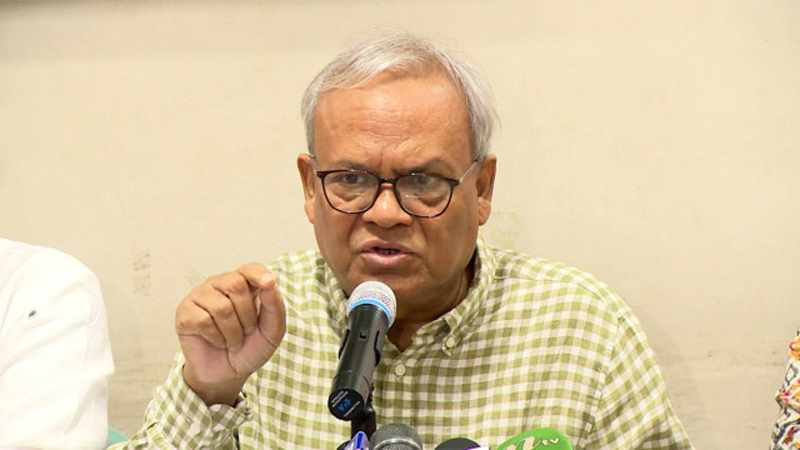
DHAKA, Sep 21: Bangladesh Nationalist Party (BNP) Senior Joint Secretary General Ruhul Kabir Rizvi has accused the Jamaat-e-Islami of trying to create a “state within the state” through its activities in the political landscape and universities.
Speaking at a discussion at the National Press Club, Rizvi warned that Bangladesh’s sovereignty could face a “major conspiracy” due to external threats and the rise of divisive forces, particularly at a time when the country is in dire straits on the socio-political and economic front, and is struggling to rise, reports Business Standard BD.
He cited recent actions by Jamaat’s student wing, Islami Chhatra Shibir, including Ducsu VP Md Abu Shadik Kayem, who allegedly fined a campus shop Tk 3,000 ($24) and depositing it into the party’s fund.
Questioning the move’s legality, the BNP member remarked “Has the Ducsu VP (Shibir’s Md Abu Shadik Kayem) been given magistracy power to decide which shop on the campus is legal or illegal ”
He also criticised Shibir for supplying iron beds to university halls, arguing that such provisions undermine state authority and the role of university administrations.
“Are you running an orphanage that you provide iron beds Will you also provide dining tables ” Rizvi asked, calling the practice a “very bad sign.”
The BNP leader accused Jamaat of exploiting the current political climate – following the 2024 crisis and the Awami League’s ban – to strengthen its influence, while attempts were underway to falsely implicate BNP members in extortion, sand lifting and stone theft.
Rizvi claimed media outlets downplay Jamaat’s alleged misdeeds, including harassment and abuse cases, while disproportionately highlighting allegations against the BNP.
He said his party disciplines errant members, but such actions are ignored in coverage, adding: “Every family may have a black sheep. But if the parents punish the black sheep, that is a responsible family. The same goes for political parties.”
The BNP – now the leading political party in the country following the ban of Awami League – has historically been opposed to the hardline Islamic party, concurring with their AL rivals regarding the Jamaat being supportive of the Razakars of the Pakistan Army during the 1970 Bengali massacre, and being opposed to the Liberation War and Bangladesh’s creation, and were thus opposed to the restoration of the Jamaat’s status as a political party.
(UNI )
 Follow our WhatsApp channel
