

Report lists 256 illegal occupants across just 2 Khasras
* Faecal coliform issue to be taken up on next date
Mohinder Verma
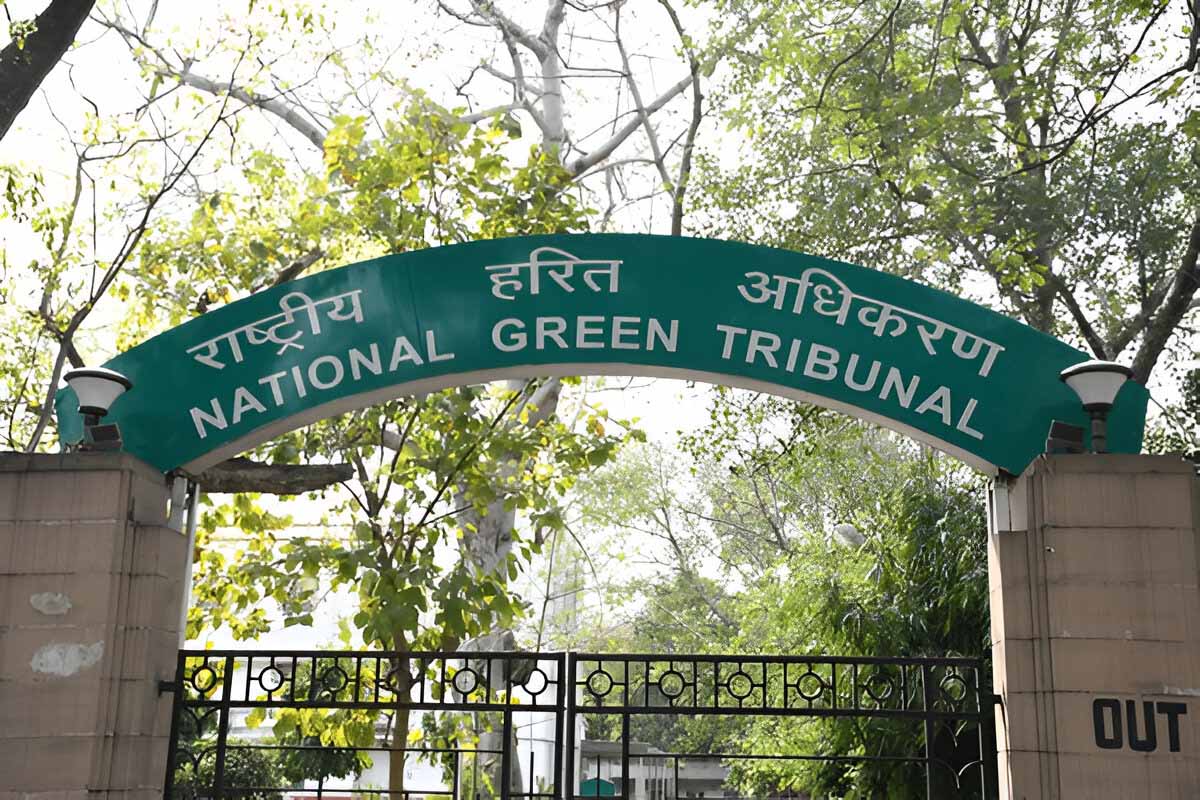
JAMMU, Sept 12: The National Green Tribunal (NGT) has directed the Jammu district administration and the Jammu Development Authority (JDA) to disclose the extent of encroachments on the floodplains of the River Tawi, after an official report revealed that 256 encroachers have been identified along the riverbanks in just two Khasras of Jammu Khas tehsil.
Follow the Daily Excelsior channel on WhatsApp
The directive came during a hearing on the ongoing case concerning the Tawi barrage and riverfront projects, which environmentalists have warned are destroying the river’s ecology through indiscriminate construction, pollution and land grabbing.
The Jammu district administration, in a report filed before the National Green Tribunal a few months ago, had mentioned the presence of 256 encroachers on the State land in Khasra Nos 302 and 303 of village Jammu Khas in Jammu tehsil. However, the report was completely silent on the action taken against the violators, even though their names were clearly listed.
When the National Green Tribunal pointed towards this aspect of the report of the Deputy Commissioner, Jammu, the counsel for J&K Union Territory sought time to obtain instructions and place on record the revenue record showing the status of Khasra Nos 302 and 303 of village Jammu Khas of Jammu tehsil.
While granting the time, the NGT Bench comprising Chairperson Prakash Shrivastava and Expert Members Dr A Senthil Vel, Sudhir Kumar Chaturvedi and Dr Sujit Kumar Bajpayee directed the Jammu district administration to disclose how many such encroachers are on the floodplains of River Tawi.
The Tribunal was informed that a portion of the encroached land has already been transferred to the Jammu Development Authority (JDA). However, despite being served notice, the JDA failed to appear before the NGT. Taking a serious view of the lapse, the Bench directed the JDA Vice Chairman, along with the Deputy Commissioner of Jammu, to file affidavits within six weeks, disclosing all requisite details as per the Tribunal’s observations.
The J&K Pollution Control Committee submitted that the J&K High Court may have already passed orders restricting constructions up to a certain distance from the Tawi River. Accordingly, the Tribunal asked the UT authorities to submit copies of such orders along with details of action taken for compliance.
The NGT has set a six-week deadline for the Deputy Commissioner, Jammu, the Vice Chairman, JDA, and the UT authorities to file their affidavits. The case will be heard again on November 4, 2025.
The Tribunal also analysed the report of J&K Pollution Control Committee disclosing that 30 MLD Sewage Treatment Plant at Bhagwati Nagar is meeting all the standards except for faecal coliform. This means that while the plant is able to remove other pollutants within permissible limits, it is failing to disinfect the treated water adequately, thereby allowing harmful bacteria from human waste to flow into the river and pose serious public health risks.
However, because of paucity of time, the NGT decided to take up this issue on the next date of hearing.
Known as Jammu’s lifeline, the Tawi River has been reeling under sewage inflows, faecal contamination and rampant illegal construction. Experts warn that unchecked encroachments and tampering with its floodplains could lead to irreversible ecological damage and heightened flood risks for the city, as witnessed recently.
It is pertinent to mention that the Deputy Commissioner, Jammu, had sent a communication dated January 7, 2025, to the Tribunal’s Consultant (Judicial), enclosing a list of encroachers in the concerned area. However, despite this submission, no formal affidavit has been filed before the NGT to disclose what action, if any, has been taken.
This delay in filing a proper response reflects a clear lapse in ensuring timely compliance with the Tribunal’s earlier order dated July 3, 2024.
 Follow our WhatsApp channel
