

KN Pandita
‘Three Evils’
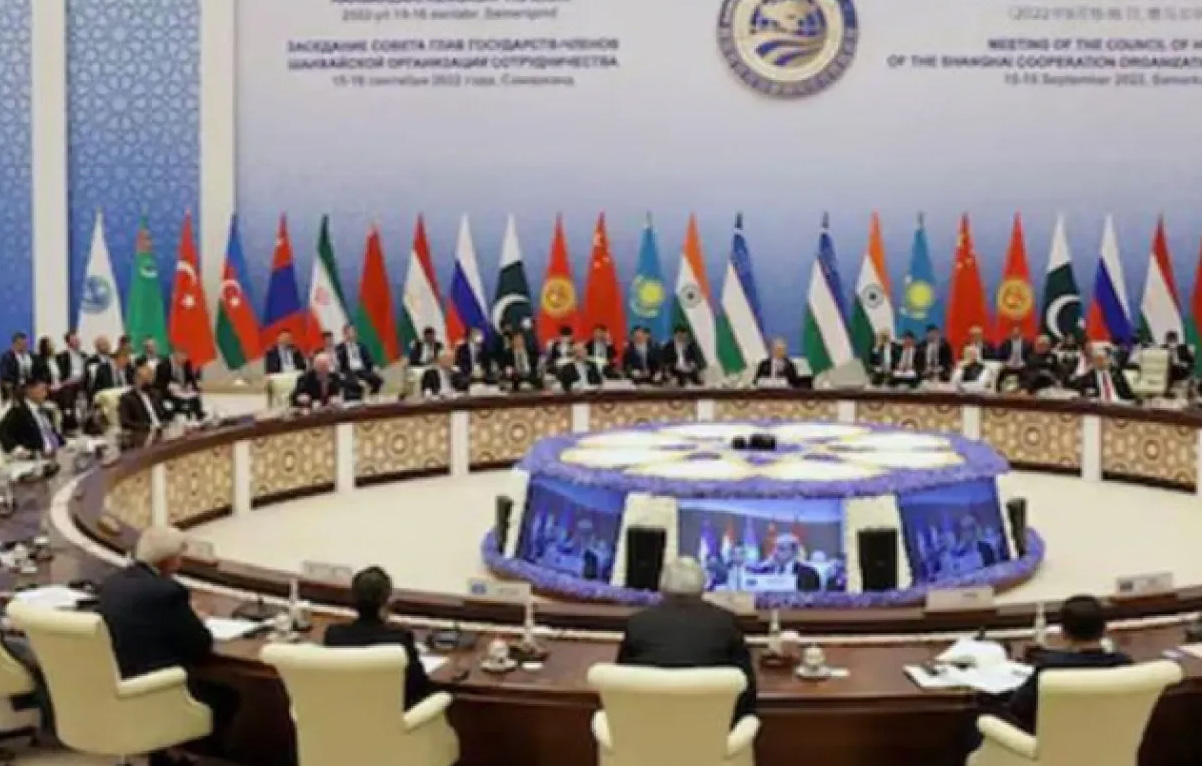
China and five Central Asian states jointly formed an organisation in 2001, which came to be called the Shanghai Cooperation Organisation (SCO).
After the dissolution of the Soviet Union in 1991, the erstwhile Central Asian Republics of the defunct Soviet Union were faced with a number of problems like inter-stateborder disputes,connectivity, trade and taxes related issues, judicious distribution of assets, etc.
But more threatening issues were related to what was nicknamed as “Three Evils”, meaning terrorism, separatism and religious extremism. Some observers are of the view that the forecasted “Three Evils” theory served as a catalyst for the emergence of SCO.The founding fathers had reasons to prioritise the three evils theory. Let us examine the how of it.
The Soviet invasion of Afghanistan had provoked the formation of the mujahideen, a coalition of guerrilla groups that opposed Soviet forces and the Afghan nationalist government headed by Dr Najibullah.
Foreign interference
The mujahideen received covert support from governments like the United States, Pakistan, China, and Saudi Arabia.But a significant source of funding and manpower was private donors and religious charities across the Muslim world.
Many Muslims from other countries travelled to Afghanistan to assist the mujahideen, becoming known as “Afghan Arabs”. A political issue was profiled as Islamic jihad in which Pakistan’s then President General Zia, with his super intelligence organisation ISI, in tandem with the CIA, took the leading role.America’s Secret War in Afghanistan, 1979-89 by Bruce Riedel, a former CIA officer, gives a graphic accountof the covert role of the US with frugal funding from Saudi Arabia.
The Taliban
The Taliban( a joint brainchild of ISI and CIA) emerged in 1994 from the ranks of the mujahideen and students (Taliban, in Pashto) who had been educated in Pakistani religious seminaries (madrasas) with a wide network in Punjab, Pakhtunkhwa and Sind provinces in Pakistan.
After the Soviet withdrawal from Afghanistan in 1989, a full decade after the Russian troops had first landed on Afghan soil, no single large terrorist or separatist movement emerged immediately in the Muslim world.
However, the experience of fighting the Soviets and the subsequent collapse of the Afghan government led to the rise of the Taliban in the early 1990s with two glaring consequences. The pushback of the Soviet troops at the hands of the Mujahideen intoxicated Islamists with the ambition of establishing the sway of the Islamic Caliphate over a vast swath of land from Asia Minor to the Far East. The second important consequence was the emergence of Osama bin Laden, the diehard militant Islamist who was rejected by his native regime, but found dedicated protectors in the rugged mountains of Afghanistan.
Targeting Central Asia
The first regime of the Taliban in Kabul became a source of serious threat to the neighbouring Central Asian State of Tajikistan. Tajiks were already engrossed in fighting the Islamists in the region of Garm. Now the dissident Tajiks joined hands with their co-ethnic Tajik groups in northern Afghanistan. The Panjshir buffer had collapsed after the murder of Ahmad Shah Masud, and the Afghan Taliban could at any time run over the southern tracts of Tajikistan.
The strategic state of Uzbekistan in Central Asia also came under the terrorist and separatist onslaught.Following the implosion of the Soviet Union, Islamism rose in Uzbekistan owing to an ideological vacuum left by communism, a history of Islamic identity, and external support from foreign religious groups. Key movements like the Islamic Movement of Uzbekistan (IMU) and Hizb-ut-Tahrir emerged, advocating for an Islamic state and challenging the secular government, leading to significant regional instability and violence.
Wealthy West Asian countries, along with Pakistan and Afghanistan, provided ideological and financial support to fundamentalist Islamist groups, fostering their growth.
Teachers and missionaries from countries like Saudi Arabia, Egypt, and Turkey promoted the idea of an Islamic state and supported militant Islamists in their opposition to the secular regime.
Pakistan activated
The activities of these groups, especially after the Taliban’s takeover of Afghanistan in 1996, further emphasised the threat of Islamic radicalism, contributing to regional instability.
Pakistan President Zia’s close contacts with prominent radicalised Islamic groups in the region and the covert support he received from the American deep stateresulted in the Pakistan army, under the guidance and tutelage of ISI, raising several jihadi groups on Pakistani soil itself with a clear agenda and roadmap for radicalising the faith. For example, LeTand JeM were asked to raise suicidebombers for operating in Kashmir, Lashkar-i-Jhangvi had the task of cleansingPakistan of the Shia and Hindu population, and Hizbul Mujahideen was tasked to clear the Kashmir valley of its Hindu population and its cultural symbles.
Even China was also targeted for separation, in which nearly 2.5 crore Sunni Uighurs of Eastern Turkestan were incited to separate from the mainland. But for Beijing’s decisive and heavy-handed action, the Uighur issue could have become another festering sore.
This was the broad scenario that had unfolded in Central Asia and which had the potential of engulfing theentire region into the cauldron of “Three Evils”.
It is for the first time that the issue of countering terrorism, separatism and radicalism has figured so prominently in the Tianjin Summit.Again, a notable thing is that it was PM Modi who devoted a good deal of the time allotted to him to urge the international community to initiate a united action for countering the growing, grave threat of the evil we are talking about.
Trump patronizes handlers
The sad and unfortunate development is that no less a person than the President of the US, a country that has suffered heavy losses as a result of 9/11, should invite the army commander of a country considered to be the den of the “Three Evils”. It remains to be seen how the SCO will respond to this diabolical step of the world’s strongest democracy. Will the US pocket the sobriquet of epicentre of world terrorism, or will it prove true to the hopes and promises of the great American thinkers and ideologues who fought the British colonialism so that democracy was strengthened and secured?
Unless the SCO brings all pressure on the US to cease extending patronage to terrorist elements and takes stringent action to curb the menace, it appears difficult to crush terrorism and terrorist movements in different parts of the world. Americans are fed up with both home-bred and externally sponsored terrorism. If the administration in Washington succumbs to the satanic triad, it will create tremendous difficulties for the people of America.
 Follow our WhatsApp channel
