

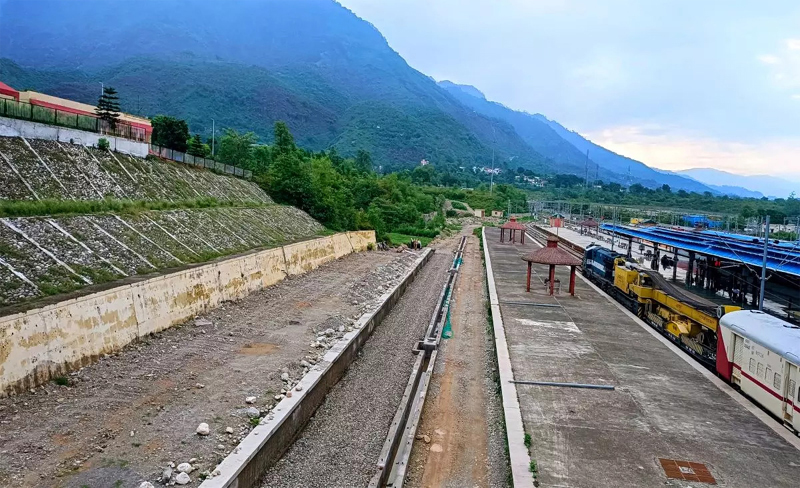
The announcement of new railway projects for Jammu and Kashmir, particularly the Baramulla-Uri line and the doubling of the Qazigund-Budgam stretch, reflects the growing emphasis on strengthening rail infrastructure in the Union Territory. With the commissioning of the Katra-Banihal section, J&K has already witnessed a historic milestone-its first seamless railway link with the rest of India after 77 long years since independence. This achievement has unlocked strategic and economic possibilities that were once considered distant dreams. The introduction of Vande Bharat between Katra and Srinagar and the overwhelming response to it underline the public appetite for reliable, fast, and modern train services. With passengers demanding an increase in frequency, the doubling of the Qazigund-Budgam line is not just desirable but necessary. A single-track system inevitably creates delays, while doubling ensures smoother and faster movement of both passenger and freight trains. More importantly, it allows for the unhindered operation of military special trains carrying troops and supplies-an indispensable need in a border-sensitive region.
Railway expansion is more than just infrastructure; it is a vehicle for integration, tourism, and economic growth. Uri, already emerging as a border tourism hub, will gain a substantial boost from the new Baramulla-Uri line. Reliable rail connectivity will reduce the region’s dependence on fragile mountain roads that remain vulnerable to landslides and harsh winters. For the Army, the project enhances logistics readiness, a factor that cannot be overlooked in the context of J&K’s security sensitivities.
Yet, the glaring omission of the Jammu-Rajouri-Poonch rail link is a disappointment. Rajouri and Poonch share the Line of Control and are strategically as significant as Baramulla and Uri. These districts hold immense tourism potential, besides being home to a large population that has long demanded rail connectivity. It is understood that railway projects demand enormous financial resources and are executed step by step. However, keeping in view their potential to transform economies, enhance national security, and integrate remote regions with mainstream development, such investments must be prioritised. The people of Rajouri and Poonch deserve equal attention, and one hopes the Government will soon recognise this imperative.
 Follow our WhatsApp channel
