

Prof Dr Shiv Sethi
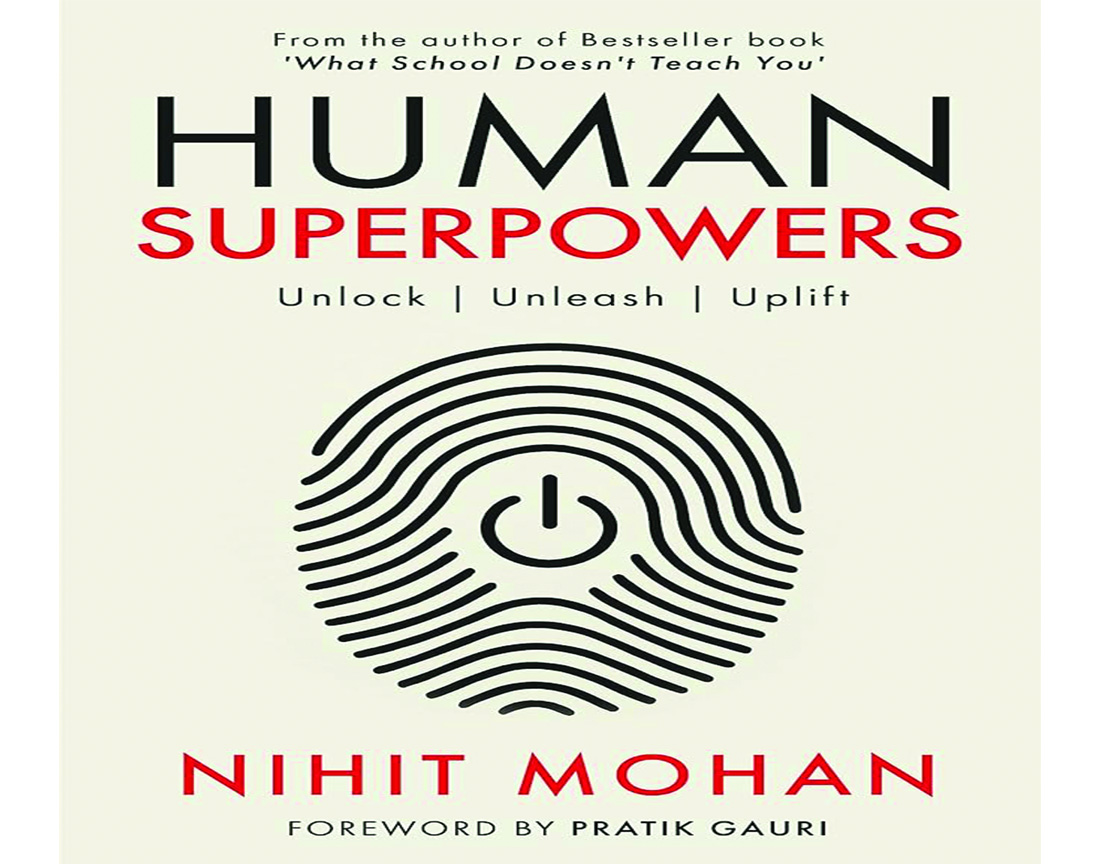
Author: Nihit Mohan
Publisher: Story Mirror
Year of publication: July 2025
Price: Rs 599/-
In an epoch besieged by frenetic acceleration, algorithmic intrusions, and an ever-morphing socio-economic topography, the imperative to recalibrate one’s internal compass and fortify the citadel of the self has never been more exigent. Enter Nihit Mohan’s Human Superpowers-a contemplative and evocative treatise that does not merely instruct, but rather illumines a pathway to inner renaissance. This is no banal compendium of motivational banalities; rather, it is a lyrical invocation to rediscover the intrinsic faculties that constitute the scaffolding of human flourishing.
Eschewing the caped clichés and radioactive tropes of fictional superheroes, Mohan turns his gaze inward-towards the oft-overlooked, yet eminently real, powers that dwell within each of us. These are not supernatural attributes, but sublimely natural ones: gratitude, imagination, resilience, faith, and the boundless profundity of the subconscious mind. Each chapter is an articulate exegesis, seamlessly interweaving the anecdotal with the philosophical, the empirical with the existential.
Most arresting is Mohan’s exposition on the Power of the Subconscious Mind-a domain where latent convictions, forged in the furnace of childhood or social conditioning, surreptitiously orchestrate our decisions, our relationships, and our destinies. Mohan’s prescription is both sagacious and actionable: to consciously re-script these subterranean narratives and thereby reclaim agency over one’s lived reality. In his able hands, neuroplasticity becomes not a neuroscientific abstraction, but a practical philosophy of transformation.
Equally noteworthy is his elucidation on the Power of Resilience. Far from offering platitudinous cheerleading, Mohan renders resilience as an alchemical process-where adversities are not ends, but crucibles; not impediments, but invitations to ascend. He portrays life’s inevitable setbacks not as existential aberrations, but as pedagogical necessities-springboards from which higher iterations of the self can be launched.
The prose, mercifully, is devoid of intellectual grandiloquence for its own sake. Mohan’s style is refreshingly lucid, democratic in tone, and imbued with a quiet moral earnestness. He draws from an eclectic reservoir of sources-boardroom dramas, parental dilemmas, sporting triumphs, and quotidian acts of courage-to render the text palpably human. This universality ensures that the book is equally relevant to a wide-eyed student teetering on the cusp of career choices, a beleaguered entrepreneur mid-pivot, or a parent attempting to nurture emotional intelligence in an AI-saturated world.
If one were to quibble, it would be that certain thematic corridors beckon further illumination. But perhaps this is by deliberate design. The text is not intended to be a doctrinaire manual, but rather a gateway-a literary nudge, urging the reader to commence their own odyssey of introspection and actualisation.
In summation, Human Superpowers is less a book and more a mirror-held aloft with compassion and clarity, encouraging each of us to recognise the incandescent reservoir of strength, grace, and purpose that lies dormant within. In an era enamoured with external validation and performative success, Mohan’s thesis is both radical and redemptive: that our most enduring superpowers were never out there-they were always, unfailingly, within.
(The author is an eminent columnist and book reviewer.)
 Follow our WhatsApp channel
