

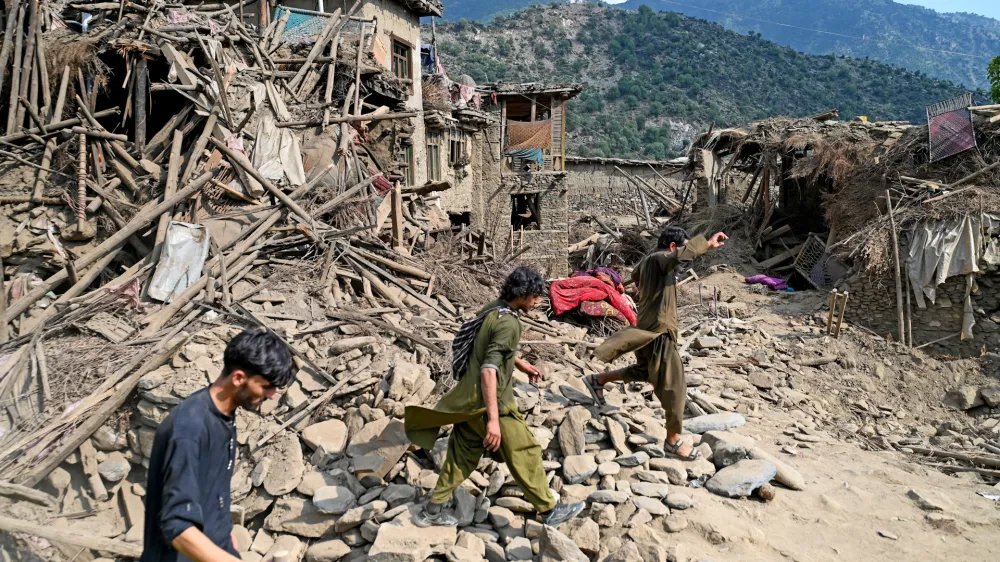
The devastating earthquake that struck eastern Afghanistan on Sunday night, killing around 800 people and injuring more than 2,500, is a grim reminder of the country’s vulnerability to natural disasters. Located in a seismically active region, Afghanistan has witnessed numerous catastrophic earthquakes in the past. Yet, despite this well-known reality, little progress has been made in building earthquake-resistant infrastructure. The result is predictable and tragic: entire villages wiped out, homes reduced to rubble, and countless families torn apart. While no nation can control earthquakes, their impact can be significantly minimised through preparedness and resilient construction. Despite frequent and intense seismic activity, countries like Japan and Chile have drastically reduced fatalities by enforcing strict building codes and using advanced engineering technologies. In contrast, Afghanistan’s houses-often built with mud bricks, timber, and poorly reinforced concrete-remain extremely vulnerable. Rural areas are particularly at risk, where poverty, lack of awareness, and absence of regulatory oversight lead to substandard construction.
The consequences of this neglect are clear. When an earthquake strikes, fragile homes collapse instantly, trapping families under debris and leaving rescuers helpless. With limited equipment and infrastructure, response efforts are slow and inadequate. This recent disaster is not an isolated incident but part of a recurring pattern that underscores the urgent need for change. Afghanistan’s current political and economic priorities have diverted attention from disaster preparedness. Decades of conflict and instability have eroded governance and institutional capacity, leaving no mechanism for implementing quake-resistant standards. However, continuing on this path is not an option. The country must embrace earthquake-resilient, eco-friendly construction technologies-such as reinforced concrete frames, bamboo reinforcement, and locally sourced sustainable materials-that are both affordable and effective.
The international community also has a moral responsibility. Afghanistan alone cannot rebuild its devastated regions or modernise its construction practices without global support. Humanitarian aid should go beyond immediate relief and focus on long-term solutions: training local builders, funding resilient housing projects, and introducing affordable seismic safety technologies. With science, planning, and collective will, the death toll can be dramatically reduced. Afghanistan’s latest calamity must serve as a wake-up call-for the Afghan authorities-to invest in safer infrastructure to secure innocent lives.
 Follow our WhatsApp channel
