

Rethinking Security
Brig Pankaj Chib (Retd)
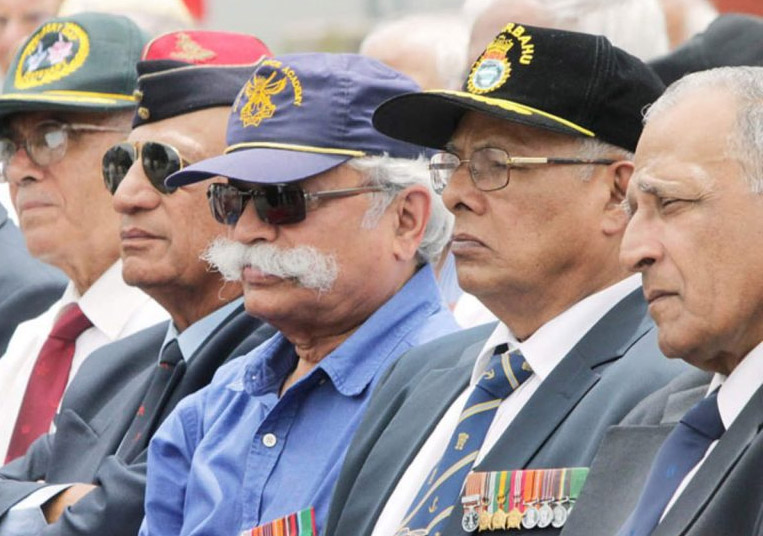
India is home to one of the largest communities of ex-servicemen (ESM) in the world – men and women who have served with distinction in the Army, Navy, and Air Force, and who retire with decades of experience in discipline, crisis management, intelligence, and technology. The government often speaks about their welfare, and indeed schemes exist for resettlement, rehabilitation and housing etc. But when it comes to employing them, the imagination seems stuck in the past.
For most, “rehabilitation” of ex-servicemen means one thing: guard duty. Physical security in banks, malls, offices, strategic installations and housing societies. But is that all our veterans are capable of?
In an age where wars are fought as much with information, perception, and cyber tools as with guns, restricting ex-servicemen to guarding gates is not only wasteful – it is a missed national opportunity.
Security Beyond the Physical
In the Indian context, security is still narrowly equated with boots on the ground and guns on the shoulder. But modern threats are no longer limited to physical attacks. Radicalisation happens on smartphones. Disinformation spreads faster than bullets. Cyberattacks can paralyse power grids and banks. And hostile narratives can erode public trust in the state without a shot being fired.
This is where the idea of non-contact security becomes critical – a blend of intelligence gathering, cyber defence, information warfare, and strategic communication. India has no shortage of manpower for physical security, especially in states like J&K where Army, CAPFs, and Police already maintain a heavy presence. What is lacking is a thought and investment in non-contact security measures, and this is precisely where ex-servicemen can step in.
The Untapped Potential of Veterans
Ex-servicemen are not an unskilled workforce. Many have backgrounds in Signals, Intelligence, EME, and technical arms. They have managed operations rooms, planned logistics for entire battalions, coordinated cross-border intelligence, and even run information campaigns in insurgency-hit areas.Yet, when they retire at 35 or 40, unfortunately their experience is funneled into being night guards and bouncers. The irony is hard to miss. At a time when India spends billions strengthening cyber capabilities and countering hybrid warfare, it ignores the very people who already understand discipline, secrecy, and operational security.
A J&K Perspective
Jammu & Kashmir presents a textbook case of this mismatch. There is already an abundance of physical security forces in the region – Army, CAPF (BSF, CRPF etc) paramilitary (Assam Rifles), and Police. More boots on the ground don’t automatically translate into more safety.What J&K really needs is:
(a) Community-based intelligence networks to spot early signs of radicalisation.
(b) Narrative warriors to counter extremist propaganda online.
(c) Cyber sentinels to detect attempts at hacking or spreading disinformation.
(d) Trusted liaisons between security forces and civilians to bridge mistrust.
Who better than ex-servicemen – many of whom are locals, know the terrain, the culture, and the threats first-hand – to fill this gap?
Where Ex-Servicemen Can Be Deployed
Intelligence and Surveillance. Ex-servicemen can strengthen HUMINT (human intelligence) networks, act as local spotters, and feed crucial information to security agencies. Their credibility within villages and towns makes them natural assets. Although it is being done at tactical level but there is no structured way to execute it as many of us donot have clear understanding of intelligence.
Counter-Radicalisation and Information Warfare. Radicalisation often spreads through WhatsApp groups, YouTube videos, and online forums. Veterans, trained and guided, could monitor, counter, and neutralise such propaganda. Their voices, carrying the weight of service, can also positively influence youth.
Cybersecurity Roles. With focused training, veterans from technical arms can staff state-level CERTs (Computer Emergency Response Teams), monitor cyber threats, and protect sensitive databases.
Strategic Research & Analysis. Retired officers can contribute to policy think-tanks at the district and state level, analysing security trends, local grievances, and insurgency patterns. This turns their lived experience into actionable insight.
Community Mediation and Trust Building. In sensitive areas, veterans can act as intermediaries between the forces and the population, helping resolve disputes, ease tensions, and build trust.
The Institutional Framework: How to Do It
India already has a framework that can be adapted for this purpose. Each state has a Sainik Welfare Department with ZilaSainik Welfare Offices (ZSWOs) at the district level, currently focused on welfare, pensions, and resettlement. With suitable re-organization, re-staffing, training, and resources, these offices could be transformed into hubs for employing ex-servicemen in non-contact security roles. In districts with a large ESM population, sub-district centres may also be created to extend reach into smaller towns and rural areas.
Alternatively, the state governmentscan establish a dedicated body tasked with selecting, training, and deploying veterans from the Armed Forces, CAPFs, and Police into these roles. To avoid public disclosure of its sensitive mandate, this organisation should carry a neutral name such as the State Ex-Servicemen Resource Authority (SESRA), Veterans Resource and Development Agency (VRDA), or StateCentre for Veteran Engagement (SCVE). Crucially, ex-servicemen data must be shared with this body to enable effective skill-mapping and deployment. This would ensure the initiative is not ad hoc or symbolic, but properly institutionalised.
Why This Matters Now
Hybrid warfare is not a theory of the future; it is the present reality. From cross-border propaganda to online radicalisation, India’s adversaries are actively working in the non-contact domain. Ignoring this while keeping thousands of trained veterans idle or under-utilised is strategic negligence.
Moreover, creating such opportunities isn’t charity. It is smart national security policy. Every ex-serviceman meaningfully employed in intelligence, cyber, or narrative-building is not just supporting his family – he is still serving the nation.
What Needs to be Done
Policy Shift. The Ministry of Defence and state governments must broaden their idea of “employment for ESM” beyond physical security.
Skill Mapping. Identify veterans with technical, intelligence, and communications backgrounds. Maintain a database of their specialisations.
Training & Certification. Partner with, CERT-In, DRDO labs, and private cyber firms to reskill veterans into roles in cyber defence, intelligence, and digital monitoring.
Pilot Projects. Start with J&K as a test case. If successful, replicate the model in other states facing security challenges, from the Northeast to Naxal-affected areas.
Conclusion: From Protectors of Perimeters to Guardians of the Future
India rightly honours its veterans on ceremonial days, celebrates their bravery, and acknowledges their sacrifices. But true honour lies not just in words – it lies in how the nation uses their potential after service.Today, the government has the chance to redefine what security means. Not just guards at gates, but guardians of data, narratives, and communities. Not just physical sentinels, but intellectual warriors.
In states like J&K, where physical security forces are already in plenty, the smarter move is to harness veterans in non-contact domains – intelligence, cyber, and information warfare. Because the battlefields of tomorrow will not only be on mountains and borders, but also on servers, screens, and in the minds of people. And India already has a silent army ready for it – its ex-servicemen.
(The ideas outlined are presented as a conceptual framework. They are not prescriptive in their current form but are intended to initiate discussion on how India and States like J&K can better utilise its ex-servicemen in non-contact security domains. With wider consultation among policymakers, defence institutions, and veteran bodies, this concept can be further refined, structured, and developed into an actionable programme that balances national security needs with the welfare and skills of our ex-servicemen).
 Follow our WhatsApp channel
