

Lay focus on climate-resilient infra, proper mitigation plans
Bivek Mathur
JAMMU, Aug 31: After unprecedented rainfall and landslides wreaked havoc across Jammu and Kashmir, particularly in Jammu region, where several people lost their lives and properties worth crores were damaged, experts have urged the Government to review its infrastructure projects and other constructions around rivers and vulnerable spots.
Several structures, including Government-owned projects, roads, and private houses close to the rivers and in seismic zones, have suffered extensive damage, especially in Jammu, Udhampur, Reasi, and Doda districts during the recent heavy rainfall and resulting landslides.
The environmental experts believe the losses occurred due to disregard to the environmental norms in the rush for development.
Follow the Daily Excelsior channel on WhatsApp
Prof Mohammad Sarfaraz Asgher, Head of the Department, Department of Geography, Jammu University, pointed to Jammu city as a stark example.
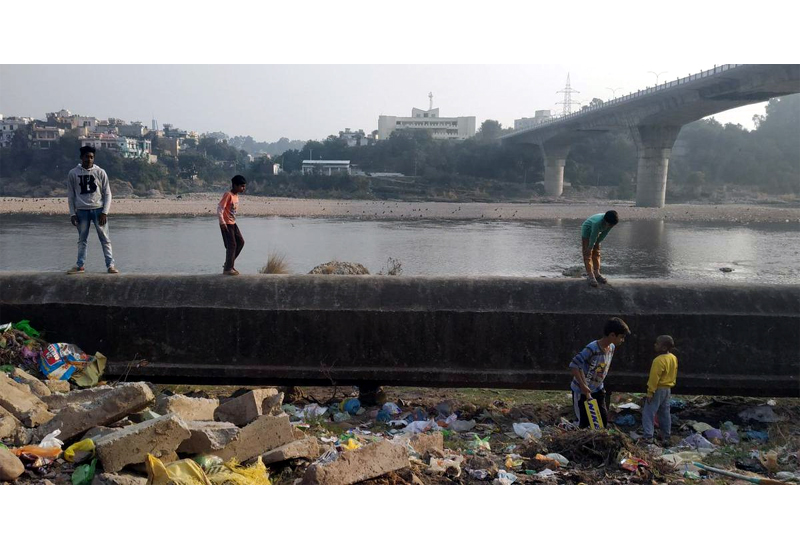
He said settlements beyond the fourth Tawi Bridge in Jammu district are being raised on flood plains.
“The river bed and flood plain beyond fourth Tawi Bridge have been encroached, and every time a catastrophic flood hits, residents of the area have to brace up for large-scale destruction,” he warned.
However, he appreciated the ongoing efforts of the Government to dismantle these settlements, but claimed that more pace is required to achieve the desired goals.
Prof Sarfaraz noted that the Tawi River Front Project, which is being developed on the pattern of Sabarmati River Front project, has already consumed 200 feet of land on either side of the river to raise concrete structures, choking the waterway and making the right bank more prone to erosion due to river meandering.
He also questioned the location of the Artificial Lake Project, which, he said, should have been built away from the city but was instead constructed close to flood-prone areas.
He further raised concerns about housing safety in the region, pointing out that J&K lies in high-risk seismic zones IV and V, yet only around 5% of the houses in Jammu plains and hills are earthquake-resistant.
He added that infrastructure projects need thorough assessments before construction, highlighting how the Jammu-Udhampur road has become prone to landslides after natural vegetation was stripped away over the years in the name of development.
Another climate expert, who wished to remain unnamed, said reckless construction is visible across the Union Territory, particularly in the widening of the Jammu-Srinagar National Highway.
“Constructions are being carried out close to water bodies in Jammu, Udhampur and Ramban districts, causing massive environmental damage. Similar mistakes are being repeated in other landslide-prone districts, where tunnels and roads are being built without proper feasibility studies,” he said.
The expert warned that nature will strike back harder in the future if such projects continue unchecked.
He also said there are hardly any mitigation plans in place.
Citing example of Chief Minister Omar Abdullah’s recent visit to Jammu after the heavy rainfall and directives for immediate relief in the flood-hit areas of Jammu district, he said the concerned agencies paid no heed to his mitigation and relief measures.
The experts also expressed concern about health risks following the floods, citing waterlogging, accumulation of silt and mud, and failure of the Jammu Municipal Corporation to clear waste or conduct fogging.
They also claimed that the absence of disaster management plans and climate-resilient infrastructure was a major factor behind the casualties in the Vaishno Devi landslide.
“If there were any pre or post-disaster mitigation plans in place, the Vaishno Devi tragedy could have been prevented,” they said.
Prof Sarfaraz, the HoD, Department of Geography, Jammu University, further criticized the local enforcement agencies such as the Municipality and JDA for failing to implement the city’s Master Plan.
“For the first time since independence, a nallah is being constructed outside Jammu University, and yet people talk of climate-resilient infrastructure. Such things exist only on paper,” he remarked.
Both the experts appealed the Government to take meaningful steps well in time to ensure that further environment-related damages are prevented in the region.
 Follow our WhatsApp channel
