

Isha Raina
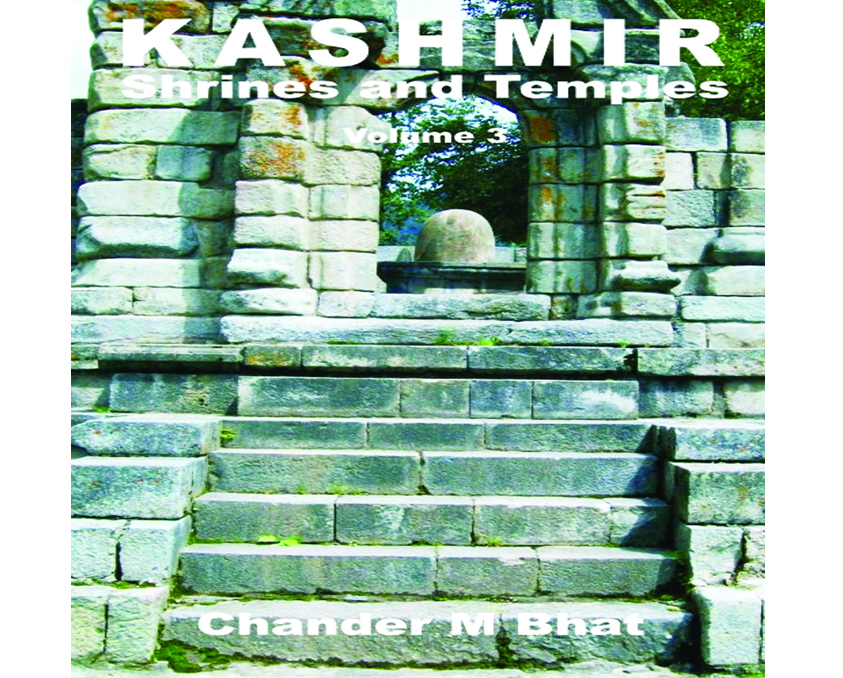
Name of the Book: Kashmir…Shrines and Temples, Volume: 3
Paperback
Pages: 432+viii
Price: Rs. 995-
ISBN: 978-93-341-5130-5
Foreword: Prof. Tej N. Dhar
Publishers: Shivas Publications
“KASHMIR… Shrines and Temples”, Volume 3, authored by Chander M. Bhat, stands as a monumental testament to the timeless spiritual and cultural soul of Kashmir. This third installment in the author’s magnum opus, a six-volume series meticulously chronicling over 531 sacred sites, transcends the role of a mere catalogue. Instead, it emerges as a deeply personal homage to a land where every stone, stream, and shrine tells stories of faith, resilience, and devotion passed down through generations.
The journey of this extraordinary work commenced in 1990, a period marked by political turbulence and communal unrest that shook the very foundations of the Kashmir Valley. Against this harrowing backdrop, Bhat, with steadfast resolve and a heart steeped in devotion, embarked on an odyssey to document and preserve the sacred geography of his homeland. Over three decades of tireless exploration, research, and documentation have culminated in a series that captures the spirit of Kashmir in all its spiritual splendor.
What elevates this volume beyond scholarly documentation is its ability to weave together the threads of history, mythology, architecture, and the intangible spiritual ethos of the Kashmiri Pandit community. Each shrine, temple, sacred spring, and hallowed grove comes alive under Bhat’s discerning gaze, presented not merely as physical structures but as living embodiments of the region’s ancient traditions and the undying faith of its people.
Volume Three offers readers an immersive window into the sacred geography of Kashmir, illuminating the profound interconnectedness between nature, faith, and culture that defines this mystical land. Through vivid narrative and meticulous research, Bhat captures the essence of these sites, ensuring that they resonate with contemporary seekers and serve as a lasting cornerstone for future generations.
Structured thoughtfully into five thematic sections, the book invites readers on a journey through the diverse dimensions of Kashmir’s sacred landscape. The first section delves into ancient temples that have withstood the ravages of time and conflict. These architectural marvels stand as silent sentinels of history, bearing witness to the spiritual fervor and artistic genius of bygone eras. The reader is guided through their legends, architectural features, and current state, with each description imbued with reverence and scholarly precision.
The second section is devoted to Devi shrines…abodes of the Divine Feminine, whose presence permeates the valley with maternal grace and fierce protection. Here, the spiritual philosophy of Shakti finds its most profound expression, as Bhat explores not only the physical shrines but also the living traditions, festivals, and rituals that continue to honor the Mother Goddess in her myriad forms.
The third section brings forth the valley’s deep rooted connection to Shaivism through an exploration of Shiva shrines. Kashmir, often referred to as the cradle of Kashmiri Shaivism, is home to countless temples dedicated to Lord Shiva, the cosmic dancer and ascetic yogi. Bhat masterfully presents these sacred sites, interweaving their historical narratives with philosophical reflections on the valley’s enduring spiritual heritage.
In the fourth section, the narrative shifts to the sanctity of natural springs, many of which are venerated as sacred pilgrimage centres. These life giving waters, flowing from the heart of the Himalayas, have for centuries been revered not only for their physical sustenance but also for their spiritual potency. Through poetic prose and careful documentation, Bhat brings alive the legends, rituals, and healing traditions associated with these sacred springs.
The fifth and final section broadens the horizon, inviting readers to lesser explored yet equally significant sacred elements…ancient trees, mystical caves, and serene mountain lakes. Each of these natural sites holds a sacred resonance, often rooted in folklore and oral traditions that speak of sages, saints, and divine manifestations. Bhat’s holistic approach underscores the intrinsic harmony between Kashmir’s natural beauty and its spiritual heritage, reminding readers of the region’s unique identity where divinity and nature are one.
In addition to the main chapters, two thoughtfully curated sections enrich the volume before the Bibliography. The first, titled “What They Said,” offers readers a glimpse into the heartfelt responses, reflections, and commendations received for Volumes 1 and 2 from scholars, spiritual seekers, and members of the Kashmiri community worldwide. These testimonials not only underscore the impact of the earlier works but also highlight the emotional and cultural resonance they have evoked. The second section provides a comprehensive list of the shrines, temples, and sacred sites meticulously documented in the previous two volumes, serving both as a useful reference and as a testament to the vastness of Kashmir’s spiritual heritage already preserved through this ongoing series. Together, these sections enhance the reader’s journey by honoring the voices of the community and by offering continuity to this monumental documentation of faith, history, and devotion.
What sets this work apart is not only the depth of research but also the remarkable personal sacrifices behind its creation. Bhat’s fieldwork, conducted often in volatile and hostile environments, reveals a narrative of quiet courage and unwavering determination. In many instances, he faced suspicion, hostility, and even threats to his safety as he traveled through remote villages to photograph and document neglected or forgotten shrines. Yet, propelled by an unshakable sense of duty and a profound spiritual calling, he persevered, ensuring that these treasures would not be lost to time and oblivion.
The author’s attention to detail is impeccable. Each entry in the book is meticulously annotated with geographical coordinates, historical context, architectural features, and the current state of preservation. Equally captivating are the mythological and cultural anecdotes that accompany these descriptions, tales that breathe life into stone and water, transforming the sites from static relics into vibrant testimonies of living faith.
Bhat’s literary style is both scholarly and poetic, striking a delicate balance between academic rigor and heartfelt storytelling. His prose flows with elegance, capturing not only the physical beauty of these sites but also their spiritual resonance. Readers are not mere observers; they become fellow pilgrims journeying through the sacred landscapes of the valley.
The importance of this volume, however, extends beyond mere documentation. In a time when Kashmir’s cultural and religious heritage faces unprecedented threats, from neglect, encroachment, and the erosion of collective memory, this work emerges as a clarion call for preservation. Bhat reminds us that these shrines are not just architectural marvels or historical artifacts; they are living embodiments of identity, continuity, and spiritual belonging. To lose them is to sever the threads that connect the present to the ancestral past.
The anticipation surrounding Volume Three reflects the profound impact that Bhat’s earlier volumes have had on readers across the globe. Scholars, historians, spiritual seekers, and members of the Kashmiri diaspora eagerly await each new installment, recognizing in these pages a rare and invaluable preservation of a culture on the brink of vanishing.
The book is further enriched by a foreword penned by the distinguished professor Tej N. Dhar, whose insights into Kashmir’s religious history lend gravitas to the narrative. Prof. Dhar’s words serve as both an endorsement and an affirmation of the significance of Bhat’s endeavor, situating it within the broader context of cultural conservation and scholarly discourse.
Ultimately, ‘KASHMIR… Shrines and Temples, Volume 3’ is more than a book; it is a labor of love, a spiritual pilgrimage in prose, and a monumental contribution to the preservation of one of the world’s most endangered cultural heritages. It is a call to remember, to honor, and to protect the sacred legacies that define us.
 Follow our WhatsApp channel
