

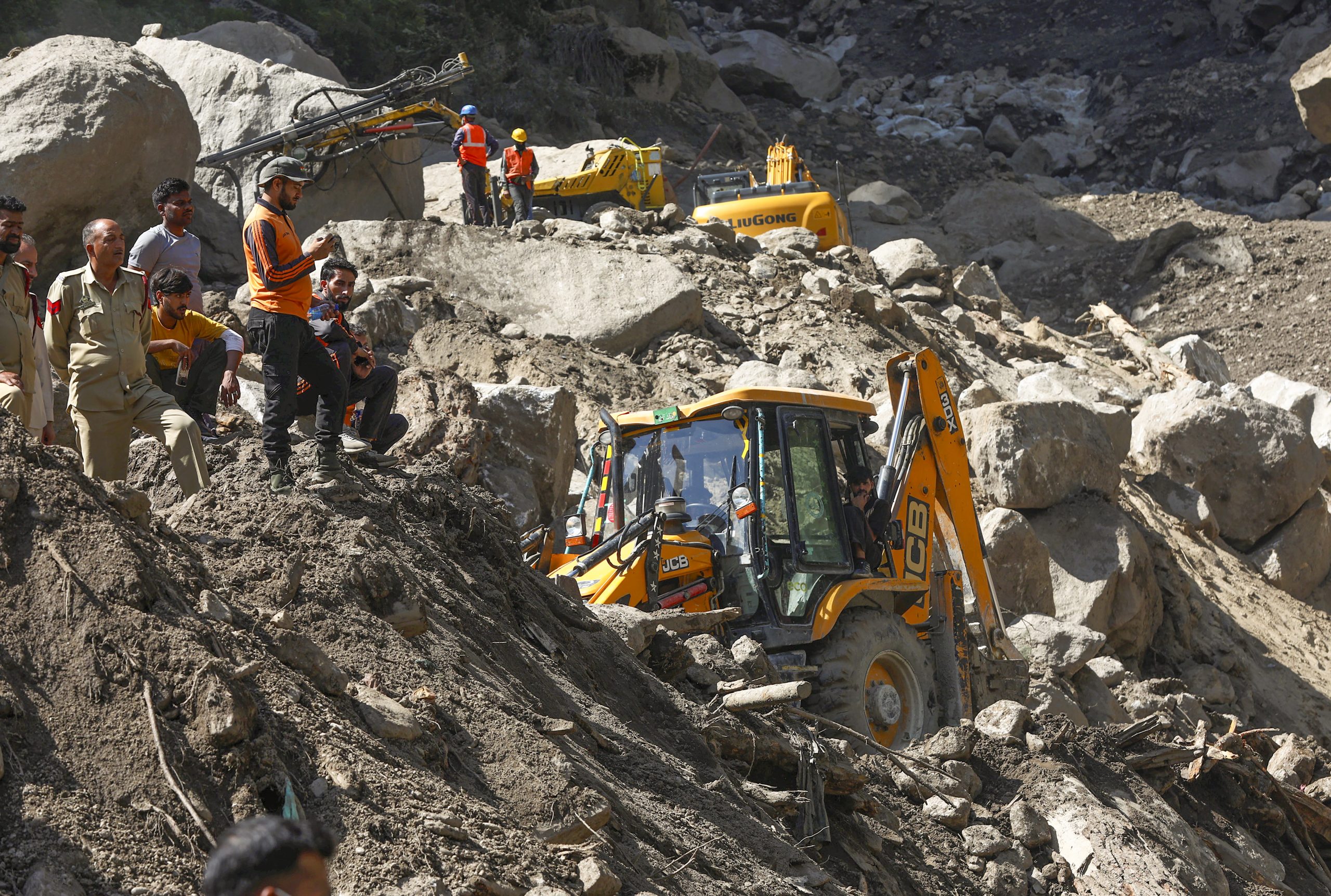
DDMP had flagged area as highly vulnerable to disasters
Mohinder Verma
KISHTWAR, Aug 29: Even as the District Disaster Management Plan (DDMP) and the Glacial Lake Outburst Floods (GLOFs) Risk Mitigation Plan of Kishtwar had categorically identified Chashoti and Paddar as highly vulnerable to flash floods and landslides, no preventive or mitigation measures were ever implemented on the ground. Had the blueprints been taken seriously, the recent fury of nature would not have caused much devastation.
Follow the Daily Excelsior channel on WhatsApp
In the District Disaster Management Plan (DDMP) 2024-25 prepared under the Disaster Management Act, 2005, it has been mentioned that Kishtwar district, marked by its rugged terrain and high-altitude glaciers, is vulnerable to natural hazards including Glacial Lake Outburst Floods (GLOFs).
Further, it has been pointed out that the impacts of climate change, especially the accelerated melting of glaciers, have intensified the risk of such catastrophic events, posing significant threats to human life and critical infrastructure. The DDMP was prepared to highlight the vulnerability of different areas of the district to disasters and suggest hazard-specific preparedness, response and mitigation measures.
In the DDMP, Chashoti and Paddar are among the villages identified as highly vulnerable to flash floods either due to cloudbursts or Glacial Lake Outburst. Accordingly, thrust has been laid on risk assessment and planning to ensure that no structure comes up in the vicinity of the nullahs flowing in these areas and all the structures are elevated to minimize water exposure.
Moreover, the DDMP suggests integration of disaster-resilient features into infrastructure projects such as roads, buildings and public spaces to minimize the impact of disasters. Enough stress has also been laid on deploying early warning systems to provide timely alerts about imminent disasters, enabling preventive measures and evacuation, and integrating smart technology such as sensors, monitoring systems and data analytics to detect vulnerabilities.
Likewise, the Glacial Lake Risk Management Plan states that GLOF is a significant hazard to Kishtwar district, particularly impacting the tehsils of Padder, Machail, Dachhan, Marwah and Warwan along with areas near the Kishtwar High Altitude National Park.
These regions are especially vulnerable due to their proximity to glacial lakes, making them prone to sudden flooding events that can have devastating impacts on local communities, infrastructure and the environment. Human lives and infrastructure like roads, Government buildings, schools, hospitals, etc. are highly vulnerable.
Accordingly, in the plan, thrust has been laid on initiating disaster preparedness measures including creation of buffer zones and evacuation routes. Moreover, it has been mentioned that an Early Warning System should be immediately established to predict weather conditions that could trigger GLOFs. These systems will enable authorities to issue timely alerts to vulnerable communities and ensure evacuation measures are in place.
In both the plans, suggestions have been made for controlled development along vulnerable slopes and community-based disaster preparedness training.
“Both the plans were not only comprehensive but also implementable at the district level with proper coordination between all the concerned departments. However, not even the basic recommendations were acted upon,” official sources told EXCELSIOR, adding, “had the suggested mitigation measures been enforced, the damage caused by the recent flash floods and landslides in Chashoti could have been minimized to a large extent.”
“The concerned agencies are ignoring the early warning signs and the price is being paid by the vulnerable communities living in fragile mountains,” said geologists, adding that the glacial melt in the Himalayas is intensifying due to climate change, making regions like Paddar more disaster-prone.
“What adds to the irony is that the Disaster Management Act, 2005 mandates periodic review and implementation of district-level plans and holds the administration accountable for preparedness. Yet, the approach continues to be reactive rather than preventive,” they said, adding, “if the authorities continue to sit on such crucial blueprints, we will keep facing disasters of increasing magnitude. The administration must wake up before more lives and property are lost.”
The recent tragedy in Chashoti, they said, should serve as a wake-up call for the authorities to move beyond paperwork and put mitigation strategies into action on the ground, especially in a district that has been categorized among the most vulnerable in Jammu and Kashmir due to its topography and fragile ecology.
 Follow our WhatsApp channel
