

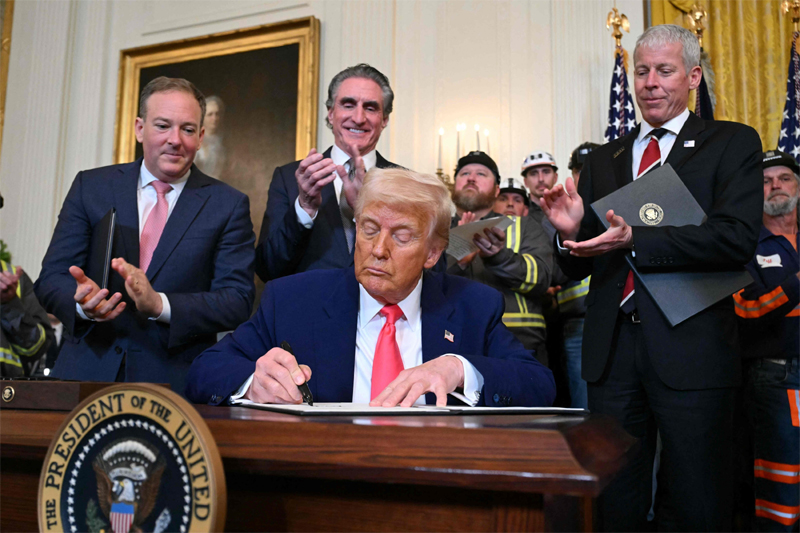
WASHINGTON, Aug 24: As American states prepare for President Donald Trump s highly controversial economic package, known as the One Big Beautiful Bill to kick in, states are already facing a financial fallout amid cuts in federal funding.
The legislation, which combines large federal tax cuts with sweeping reductions in government spending, is already rippling through state budgets, creating uncertainties regarding the maintenance of essential services.
Unlike the federal government, states are legally required to balance their budgets. For much of the past decade, buoyant tax revenues and sizeable federal transfers particularly through Biden-era pandemic relief and infrastructure measures allowed state governments to post surpluses and build up reserves.
However, with the Trump administration rolling back on federal funding for healthcare, education and climate programmes, several states have been left facing economic shortfalls, according to Axios.
The underlying macro drivers are expected to slow revenue growth for states, and to continue to put pressure on the cost side of the income statement, making it harder and more challenging for states to keep up, said Jennifer Johnston, senior vice president at Franklin Templeton. And we’re seeing that across the country.
The legislation compounds those pressures in two main ways. First, the tax cuts, as many states align their income tax codes with federal rules, reductions in taxable income at the national level automatically diminish state revenue. Colorado, for example, is projecting a $1.2 billion shortfall, while New York forecasts a $3 billion reduction in federal funds over the next fiscal year.
Second, the bill shifts costs to the states. Programmes such as SNAP, or food stamps, previously funded entirely by Washington, will now require state contributions a burden expected to run into hundreds of millions of dollars annually.
Medicaid coverage, housing support and public health initiatives also face reductions. States must now choose whether to plug the gaps with their own funds, raise taxes, or accept service cuts.
You’re potentially going to see really broad-based cuts to healthcare, food assistance, housing, education, warned Wesley Tharpe, senior advisor at the Center for Budget and Policy Priorities.
The political response is divided. Some Democratic-led states are exploring tax rises on wealthier residents to offset federal retrenchment. Others are preparing to dip into rainy-day funds built up during years of strong growth.
Republicans, meanwhile, argue that the bill s tax cuts will stimulate private-sector investment and economic activity, ultimately boosting state revenues in the longer term.
Despite those reassurances, the near-term picture remains fraught. A slowing job market, rising tariffs and inflationary pressures are already squeezing state tax receipts.
Trump officials insist the new framework will deliver growth dividends, but for state treasurers, the choices are immediate: raise taxes, reduce services, or burn through reserves.
States have tough decisions to make, Johnston noted. The reserves are there for a rainy day and this is likely to be the rainy day.
(UNI)
 Follow our WhatsApp channel
