

Zabeer Ahmed
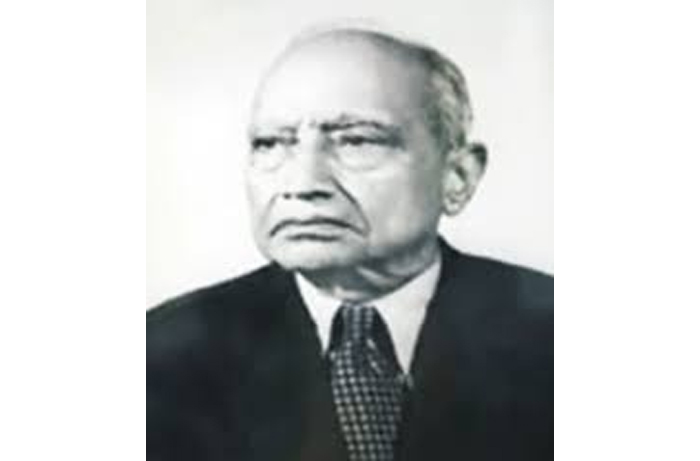
The Jammu and Kashmir through ages has been a birthplace of many notable personalities who excelled in diverse fields like Politics, Art & Culture, Music, Sports and Education. Col. Ram Nath Chopra a distinguished Scientist was one among them, born, brought up and breathed his last in Jammu and Kashmir State. Col Sir R. N. Chopra, born on August 17, 1882, in Gujranwala, Punjab, stood as a towering figure whose contributions to Indian medicine and pharmacology have earned him immortal recognition as the “Father of Indian Pharmacology.” Today, on his 143rd Birth Anniversary, our rich tribute to this great Scientist whose research work provided a global relevance to Indian Traditional System of medicine. Much before Indian Independence, in 1941, he founded the first Drug Research Laboratory (DRL) at Jammu for exploring the vast untapped medicinal plant wealth of Jammu and Kashmir as also across the country. The DRL, Jammu was later expanded and named as Regional Research Laboratory (RRL) which was taken over by Council of Scientific and Industrial Research (CSIR) in 1957. Broadening the horizon of research and development domains, the Regional Research Laboratory was, in 2007, named as the Indian Institute of Integrative Medicine (IIIM) under the overall supervision of Indian Council of Scientific and Industrial Research (CSIR) under the Union Ministry of Science & Technology, playing a pivotal role in the discovery of new drugs and therapeutic approaches from Natural Products, both of plant and microbial origin, enabled by biotechnology, to develop technologies, drugs and products of high value for the national and international markets.
A Journey of Excellence and Service
Sir Ram Nath Chopra’s journey embodied the finest traditions of academic excellence and selfless service. Educated at Government College Lahore, Downing College Cambridge, and St. Bartholomew’s Hospital London, he represented the best synthesis of Eastern wisdom and Western scientific methodology. His educational foundation at these prestigious institutions equipped him with the knowledge and vision that would later transform India’s pharmaceutical landscape.
Col R.N. Chopra has made notable contribution in the field of medical education as he served in the Indian Military Medical Service for quite some years during the First World War. He served with distinction in various military operations, experiences that instilled in him the discipline and resilience that would define his later scientific endeavors.
Architect of Indian Pharmacological Independence
The true measure of Sir Ram Nath Chopra’s greatness lies in his visionary pursuit of India’s pharmaceutical self-sufficiency. At a time when the nation was heavily dependent on foreign medicines, he embarked on a revolutionary mission to evaluate and validate indigenous and traditional drugs through rigorous scientific methods. His establishment of a research laboratory marked the beginning of a new era in Indian medical science.
In 1921, when Chopra joined the Calcutta School of Tropical Medicine as Professor of Pharmacology, he transformed it into a beacon of indigenous pharmaceutical research. His tenure as director from 1935 until his retirement in 1941 witnessed unprecedented advances in the scientific validation of traditional Indian medicines. Through meticulous experimental evaluation, he bridged the gap between ancient Ayurvedic wisdom and modern scientific methodology, creating a unique Indian approach to pharmacology.
Champion of Indigenous Knowledge
What set Sir Ram Nath Chopra apart was his deep respect for India’s traditional medical heritage combined with rigorous scientific inquiry. He understood that true pharmaceutical independence could only be achieved by unlocking the therapeutic potential of indigenous plants and traditional formulations. Beyond Sarpagandha, his research teams worked extensively on plants like Ephedra, various Rauwolfia species, and numerous Ayurvedic formulations, developing standardized extraction methods and establishing pharmacological profiles that met international standards.
His work on Rauwolfia serpentina (Sarpagandha) stands as a testament to his vision. This indigenous plant, traditionally used in Ayurvedic medicine, was scientifically validated under his guidance and later became globally recognized for its cardiovascular benefits. His research methodology involved the systematic screening of thousands of indigenous plants, leading to the discovery of numerous compounds with significant therapeutic value. Under his leadership, the Drug Research Laboratory (DRL) developed rigorous protocols for evaluating traditional medicines, establishing India as a pioneer in evidence-based validation of indigenous therapeutic systems. His pioneer work for the modernization of Indian traditional knowledge particularly the Ayurveda has guided our country to establish guidelines for phytopharmaceuticals, a category of plant-based drugs, to ensure quality, safety, and efficacy while also working to protect traditional knowledge through various initiatives.
Legacy of Leadership and Recognition
Sir Ram Nath Chopra’s contributions extended beyond laboratory research. His election as President of the Indian Science Congress in 1947 coincided with India’s independence, symbolically representing the nation’s scientific awakening. His leadership inspired a generation of Indian scientists to pursue excellence while remaining rooted in indigenous knowledge systems.
The British government’s recognition of his services through the Companion of the Order of the Indian Empire (CIE) and his knighthood reflected international acknowledgment of his contributions. However, perhaps more significant was India’s posthumous recognition when postal stamps were issued in his honor in 1997, alongside stamps featuring Sarpagandha, the plant he helped bring to global prominence.
Enduring Impact and Inspiration
Today, as India emerges as a global pharmaceutical powerhouse, the foundations laid by Sir Ram Nath Chopra remain more relevant than ever. His vision of combining traditional wisdom with modern scientific methods has become the blueprint for contemporary pharmaceutical research in India. The current emphasis on evidence-based validation of traditional medicines directly traces its lineage to the pioneering work he initiated over a century ago.
His life teaches us that true patriotism lies not in mere rhetoric but in dedicated service to humanity and nation-building through knowledge and innovation. At a time when colonial mindset often dismissed indigenous knowledge, Chopra stood as a beacon of intellectual independence, proving that Indian minds could excel in any field given the right opportunities and dedication.
As we commemorate his birth anniversary, we remember Sir Ram Nath Chopra not merely as a distinguished scientist but as a true son of soil who demonstrated that the highest forms of service combine deep respect for one’s heritage with relentless pursuit of excellence. His legacy continues to inspire researchers, medical professionals, and patriots who believe in India’s potential to lead the world through knowledge, innovation, and service to humanity.
CSIR-IIIM Jammu, continuing the research legacy of Col. R.N.Chopra, to humbly remember his contributions in the building of the institute, has installed a statue of Col. R.N.Chopra in the campus and various institutional facilities like Natural Products Repository, Sports Complex, RRL High School and Institute Museum have been named after him. Another outstanding landmark is the existence of Col. Sir R.N. Chopra Nursing Home in the campus of the Government Medical College, Jammu. Otherwise also Col. Chopra’s name is well etched in the minds of the people in Jammu and Kashmir.
In honouring his memory, the Team CSIR-IIIM commits to carrying forward his vision of a self-reliant India that draws strength from its roots while embracing the best of modern science and technology.
(The author is a renowned Scientist and presently serves as Director, CSIR-IIIM, Jammu)
 Follow our WhatsApp channel
