

Maj Gen Ranjan Mahajan (Retd)
My memories go back to 1989, when my unit was tasked with a mission of great cultural and spiritual significance: establishing a camp at Baltal and facilitating the reopening of the Holy Cave of Shri Amarnath Ji Shrine. Nestled in the Kashmir Valley, this revered shrine dedicated to Lord Shiva holds profound meaning in Hinduism.
The Amarnath Yatra offers two routes to reach the shrine. The traditional path from Pahalgam spans approximately 45 km, while the shorter yet more arduous trek from Baltal covers about 15 km through challenging mountainous terrain. Setting up the camp at Baltal in June 1989, we began the formidable task of opening the route. The pilgrimage demands physical resilience, as the trek through Baltal presents rugged paths and unpredictable weather.
It was July 1989 when I first made the trek to the shrine. I vividly recall that initial climb, undertaken with my own team, reaching the shrine in record time. Following the darshan, we returned to camp, only for me to be called to accompany a senior officer back to the shrine. The second ascent, immediately after the first, was arduous, but the chance to pay homage twice in one day brought a rare and deeply personal sense of fulfillment. The experience was nothing short of divine – a moment of serenity and spiritual clarity that remains with me.
But as the 1990s dawned, Kashmir transformed into a land shadowed by fear. Militants became woven into the fabric of daily life, turning the Valley into a stronghold of conflict. The Amarnath Yatra was suspended for several years, and the idea of pilgrims navigating the treacherous mountain paths once again seemed nearly impossible.
In 1995, however, a decision was made to reopen the Yatra, a step both bold and fraught with risk. Under immense pressure from religious leaders and the public, the Government resolved to restore the pilgrimage despite the heightened security threats. This was no ordinary journey; the logistical challenges alone were staggering, as securing a route through some of Kashmir’s most volatile areas required unprecedented coordination among the Army, Police, and Intelligence agencies. And it recommenced.
Every summer, the serene heights of Jammu & Kashmir come alive with the devotion of lakhs of pilgrims undertaking the arduous journey to the Holy Amarnath Cave. For centuries, this Yatra has been more than just a pilgrimage – it has been a testament to faith, resilience, and the deep spiritual fabric of India. An analysis of pilgrimage statistics over the past 25 years shows an annual average of around 3.6 lakh devotees. In 2025, however, the number surged to over 4.5 lakh pilgrims visiting the sacred Amarnath Cave.
But this year, the sacred path to Baba Barfani’s abode was clouded by tragedy. A brutal terrorist attack in Pahalgam, just days before the Yatra, claimed precious lives and sent shockwaves across the nation. The cowardly assault aimed to spread fear, disrupt the tourism, pilgrimage and undermine peace in the region. The challenge before the Security Forces was monumental – restore confidence, neutralise the threat, and ensure the safe culmination of the Yatra. The Central Government’s clear directives, coupled with the active involvement of the Lt Governor, ensured meticulous preparation and seamless coordination among all stakeholders.
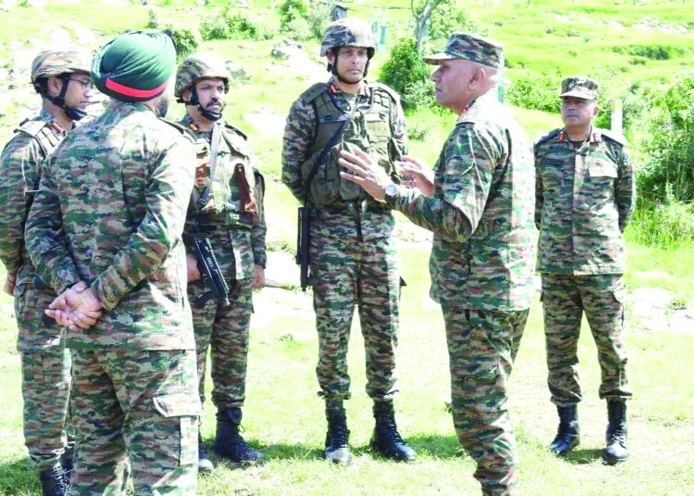
In stepped the Indian Army under the Northern Army Commander, as the “The Guardian of the Yatra” launched Operation Shiva, a meticulously planned security shield around the pilgrimage. From base camps to High-Altitude tracks, every stretch was strongly patrolled, area dominated and every movement monitored. Coordination with J&K Police, CRPF, and other agencies created an impregnable security grid, ensuring that faith walked hand in hand with safety.
Parallel to this, the Northern Army’s Chinar Corps launched Operation Mahadev – a swift and decisive counter terrorist operation. Intelligence-based operation which continued for over three weeks finally led to the elimination of the terrorists responsible for the Pahalgam attack. In a matter of days, those who sought to terrorise the Valley were sent to their reckoning – restoring peace and reinforcing the message that the Valley belongs to its people, not to fear.
Despite the clouds of violence, the Amarnath Yatra culminated successfully, with lakhs of devotees offering prayers at the holy shrine. The unity of purpose – from soldiers guarding icy mountain passes to villagers supporting the pilgrims – ensured that the journey of faith was neither halted nor diminished.
This year’s Yatra stands as a reminder: terror may try to shake the path, but the spirit of India – protected by our Armed Forces-will always keep it open. As the Tricolour fluttered over snow peaks and the chants of Har Har Mahadev echoed in the Himalayas, one truth rang clear-faith has its guardians, and fear has no place where courage stands watch.
The Chhari Mubarak – the sacred mace symbolising Lord Shiva – began its final and most revered journey to the holy Amarnath Cave on August 4, 2025, led by Mahant Deependra Giri from the historic Dashnami Akhara Temple in Srinagar.
The procession wound its way through key spiritual towns, halting at Bijbehara, where throngs of devotees gathered in deep devotional fervour, before proceeding to Pahalgam for a two-night stay.
From there, the sacred journey advanced to Chandanwari on August 6, Sheshnag on August 7, and Panjtarni on August 8, each halt steeped in tradition and faith. Finally, on August 9, coinciding with the auspicious occasion of Shravan Purnima, the Chhari Mubarak reached the sanctified cave shrine of Amarnath. Its arrival marked the spiritually profound conclusion of this year’s Yatra, weaving together devotion, heritage, and the unbroken spirit of the pilgrimage.
The warriors of the Indian Army’s Northern Command once again proved themselves as the steadfast guardians of faith during this year’s Amarnath Yatra. Operating in some of the world’s most challenging mountain terrain, they created an unbroken security shield over the pilgrimage route, from the base camps to the icy heights of the holy cave. Through Operation Shiva, troops worked in close coordination with J&K Police, CRPF, and civil administration, ensuring safe passage for lakhs of devotees. The Central Government’s clear mandate and steadfast support laid a strong foundation for conducting the Yatra in a truly distinguished and befitting manner. Round-the-clock surveillance, high-altitude patrols, and quick reaction teams neutralised potential threats, allowing the sacred chants of Har Har Mahadev to echo unhindered through the Himalayas.
In fact, their role went far beyond conventional security. Soldiers assisted pilgrims in crossing treacherous tracks, provided medical aid in emergencies, and maintained supply routes despite harsh weather. In the aftermath of the Pahalgam terror attack, Northern Command’s swift launch of Operation Mahadev eliminated the perpetrators, restoring confidence among devotees. This seamless blend of military precision and humanitarian commitment ensured that the Yatra was not only protected but also imbued with an unshakable sense of safety – turning a journey of faith into a celebration of courage and unity.
 Follow our WhatsApp channel
