

By T N Ashok
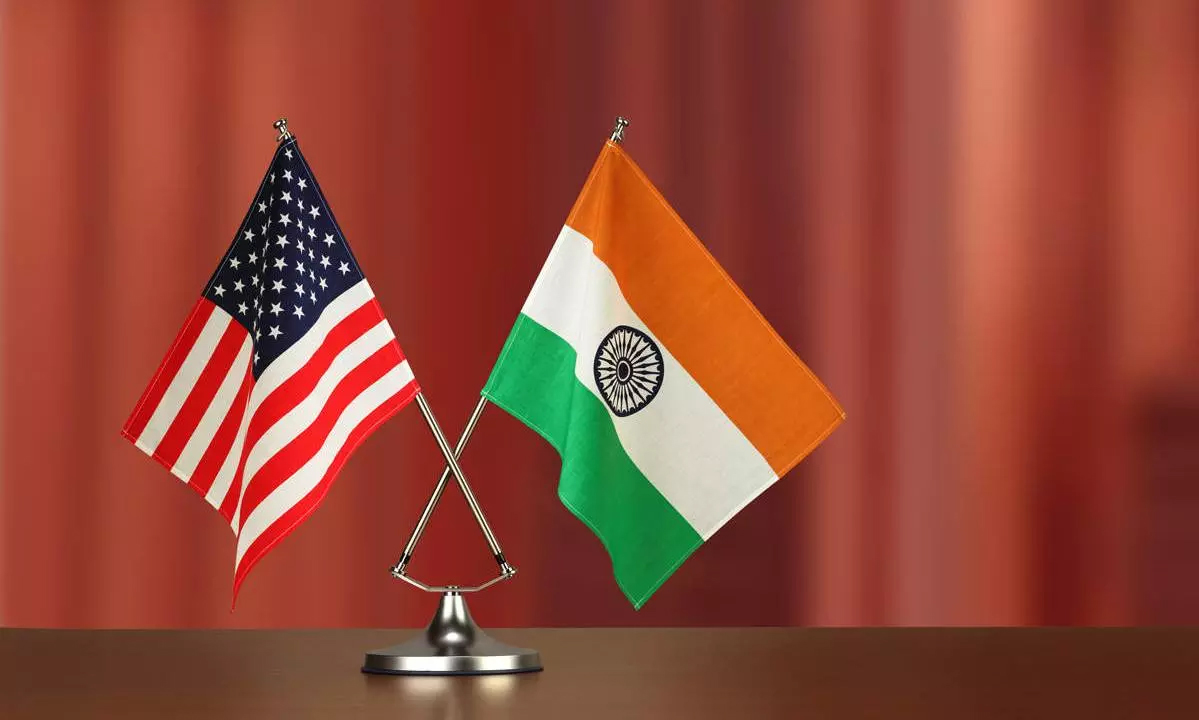
NEW YORK: India is once again at the epicentre of a great geopolitical tug-of-war. On one side stands the United States under President Donald Trump—erratic, aggressive, and determined to punish India with a 25% tariff for buying discounted oil from Russia. On the other, Russia, sanctioned and isolated by the West, but now India’s top energy supplier.
In between stands Prime Minister Narendra Modi, adopting a posture of strategic calm and quiet resolve, holding firm against global pressures while keeping India’s long-term interests front and center.
Despite Trump’s firebrand rhetoric—branding India’s economy as “dead” and threatening secondary sanctions over Russian oil—India is walking a delicate diplomatic tightrope. It is resisting being bullied into abandoning a vital economic lifeline, while keeping the door open for cooperation with Washington, especially in the Indo-Pacific.
India’s position today is the result of a calculated shift in foreign policy over the past decade—from a doctrine of non-alignment to one of “strategic autonomy,” and now, under Modi, toward strategic pragmatism. This pragmatism is most evident in India’s energy diplomacy.
Before Russia invaded Ukraine in February 2022, India’s crude oil imports from Russia were negligible—just 0.2% of its total. Fast forward to mid-2025, and Russia has surged to become India’s top oil supplier, comprising more than 40% of total crude imports. This is not ideological alignment with Moscow, but a hard-nosed economic strategy.
The math is simple: Russian crude, once discounted by as much as $30–$40 per barrel from Brent, helped India save over $13 billion in oil bills over two years, according to ICRA, a rating cum research agency of India. That’s money redirected to welfare schemes, infrastructure, and fiscal consolidation.
Donald Trump’s re-election in 2024 November brought with it a resurgence of his confrontational “America First” trade policies. The former president, now back in office, swiftly imposed a 25% tariff on Indian exports in retaliation for what he calls “unfair trade practices” and “cozying up to Russia.” He didn’t stop there. In a trademark social media broadside, he accused India of “funding Putin’s war machine” and threatened penalties unless India cut oil ties with Moscow within 50 days.
This is vintage Trump—governance by tweet, diplomacy by coercion. But India isn’t blinking. This is also India at its best in its domestic theatre of politics that could get Premier Modi a 4th record term beating Congress Iron Woman Indira Gandhi. Standing up to global pressures goes down with the Indian psyche, a hero the voters like to identify themselves with.
Unlike other global leaders who have either scrambled to pacify Trump or publicly challenged him (and paid the price), Modi has remained measured, firm, and diplomatic. At a recent press briefing, he neither condemns nor endorses Trump’s statements, simply saying, “India’s energy security will always reflect our national interest. We value all our partnerships equally.”No bluster. No capitulation. Just quiet defiance.
India’s ties with Russia go well beyond oil. Since the Cold War, Moscow has been India’s most reliable defense partner. Nearly 60–70% of India’s military hardware—especially in the Navy and Air Force—is of Russian origin. From BrahMos missiles to nuclear submarines, Indo-Russian cooperation is deep, strategic, and difficult to untangle overnight.
Moreover, Russia’s willingness to sell discounted crude oil post-2022 was not just an economic boon—it was a geopolitical signal. Moscow gave India a preferred buyer status at a time when oil prices were wreaking havoc on global economies. In return, India has maintained a “neutral” stance on the Ukraine war, abstaining from UN resolutions condemning Russia while repeatedly calling for diplomacy and dialogue.
But neutrality isn’t passivity. India has carefully balanced its messaging—highlighting international law, territorial sovereignty, and humanitarian concerns without aligning with Western narratives. This approach has drawn criticism in Washington and Brussels but admiration in much of the Global South.
Trump’s description of India as a “dead economy” sharply contrasts with the global consensus.
RankCountry GDP Current prices (in USD) 2025
Projected Real GDP (% Change)
1. United States $30.51 trillion 1.8%
2. China, People’s Republic $19.23 trillion 4.0%
3. Germany $4.74 trillion 0.1%
4. India $4.19 trillion 6.2%
5. Japan $4.19 trillion 0.6%
6. United Kingdom $3.84 trillion 1.1%
7. France $3.21 trillion 0.6%
8. Italy $2.42 trillion 0.4%
9. Canada $2.23 trillion 1.4%
10. Brazil $2.13 trillion 2.0%
Source: IMF’s World Economic Outlook | Data as of: May 26, 2025
The International Monetary Fund (IMF) recently reaffirmed India as the fastest-growing major economy in the world, projecting a growth rate of 6.8% in 2025–26. Foreign direct investment remains robust. The Indian stock markets are buoyant. Private consumption and manufacturing indices have exceeded pre-pandemic levels.
Far from being “dead,” India is driving global growth. Major U.S. corporations—from Apple to Amazon—are expanding operations in India. Defense, tech, and clean energy collaborations with Washington have intensified over the last five years. If anything, Trump’s remarks reflect political hostility rather than economic reality.
This divergence matters. For every American investor or policymaker reading Trump’s tweets, there’s a counter-narrative backed by data, credit ratings, and trade projections. Modi’s government is leveraging this to ensure that U.S.-India relations remain on a strategic keel even if the White House rhetoric turns sour.
India’s response to Trump’s economic aggression has been notably restrained. No tit-for-tat tariffs. No retaliatory threats. Instead, the Modi government has doubled down on trade diversification, exploring new energy corridors (such as Kazakhstan and Guyana), advancing free trade talks with the EU and the UK, and accelerating the International North-South Transport Corridor (INSTC) with Iran and Central Asia.
India’s response to external threats is just working to reduce its oil import dependence through investments in ethanol blending, solar infrastructure, and strategic petroleum reserves.
Modi’s approach reflects his broader doctrine: strengthen core capabilities, avoid unnecessary provocations, and build leverage over time. Where previous Indian governments may have reacted impulsively or defensively, Modi is playing the long game. Trump may dominate headlines, but Modi is consolidating India’s position as a credible, self-reliant, and indispensable global partner.
Modi’s ambition may be described as “vaulting” but he makes no bones about touching the threshold of a $5 trillion economy by 2023, by which time he also wants to conclude a $530 bn trade pact with US , Trump Angst or No Trump tariffs, to overhaul Japan to become the world’s 3rd largest economy next only to the US ($30 trillion) and China ($19 trillion). India has already overhauled the UK, set to overhaul Germany and Japan in the next few years.
Dead Economy – No, an economy full of vibrancy driven by the world’s largest demographics between 18 and 35. One of the world’s leading software services exporters. America’s backbone in pharma products in both generic and intermediaries exports.
India’s growing importance as a counterweight to China in the Indo-Pacific is not lost on U.S. policymakers—even those within Trump’s own administration. The Quad (India, U.S., Japan, Australia), joint military exercises, and maritime security cooperation are all pillars of shared interests that Trump’s tariffs now threaten to unravel.
If Washington pushes too hard, it risks alienating a partner that is critical to its Asia strategy. India is not Russia. It is not China. It is the world’s largest democracy, with a massive youth demographic, an expanding middle class, and a commitment to rule-based order—even if its methods differ from Western prescriptions.
This realization is dawning across Capitol Hill, where both Republican and Democratic lawmakers have voiced discomfort with Trump’s tariff escalation. Many recognize that economic coercion may backfire, pushing India deeper into alternative alliances, including BRICS+ and SCO frameworks where Russia and China wield more influence.
India’s foreign policy has never been easy to categorize. It is not a treaty-bound ally of any superpower, nor is it a rogue state ignoring global norms. Its strategic posture under Modi is unique: assertive but non-aligned, globalist but nationalistic, cooperative but uncompromising.
In the latest crisis over Russian oil and Trump’s punitive tariffs, this posture is on full display. India is asserting its sovereignty over economic choices while avoiding needless confrontation. It is buying time, building alternatives, and preparing for a world where great power politics will be more volatile than ever.
Modi’s calm response to Trump’s vitriol may frustrate the loudest voices in Washington, but it is winning quiet respect in capitals from Tokyo to Paris to Abu Dhabi. It signals to the world that India will not be a pawn in another superpower rivalry. It will be a player—firm in its convictions, clear in its interests, and unafraid of walking alone when necessary.
As the oil flows and the tweets rage, one thing is clear: in the new world disorder, India is no longer just reacting. It is navigating. The final results will have impact on the course of Indian economy.
 Follow our WhatsApp channel
