

Shagun Parihar
In a world torn between extreme materialism and divisive identity politics, India has rediscovered a guiding light in Integral Humanism, the philosophy of Pandit Deendayal Upadhyay. This vision of holistic, human-centric development – rooted in India’s civilizational ethos – finds its true realization today under Prime Minister Narendra Modi’s leadership.
Deendayal Ji believed that true development must address the body, mind, intellect, and soul – respecting both individual dignity and social harmony. It is not just about economic upliftment, but about restoring moral and cultural balance in society. For decades, this vision remained neglected, overshadowed by imported ideologies. But since 2014, Modi Ji has breathed life into this philosophy, translating it into governance that reaches every Indian, regardless of religion or caste.
Unlike previous governments that often treated the poor as vote banks or subjects of charity, Modi Ji’s governance respects them as partners in national progress. The change is visible – not just in policies but in spirit. Today, millions who once stood at the margins of society have homes, electricity, toilets, bank accounts, and digital access. This is not just welfare; it is dignity-led development, or Antyodaya – the core of Deendayal Ji’s thinking.
What sets this model apart is its genuine inclusivity. Modi Ji’s development is not filtered through religious identities. Whether it is scholarships, homes, or business loans, beneficiaries are selected on the basis of need, not religion. This is in stark contrast to the Indian National Congress, whose brand of secularism often meant minority appeasement and majority alienation. It created a politics of division – Hindus vs Muslims, Dalits vs non-Dalits – in pursuit of votes. The result was fragmented society and stalled progress.
Take the issue of triple talaq. For decades, Muslim women were subjected to instant divorce without justice. Congress, despite being in power, chose silence to protect its vote bank. Modi Ji, however, took a bold, moral stand and banned the practice – not for political gain, but to protect the dignity of Muslim women. This is true empowerment – guided by compassion, not calculation.
Compare this to the infamous Shah Bano case during Rajiv Gandhi’s tenure, where a Supreme Court ruling favoring justice for a Muslim woman was overturned by Congress under pressure from religious orthodoxy. That moment exposed Congress’s unwillingness to stand up for human rights when faced with political cost – a betrayal of both secularism and the Constitution.
Modi Ji’s vision also restores pride in India’s cultural and spiritual roots. Under previous regimes, even speaking of India’s traditions – whether yoga, temples, or festivals – was seen as regressive or majoritarian. Today, the world celebrates International Yoga Day, and our cultural heritage is seen as a strength, not a liability. Yet, every community is included, not excluded. India is becoming modern while staying rooted.
Even in foreign policy, Modi Ji’s Integral Humanism shines through. India is seen as a voice of the Global South, a compassionate leader, not just an economic power. This moral authority comes from a civilizational mindset – one that sees the world as a family (Vasudhaiva Kutumbakam), not a battlefield.
Some critics label BJP as majoritarian. But we must ask: who built homes for the poor without asking their religion? Who ensured that Dalits, Muslims, and tribal communities received the same benefits without bias? Modi Ji has proved through action that inclusion without appeasement is possible – that justice can be delivered without compromising identity.
Integral Humanism teaches us to view the nation as a living organism – not a marketplace or a collection of vote banks. Each citizen is a vital part of this body, and governance must nurture every part without conflict. Modi Ji’s India reflects this spirit. Unlike Congress, which created divisions and sold dreams, BJP under Modi Ji is uniting hearts and fulfilling aspirations.
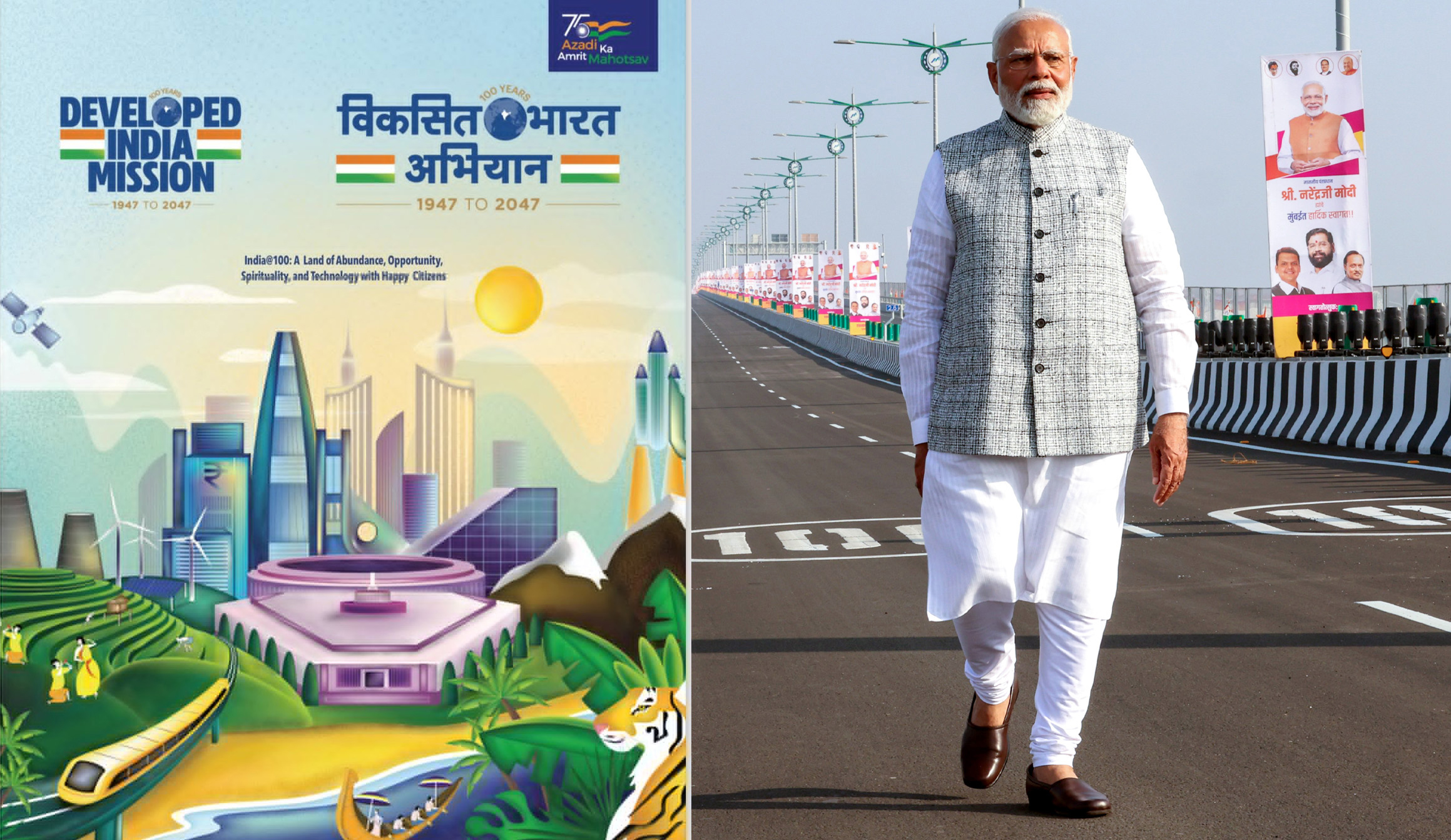
As India enters Amrit Kaal, this philosophy offers a roadmap not just for development, but for national unity and moral strength. Deendayal Upadhyay’s vision is no longer a forgotten doctrine – it is the soul of New India, built by the hands of every citizen and guided by the leadership of Narendra Modi.
(The author is MLA Kishtwar)
 Follow our WhatsApp channel
