

Trending with Teenagers
Adnan Aqib
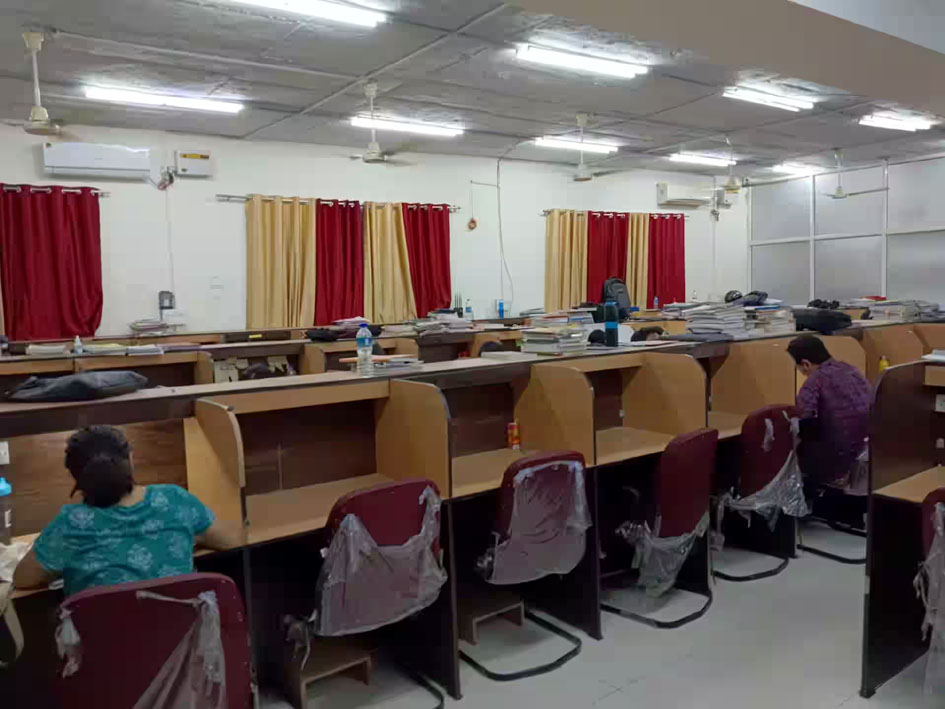
In recent years, a peculiar trend has emerged across many Indian towns and cities: rooms or halls with chairs, tables, and a quiet ambiance, but with no books are now commonly referred to as “libraries.” These spaces, often self-financed or privately rented, serve as reading rooms where students bring their own books and study materials. While the intent appears to be academic focus, a closer look reveals a mixed reality. A large number of students, despite being physically present for 12-13 hours a day, do not always use this time for productive study. Instead, many spend long hours watching movies, browsing web series, chatting with friends, or engaging in romantic relationships. This paradox of presence without productivity raises critical questions about motivation, mental health, social pressure, and the effectiveness of such self-study environments.
One of the primary reasons students flock to these private study spaces is the pressure they face at home. Many Indian households, especially those with aspirants preparing for competitive exams like UPSC, NEET, or banking, place a heavy academic burden on their children. Under such circumstances, students often seek refuge in libraries, where they can claim to be studying without constant parental oversight. For some, it offers an escape from toxic or unsupportive home environments, or simply a quiet space to be alone. The notion of “being in the library” offers psychological relief not only to the students, who feel a sense of accomplishment by spending the day outside home but also to parents, who believe their child is immersed in serious academic work.
Another driving force behind this trend is the lack of proper public or institutional libraries. A significant number of educational institutions in India do not have dedicated library buildings. Research indicates that nearly 75% of colleges in Jammu & Kashmir, for example, lack a separate library building. Over 81% function with only 1-5 rooms, and around 37% provide seating for just 51-100 students. This shortfall pushes students to seek alternative places for uninterrupted study time. With limited options, the privately managed “no-book libraries” fill this infrastructural gap. However, while they offer space and seating, they do not always facilitate genuine academic focus.
Adding to the complexity is the lack of supervision and structure within these spaces. Traditional libraries often have staff, access to curated materials, and a system that subtly enforces academic discipline. In contrast, these reading halls operate with minimal regulation. Without any formal system of attendance, goal tracking, or oversight, they often transform into social spaces. Many students spend hours chatting, engaging with the opposite gender, or simply passing time. The environment becomes less about study and more about socialization under the guise of academic commitment. With mobile phones and headphones becoming a constant companion, it’s not uncommon to find students binging series or endlessly scrolling on social media.
Despite their intentions, students who spend 12-13 hours daily in these libraries often fall into the trap of false productivity. Scientific studies have shown that the human brain can effectively focus for 6-8 hours at most in a day, with diminishing returns beyond that point. After prolonged periods of sitting, cognitive fatigue, lack of motivation, and mental burnout are common. What starts as sincere study effort often devolves into unstructured time wasting. While the presence in such a room offers a sense of control and discipline, the absence of learning strategies, breaks, or focused goals reduces the overall effectiveness.
The situation is not entirely negative, however. For a segment of dedicated students, these reading rooms offer a quiet, distraction-free environment that is far better than noisy homes or crowded coaching centres. Many aspirants report significantly improved study hours and better focus when using such spaces seriously. Some private reading rooms even impose rules like fixed shifts, mobile phone bans, or limited breaks that enhance productivity. These models, though limited in number, offer glimpses of what such spaces can achieve when managed thoughtfully.
Nevertheless, the overwhelming concern remains that these libraries are not fulfilling their intended purpose for the majority of users. They are fast becoming a refuge for procrastination, fuelled by social media and peer distractions. What exacerbates the problem is the cultural acceptance of this behaviour. Parents feel reassured that their children are studying, institutions assume students are preparing rigorously, and students themselves feel they are meeting societal expectations despite not achieving meaningful learning outcomes. This illusion of effort is dangerous, as it wastes not only time and resources but also affects mental health and long-term academic success.
Moreover, long sedentary hours pose significant health risks. Prolonged sitting, poor posture, inadequate hydration, and lack of physical activity contribute to a range of issues including obesity, sleep disturbances, anxiety, and depression. Many students who spend all day in these rooms also suffer from social isolation, irregular sleep cycles, and burnout. Without guidance or mental health support, the emotional cost of such lifestyles is often overlooked. There is also a lack of awareness about effective study techniques, time management, and the need for balanced routines among the student population.
This disconnect between intent and outcome also highlights the failure of the broader educational infrastructure. Libraries, when designed and managed properly, can be powerful tools for academic development. Unfortunately, many government and private institutions have underfunded or ignored library facilities. A survey in Karnal (Haryana) revealed that despite 90% of schools having a library, only 10% of books were issued regularly. This disinterest reflects not only a lack of engagement but also poor library management and irrelevance of available resources.
Encouragingly, some parts of India have introduced innovative library models. For example, the Aarambh Pustakalya in Delhi provides a 24/7 study space equipped with air conditioning, Wi-Fi, lockers, and a cafeteria. Students pay a nominal fee to access a well-managed, distraction-free environment. In Nagpur, the Atal Bihari Vajpayee e-Library has helped over 70 students clear major exams in just two years. Similarly, the Holkar College library in Indore has over 800 students on the waiting list, thanks to its structured shift system, strict rules, and resource-rich setup. These models demonstrate that with the right framework, even reading rooms without books can become powerful academic spaces.
However, the success of such initiatives is still limited in reach. In most Indian towns, reading rooms continue to function with minimal oversight and maximum freedom. To transform them into productive spaces, a few key reforms are necessary. First, supervision must be introduced. Trained staff or volunteers should ensure that the environment remains conducive to study. Second, a structured system involving attendance, fixed shifts, and regular assessments can help students remain focused. Third, even minimal library resources such as online access to journals, recommended reading lists, or mock test sets should be made available. These additions can bridge the gap between a mere space and a true academic support system.
It is also important to promote awareness among students and parents about realistic study hours and healthy routines. Spending all day in a study room does not equate to efficient learning. Study workshops, mental health sessions, and peer support groups can help students adopt effective habits. Encouraging small study groups, enforcing phone bans during core hours, and allowing for scheduled breaks can make a big difference. Ultimately, the goal should be to create an ecosystem where libraries whether traditional or makeshift serve their core purpose: fostering knowledge, discipline, and intellectual growth.
From a policy perspective, it is essential for local authorities and educational institutions to invest in modern, inclusive, and technology-driven library models. These should combine the benefits of physical space with access to digital content, guidance from educators, and tools for self-assessment. Government schemes like SWAYAM and the National Digital Library of India (NDLI) have made significant strides, but more needs to be done to integrate such resources into physical reading spaces across the country.
In conclusion, the trend of students spending long hours in “libraries without books” reflects a complex mix of educational aspiration, social pressure, infrastructural gaps, and psychological needs. While these spaces offer potential, their current usage in many cases fails to support meaningful academic progress. Without intervention, they risk becoming symbols of a system that values appearance over achievement. However, with thoughtful management, resource allocation, and awareness building, these informal libraries can be transformed into powerful engines of learning and personal growth. As India continues to expand its educational ambitions, rethinking the purpose and management of these spaces is not just necessary it is urgent.
(The author is M. Sc Chemistry University of Jammu)
 Follow our WhatsApp channel
