

Mohammad Hanief
In a region where tulips bloom in spring and snowflakes drift gently in winter, the school days of Kashmiri children are as poetic and vivid as the valley itself. Surrounded by pine-covered hills, gushing streams, and the towering Himalayas, education in Kashmir unfolds in a landscape that feels lifted from the pages of a storybook.
But school life in Kashmir is not merely a scenic postcard — it is an experience filled with tradition, warmth, joy, and childhood wonder. It is here, amid ancient chinar trees and quiet mornings, that generations of students have learned their first lessons in life, language, and literature.
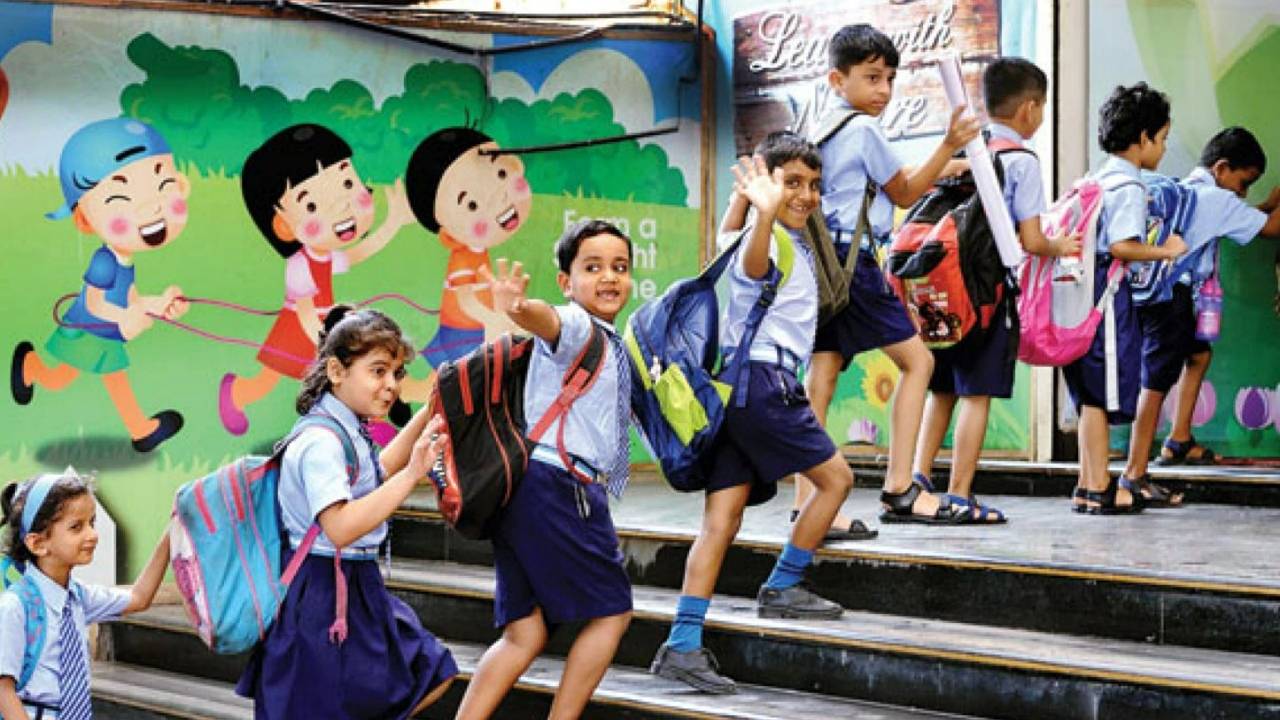
The day for a Kashmiri student begins early. In the hush of dawn, with mist rising from the valley floor, schoolchildren set out dressed in neat uniforms, their bags bouncing gently with each step. The scent of nun chai (salted pink tea) and freshly baked girda (traditional Kashmiri bread) lingers in the air as families prepare their young ones for the day ahead.
In summer, mornings are soft and green, and children walk under shady trees with lunchboxes in hand. In winter, the same journey becomes a little more magical — students wrapped in woollen pherans, gloves, and mufflers walk over snow-covered paths, their laughter rising like smoke into the chilly air.
“There’s something special about going to school with snowflakes falling all around you,” says Mohammad Hadiq, a 10th-grade student in Srinagar. “You feel like you’re walking through a fairytale.”
From Srinagar’s historic missionary institutions to the charming hilltop government schools, Kashmir’s school buildings blend naturally into the landscape. Sloped tin roofs, wooden walls, and wide windows that open to views of the Dal Lake or walnut orchards create learning environments that are both cozy and inspiring.
Many schools have open courtyards where morning assemblies are held, and the air often echoes with prayers, poems, and patriotic songs. In winter, classrooms are warmed by bukharis — traditional heaters around which students gather, warming their hands as they revise lessons or write essays.
Schooling in Kashmir is not just about books and exams; it’s also about understanding identity and celebrating heritage. Alongside subjects like science, math, and English, students study Urdu, Kashmiri, and Islamic Studies or moral science, depending on the school.
Cultural awareness is interwoven into the curriculum through poetry recitations, debate competitions, art exhibitions, and school plays. Many schools also host annual “School Day” celebrations, where students dress in traditional attire, perform folk dances like Rouf, and prepare local dishes.
“There’s a deep pride in our language and traditions,” says Imran, a teacher at a school in lal Bazar. “We make sure our students grow up confident in their roots as well as their ambitions.”
For children, some of the most cherished memories are not from the classroom but from what happens between the lessons. School breaks are filled with laughter, quick games of cricket or pithu (seven stones), and the sharing of home-packed snacks — parathas, dry fruits, or a sweet treat tucked in by a parent.
Annual picnics are another highlight. Schools often organize day trips to places like Gulmarg, Pahalgam, or the Nishat Gardens. Students bring colourfultiffins, play games in open meadows, and return with hearts full of stories and phones full of pictures.
“It’s those picnic days we remember the most,” says Ather Khan, a college student reminiscing about his middle school years. “Just being together with friends, eating under the shade of trees, singing songs on the bus ride — it stays with you.”
The role of teachers in Kashmiri schools extends far beyond the syllabus. They are mentors, disciplinarians, story-weavers, and second parents. Whether explaining algebra or narrating a tale from Kashmiri folklore, they shape not just minds but also values.
It is not uncommon for students to continue visiting their teacher’s years after graduation, often addressing them with deep respect and affection. The bond between students and teachers in Kashmir is steeped in cultural regard, where knowledge is considered a sacred trust.
“Teaching here is about nurturing,” says Muzamil Sir, who has been teaching for over 25 years in Pulwama. “Our classrooms are not just places of learning; they are spaces of belonging.”
Perhaps nowhere else is the rhythm of school life as beautifully tied to the seasons as it is in Kashmir. Spring brings a renewal of spirit and fresh beginnings — new sessions begin, gardens bloom, and school grounds buzz with fresh energy.
Summer is the season of long school days, sports tournaments, science fairs, and cultural programs. Autumn paints the playgrounds in gold as the chinar leaves fall, and students begin preparing for half-yearly exams.
Winter brings with it a long break — a time when schools close for several weeks. This vacation isn’t just for rest; it’s when children help their families with small chores, learn local crafts, or sit with grandparents and listen to folktales while sipping hot kehwa around the bukhari.
Even during holidays, many students revise lessons, read books, and write in journals. The value placed on education — encouraged by both family and society — remains strong across all districts of the valley.
Today’s students in Kashmir are growing up in a rapidly changing world. With the spread of technology and the rising popularity of digital learning tools, students are expanding their horizons beyond the valley. Many dream of becoming doctors, engineers, writers, environmentalists, artists, or entrepreneurs.
School clubs, reading corners, science labs, and art rooms are helping to shape multi-talented individuals. Some students are even participating in national-level competitions and academic Olympiads, making their schools — and their state — proud.
“Children here are full of curiosity and potential,” says Principal Mohammad Rafiq of a private school in Hazratbal side. “All they need is the right environment and encouragement.”
Ask any adult in Kashmir about their school days, and a smile will likely cross their face. They’ll recall warm mornings by the lake, the sound of school bells echoing through narrow lanes, and the feeling of holding a new notebook on the first day of class.
From climbing apple trees behind the school compound to borrowing pens from friends during surprise tests, the memories are stitched together by a sense of place and a sense of purpose.
“These memories are treasures,” says AijazAhmed, now a professor. “Even after decades, they feel fresh — like a song you never forget.”
In Kashmir, education is more than a process — it is a celebration of life, nature, and heritage. The school days of Kashmiri children are rich not just in academic learning but in values, friendships, creativity, and joy.
Even as the world outside evolves, the simple image of a child walking to school under blossoming almond trees or snow-covered rooftops continues to define the quiet strength of this land. In every classroom warmed by a bukhari, in every playground touched by mountain winds, the story of a better tomorrow is quietly taking shape — one lesson at a time.
(The author can be mailed at m.hanief@gmail.com)
 Follow our WhatsApp channel
