

Dr Ashwani Kumar
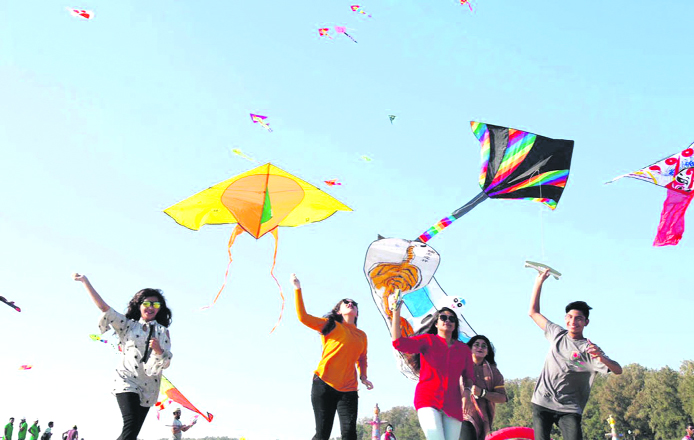
Every year, the skies across many Indian cities burst into colour with vibrant kites during festivals like Basant Panchami and Raksha Bandhan, especially in Jammu during Raksha Bandhan and Janmashtami. The practice of kite flying is most common in July and August. However, beyond the excitement lies a troubling issue: the use of harmful kite threads called Chinese manja or Gattu, which can hurt people severely or even lead to death. These heartbreaking incidents occur annually in places like Jammu and other urban areas, revealing significant social and structural challenges that need urgent attention. On July 26, 2025, for example, 37-year-old Sahil Kumar from Domana, Jammu, died when a banned thread cut his throat while he was riding his bike. This incident is not unique; year after year, we see similar tragedies.
Kite flying in a city like Jammu has always been more than just a leisure activity. It is part of Hindu festivals that strengthen social bonds, connect generations, and build a shared identity. It brings communities together in joyful rituals and friendly competition. However, gradually it has been transformed from cooperative celebrations to aggressive contests, where the aim is to bring down rival kites with razor-sharp threads, increasing the probability. This change reflects a significant shift from a community festival to a dangerous competition. From a sociological viewpoint, the ongoing use of hazardous kite threads despite their ban shows more than just a disregard for the law. It reflected the underlying social norms, group behaviour, and identity expressions that promote such risky actions. The government has enacted bans on Chinese manga to reduce injuries and deaths, yet the continued use of these threads points to the limits of legal actions when they lack deeper cultural and social engagement.
The intense kite fights have evolved into ritualised performances, where individuals, particularly young men, assert their identity, dominance, and social standing. This trend can be connected with societal views of masculinity linked to risk-taking and public displays of strength and skill. Participants in these kite fights seek pleasure in risk and competition, sometimes at the cost of their safety. This societal endorsement of risk resonates with broader patterns of how young men seek identity through dangerous activities, even when the risks include serious injury or death. Furthermore, this shift from communal celebration to risk-taking activity shows a decline in the solidarity and empathy that used to characterise these festivals. Festivals are meant to strengthen social ties and shared values. However, the rise of dangerous kite-flying practices illustrates a breakdown of these norms, what Durkheim referred to as “anomie,” a state where people lack clear moral guidance and act out of self-interest or competition without regard for the community’s welfare. The kite fight illustrates how festive occasions can turn into competitive arenas rather than spaces for unity.
Pathological urbanisation has also played a significant role in worsening this issue. The rapid growth of cities like Jammu has reduced the availability of open public spaces that used to be safe places for kite flying. Parks, playgrounds, and open fields, where kite flying could once happen safely, are becoming increasingly rare. This situation compels kite enthusiasts to fly their kites in unsafe places, such as on the roofs of their homes and spare spaces near busy roads and markets. This lack of safe space raises the risk of accidents, not just for kite flyers but also for pedestrians and bike riders sharing those urban areas. The absence of designated, safe areas for kite flying reflects urban planning that undermines traditional cultural practices. Without proper venues, people may engage in their traditional festivals in unsafe ways, turning a harmless play into a public hazard.
The lack of safe spaces interacts with social factors as well. When young people lack safe, accessible places for leisure and cultural activities, they may resort to riskier behaviours to express their identity and fit in. This aligns with the correlation with marginality and youth culture, which suggests that limited opportunities can lead to dangerous behaviours that affirm group identity and provide excitement.To address this complex issue, policymakers must go beyond simply enforcing legal bans. While banning dangerous kite threads is important, it is not enough. A more complete approach needs community involvement and education that emphasises respect for culture, empathy, and safety. Campaigns should encourage kite flyers and communities to see kite flying as a shared cultural heritage to celebrate responsibly, rather than a battleground.
It is also crucial to challenge the gendered expectations associated with risk-taking. The link between masculinity and daring behaviour promotes hazardous kite flying. Awareness campaigns should promote alternative expressions of identity that do not require putting oneself or others at risk. Urban authorities should incorporate cultural aspects into city planning by creating safe, designated areas for kite festivals. Parks or open spaces specifically for kite flying would enable the tradition to continue without compromising public safety. Recognising kite flying as an essential cultural practice deserving of protection can promote social unity and improve urban life
Lastly, the ongoing incidents related to kite flying expose broader tensions between tradition, modernity, and risk in contemporary society. This kind of situation compels us to rethink how cultural rituals evolve in rapidly urbanising and competitive settings. Preserving the joy and community spirit of kite flying requires a collective commitment with responsibility not only on an individual level but also from urban policy makers to create the spaces for the celebration of this traditional joyful activity. The recent death in Jammu serves as a reminder that the purpose of our traditional festivals is to promote unity, happiness, and shared culture, not competition and harm. Understanding this issue from a sociological perspective shows that addressing it needs holistic efforts, which include legal action, community awareness, urban planning, and cultural sensitivity. Only by understanding the complex social dynamics behind dangerous kite flying can we hope to reclaim the skies as safe places for celebration, where tradition thrives alongside safety, respect, and collective care.
(The author is an Assistant Professor of Sociology at UILS, Chandigarh University, Punjab)
 Follow our WhatsApp channel
