

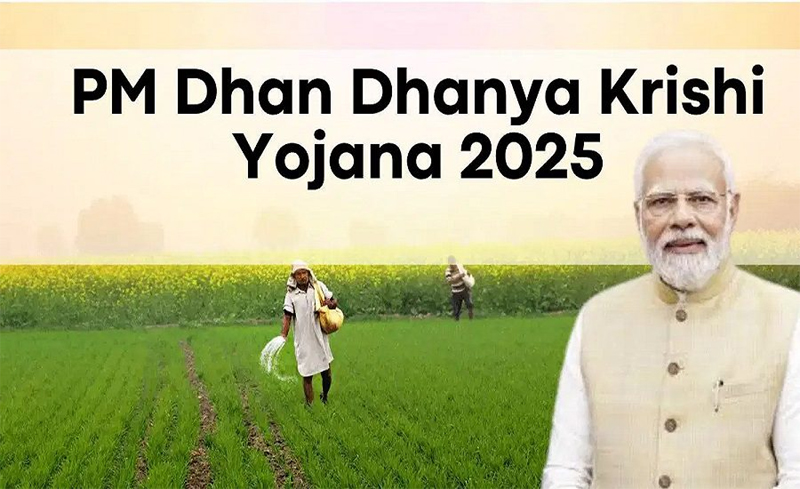
The Union Cabinet’s approval of the ‘Prime Minister Dhan-Dhaanya Krishi Yojana’ marks another major stride to empower farmers and bolster agricultural productivity. With an annual outlay of Rs24,000 crore over six years, the scheme’s ambition is evident-to transform 100 identified districts into hubs of sustainable and diversified agriculture. This support, coupled with a data-driven approach, reflects how agricultural policymaking has matured in recent years. Since the last decade, the Government of India has increasingly prioritised the welfare of farmers, recognising their role as the backbone of the nation. Schemes such as PM-KISAN, which ensure direct cash transfers to farmers, have played a pivotal role in cushioning them against the vagaries of weather, pest infestations, and market fluctuations. The direct infusion of money has not only supported household consumption but also enabled timely investment in seeds, fertilisers, and machinery. This financial support has become a crucial lifeline, allowing farmers to navigate uncertainties that threaten their livelihoods.
In the digital age, using data analytics to identify underperforming districts-those with low productivity, cropping intensity, and credit access-enables targeted intervention. The Dhan-Dhaanya scheme rightly focuses on addressing these root causes through the convergence of 36 Central schemes and local partnerships. By integrating modern practices such as crop diversification, water and soil conservation, and expansion of organic farming, the Government aims to unlock the full potential of India’s agrarian economy. Efforts to augment post-harvest infrastructure and credit availability are equally commendable. These not only improve the farmer’s income security but also reduce dependency on middlemen. The district-level planning, involving progressive farmers, ensures that solutions are grounded in local realities. Monitoring through a national dashboard on 117 performance indicators provides transparency and scope for mid-course corrections-an example of smart governance. In a populous country like India, where expanding cultivable land is no longer an option, increasing agricultural output through improved efficiency is the only sustainable path forward. Ensuring food security and equitable rural development depends on it. By supporting farmers in a structured, scientific, and inclusive manner, the Government is laying the groundwork for long-term national progress. The message is clear: a stronger farmer means a stronger India.
 Follow our WhatsApp channel
