

Manzoor Ahmed Naik
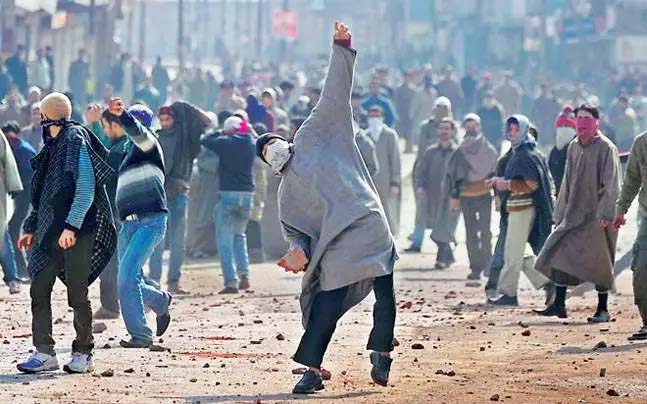
Once seen through the narrow prism of unrest, radicalism, and relentless turmoil, Kashmir is undergoing a profound transformation. The youth of Jammu and Kashmir (J&K), who once fell prey to the politics of manipulation, separatist propaganda, and hopelessness, are now embracing technology, innovation, and entrepreneurship. A powerful undercurrent of aspiration is sweeping across the Valley, one that is quietly but surely replacing stones with startups, and slogans of separatism with dreams of self-reliance.
This change, seismic in nature, is neither accidental nor cosmetic. It is the direct consequence of decisive governance, clear policy interventions, and a break from the decades of dynastic and exploitative politics of National Conference (NC), People’s Democratic Party (PDP), and Congress. At the heart of this new dawn lies the visionary leadership of Prime Minister Narendra Modi, whose firm grip on governance and long-term commitment to national integration have reshaped the aspirations of an entire generation in Jammu and Kashmir.
For nearly seven decades, the people of Jammu and Kashmir were kept in a political and emotional chokehold by NC, PDP, and Congress—parties that ran their regimes not on performance, but on propaganda, fear, and communal polarization.
While Sheikh Abdullah’s promise of “Naya Kashmir” was reduced to hollow slogans, the reality was that youth were left without opportunity, access, or vision. The focus remained on appeasing separatist voices rather than integrating Kashmir with the national mainstream. Education was underfunded, industrial investment was nonexistent, and political discourse remained hostage to the “Kashmir issue,” rather than Kashmir’s future.
These parties created a culture of dependency and dynastic entitlement, where merit was overlooked, and youth were trapped in cycles of unemployment, drug addiction, and violence. According to the Economic Survey of J&K (2016-17), youth unemployment in Kashmir was above 24.6%, among the highest in the country. Yet these figures were routinely buried under the noise of political slogans.
The revocation of Article 370 and 35A on August 5, 2019, marked a historic reset. Not just in the constitutional framework of J&K, but in the psyche of its youth. The removal of these provisions allowed for:
Full integration of J&K with the Indian Constitution, including 890 Central laws.
Extension of Right to Education (RTE), Prevention of Corruption Act, SC/ST Reservation Act, and Minority Rights to J&K.
Increased investment from outside the region, due to the removal of land ownership restrictions.
Post Article 370 abrogation, over ₹56,000 crore worth of industrial investment proposals have been received (as of March 2024), according to the J&K Industries and Commerce Department.
IIM Jammu, AIIMS Vijaypur, seven new medical colleges, and two AICTEs have been opened in the past five years.
The Himayat Program, under the Deen Dayal Upadhyaya Grameen Kaushalya Yojana (DDU-GKY), trained over 68,000 youth by 2023.
Digital literacy is spreading. The “Digital India” program has connected over 6,000 Panchayats via high-speed internet under BharatNet Phase II in J&K.
J&K Startup Policy 2024 offers a ₹10 lakh seed fund, mentorship, and incubation for young entrepreneurs.
As of May 2024, over 700 startups have registered from Jammu and Kashmir, including 20+ women-led ventures.
Srinagar and Jammu Incubation Centres, funded under the Ministry of Skill Development, provide state-of-the-art facilities for youth to launch ventures in sectors like handicrafts, agro-tech, tourism-tech, and software development.
“Kashmir Box”, a Srinagar-based e-commerce startup, now exports local handicrafts and organic produce globally.“FastBeetle”, a logistics startup from Kashmir, received funding under the Startup India scheme and now operates throughout North India.
Once infamous for stone pelting and street unrest, today Kashmir’s youth are seen attending hackathons, job fairs, and skill workshops. In 2018, over 1,200 incidents of stone pelting were recorded. In 2023, less than 50 minor law and order incidents were reported across Kashmir.
Tourism is a major employer for Kashmiri youth. With renewed peace, Kashmir recorded over 2.1 crore tourist arrivals in 2023, the highest ever in history. Yuva Tourism Clubs have been set up in over 1000 schools and colleges, encouraging young locals to become tourism entrepreneurs, guides, and digital marketers.
While the progress is commendable, the fight is far from over. The rise in narco-terrorism and drug addiction, particularly in border districts like Rajouri, Poonch, and Kupwara, poses a new kind of threat to Kashmiri youth.
However, the Modi government is actively addressing Nasha Mukt Bharat Abhiyan covers all 20 districts of J&K. De-addiction centers have been opened in all districts. Thousands of youth have been rehabilitated and enrolled in vocational training.
Kashmiri youth are no longer politically naïve. They see through the duplicity of those who kept them underdeveloped in the name of “special status.” They reject those who incited violence but sent their own children to universities abroad. They are now asking real questions:
Why did NC, PDP, and Congress never build IT parks or universities?
Why were job opportunities monopolized by political families?
Why were elections boycotted, and fear manufactured?
The transformation of Kashmiri youth from stone-pelters to startup founders is no accident—it is the result of a fundamental shift in policy, purpose, and political will. For the first time in decades, the Valley is not merely healing—it is aspiring. It is demanding better infrastructure, better jobs, better representation. It is refusing to be stereotyped.
Yes, challenges remain. But there is clarity at the top, courage on the ground, and change in the air. This is Modi’s Kashmir—where every young person is not a separatist-in-waiting, but a soldier of development, armed with a laptop, a startup pitch, or a degree. The pen, the plough, and the platform have replaced the stone. And that is the Kashmir story the world needs to see.
 Follow our WhatsApp channel
