

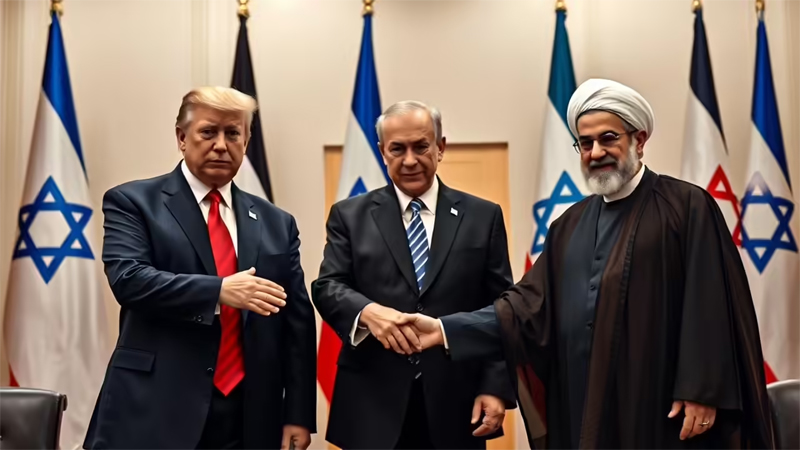
JERUSALEM, June 26 : A ceasefire between Iran and Israel might reduce military actions, but it is unlikely to result in a permanent peace deal, Richard Balfe, a Conservative member of the UK Parliament’s House of Lords, told Sputnik.
US President Donald Trump said late on Monday that Israel and Iran had agreed to a ceasefire that would, after 24 hours, be an official end to the 12-day war. On Tuesday, Trump said that the ceasefire between Iran and Israel was now in effect, urging the sides not to violate it.
“If it works, it is good news, but as both sides seem to strongly dislike each other, it may lead to the ending of military action, but is unlikely to lead to a permanent solution,” Balfe said.
If the ceasefire agreement fails, Iran and Israel will continue military actions, albeit at a “lower level,” Balfe believes.
The situation in the Middle East escalated on June 13, when Israel launched large-scale strikes against Iran, accusing it of implementing a secret military nuclear program. Tehran retaliated by striking military targets inside Israel. On June 22, the United States struck three Iranian nuclear sites – Natanz, Fordow, and Isfahan. On Monday, Iran launched a missile strike on the US’s Al Udeid Air Base in Qatar in response to the US attack.
(UNI)
 Follow our WhatsApp channel
