

Ashwani Kumar
Emotional instability is not merely personal-it emerges when society fails to teach individuals how to negotiate their feelings within relationships and cultural expectations.
India is experiencing a deep cultural and emotional shift. On the surface, modernity seems to be thriving. Love marriages are more common, dating apps are popular, live-in relationships are becoming socially visible, and there is growing emphasis on personal choice. Yet, beneath these surface-level changes, many people still carry emotional habits rooted in traditional norms. This mismatch between outer modernity and inner conservatism has given rise to a troubling reality we might call “half modernity.”
In this condition, people adopt the appearance of modern relationships-choosing their partners, living independently, and celebrating freedom but they often lack the emotional, ethical, and communicative maturity needed to make those relationships truly work. As they struggle to balance newly gained freedoms with old belief systems, many find themselves unable to express their feelings, negotiate differences, or leave relationships peacefully. These unresolved tensions can, and do, lead to devastating consequences.
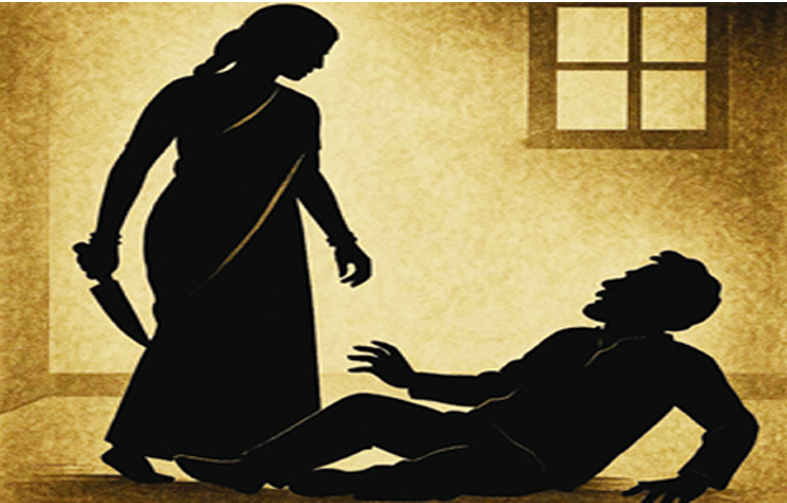
Particularly scary case took place in Meghalaya in May 2025. A young couple, Raja Raghuvanshi and Sonam, seemed to be enjoying their honeymoon at the scenic Wei Sawdong Falls. But what appeared to be a romantic getaway soon turned into a nightmare. Raja’s body was found at the bottom of a gorge. While initially assumed to be an accident, the truth shocked everyone. Sonam had conspired with her lover and others to murder her husband. What made the case even more disturbing was how convincingly Sonam maintained the image of a loving, modern wife. She had chosen Raja, arranged a contemporary honeymoon, and projected independence. Yet, emotionally, she was trapped in a culture of silence. Instead of voicing her unhappiness or walking away, she chose a violent path to preserve the illusion of a perfect relationship.
Another horrifying case surfaced in March 2025 in Meerut, Uttar Pradesh. Saurabh Rajput, who had married Muskan Rastogi by choice, was found brutally murdered, his body dismembered and hidden in a cement-filled drum. Muskan and her lover, Sahil, were arrested for the crime. The story mirrored the Meghalaya case in painful ways. Outwardly, Muskan embraced the idea of a modern relationship. But when her emotional reality clashed with that image, she chose secrecy and violence instead of seeking a mature resolution. Like Sonam, she kept up the performance of a devoted wife while hiding a completely different truth. Her inability to express emotional conflict or exit the relationship with honesty reflects a larger cultural failure.
But emotional pain does not always take a violent turn toward others. Sometimes, it turns inward. In December 2024, Atul Subhash, a 34-year-old artificial intelligence expert in Bengaluru, died by suicide. In his final message-both written and recorded-he described the emotional harassment he faced from his estranged wife and her family. Despite being highly educated and digitally literate, Atul felt helpless. He could not find emotional or legal support, nor could he free himself from the pain of a broken relationship. His death was not just a personal tragedy but also a stark reminder of how our systems-legal, emotional, and social-often fail those who need them most.
What links these three stories is a common thread: the inability to handle emotional strain in relationships shaped by modern choices. In many Indian cities, modernity often shows up through lifestyle changes urban living, fashion, travel, and technology. But the deeper elements of modernity emotional awareness, communication, consent, boundaries are still missing. People may choose partners, live together, or marry for love, but many still don’t know how to handle disagreement, rejection, or change without resorting to silence or conflict.
This is the crisis of half modernity. It gives people the right to choose, but not the emotional tool kit to live with those choices. Without emotional literacy, people cannot name their feelings, negotiate their desires, or part ways peacefully. Silence grows, frustrations fester, and in some cases, relationships become emotional prisons.
In the cases highlighted above, the victims were men. But this is not a one-sided gender issue. Across India, countless women also suffer and trapped in unwanted marriages, silenced by social shame, or punished for asserting autonomy. Dowry deaths, honor killings, emotional abuse all stem from the same deeper problem: a society caught between tradition and modernity, with no strong emotional bridge to cross that divide.
And here lies a troubling irony. Even in this era of modern freedoms, many people still feel emotionally blocked. Modernity has given us choices, but not the confidence to live those choices honestly. Many still feel afraid to speak their truth or negotiate for their own needs. Instead of feeling empowered, they feel burdened. In this way, modernity, rather than liberating them, becomes another source of confusion and stress. What we are witnessing is not a string of isolated tragedies. It’s a social emergency. Our emotional growth is not keeping pace with our social, legal, and technological progress. Dating apps, live-in relationships, and liberal marriage laws have become common, but there is little public discussion on how to handle breakups, deal with betrayal, or maintain emotional health.
We need an emotional and moral awakening. Schools, families, and media must start teaching emotional intelligence: how to express feelings, listen actively, manage anger, and respect boundaries. Communication should be taught as seriously as math or science. If we want to build a society that values freedom, we must also invest in the emotional education that makes that freedom meaningful. India cannot afford to be modern in appearance but traditional in emotional practice. To truly evolve, we must match our outer freedoms with inner readiness. Only then can we prevent further heartbreak and violence. Only then can we create a society where modern relationships don’t just look different but feel safe, honest, and humane.
(The author is an Assistant Professor UILS (Sociology) Chandigarh University)
 Follow our WhatsApp channel
