

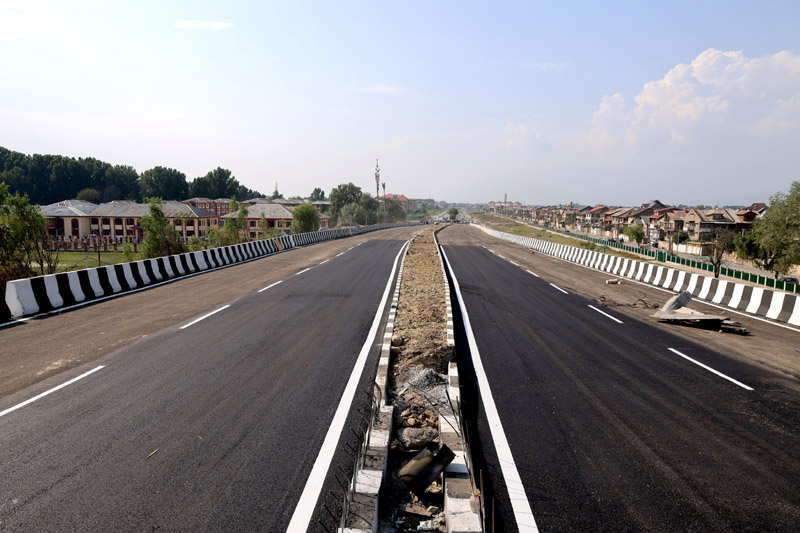
The appearance of structural cracks on the Bemina flyover in Srinagar-a project inaugurated just last year-is an alarming development that raises serious concerns about construction quality, oversight, and commuter safety. Despite assurances from the Roads & Buildings Department that the cracks are minor and due to seasonal changes, the public’s concern is neither unwarranted nor emotional. When hundreds of crores of taxpayers’ money are invested in infrastructure, any sign of premature wear-especially structural cracks-must be treated with utmost seriousness. Flyovers and other large-scale public infrastructure projects are designed with a comprehensive understanding of geographical, geological, and climatic variables. These include thermal expansion, seismic activity, and material fatigue. The emergence of visible cracks along concrete joints within a year of the flyover becoming operational is, therefore, not just unexpected-it is unacceptable. If such conditions are considered during the design phase, then why is the structure already showing signs of stress?
The statement by the Chief Engineer of R&B, describing the cracks as “seasonal” and “not alarming”, does little to instil confidence, particularly when images of the damaged section have gone viral, showing significant fissures. While such occurrences might be common in concrete structures due to temperature fluctuations, the integrity and safety of a newly constructed flyover must not be judged lightly or internally alone. A third-party structural audit must be commissioned to assess the extent of the damage. Independent verification ensures credibility, transparency, and objectivity in evaluating whether the bridge poses any risk to commuters. There is no harm in taking precautionary steps-on the contrary, it reflects a mature, safety-first approach by the administration.
Moreover, if the inquiry reveals design flaws, poor construction quality, or lapses in supervision, then strict accountability must follow. Contractors, consultants, or officials found guilty of negligence must face legal and professional consequences. Public infrastructure is not an experimental canvas-it is a lifeline that affects millions of lives and must be held to the highest standards of excellence. The people of Jammu and Kashmir deserve infrastructure they can trust, not structures that raise fears every time the season changes.
 Follow our WhatsApp channel
