

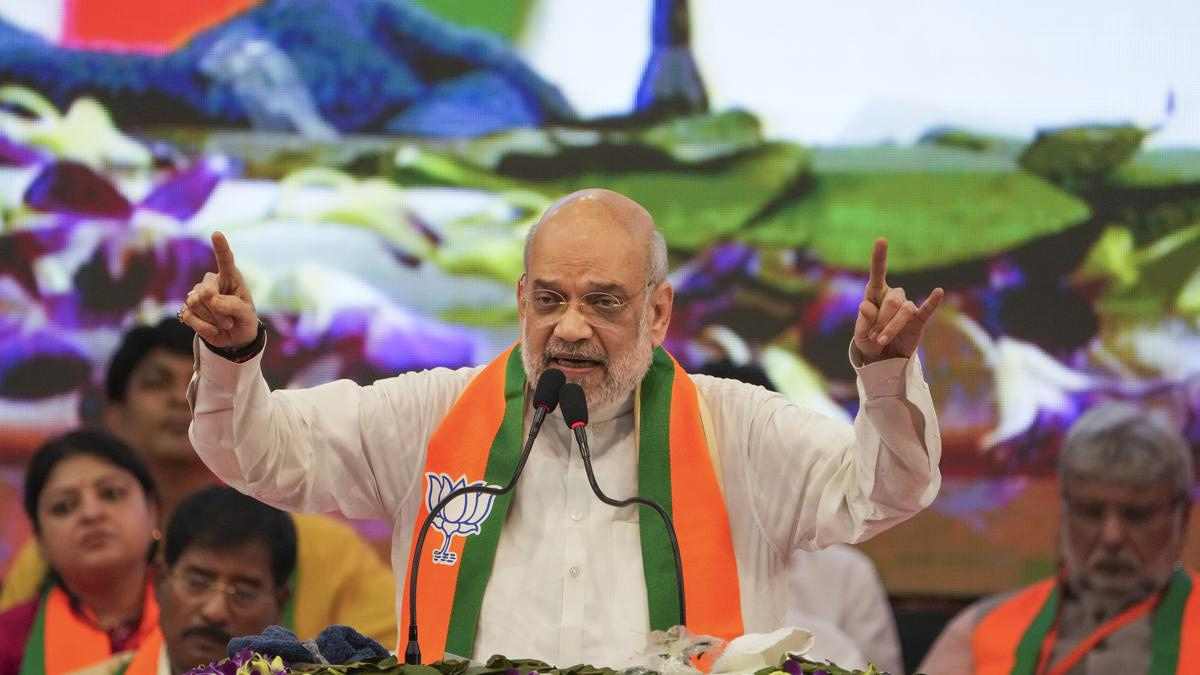
During his visit to Poonch, Union Home Minister Amit Shah sent a powerful and unequivocal message: terror, trade and talks, blood and water, cannot flow together. These are not just words but a reflection of a decisive shift in India’s strategic posture towards Pakistan – a clear signal that any further acts of terror sponsored from across the border will invite not just military retaliation but a multidimensional counter-offensive aimed at isolating and penalizing Islamabad on every front. The backdrop to HM’s statement is deeply tragic and infuriating. The shelling by Pakistan on residential areas in Poonch and Rajouri earlier this month was one of the worst since Independence, leaving 13 civilians, including schoolchildren, dead and dozens injured. Homes, religious places, and markets were targeted in an act that Shah rightly termed as “highly condemnable” and a gross violation of all humanitarian norms. This wasn’t a stray exchange of fire but a calibrated provocation from a state that continues to use terrorism and cross-border aggression as instruments of policy.
India’s response, as outlined by Shah, was swift and clinical. Terrorist infrastructure across the border was targeted and destroyed with precision, avoiding civilian casualties – a stark contrast to Pakistan’s use of its own civilians as human shields. Operation Sindoor, carried out by the BSF, dismantled over 118 Pakistani forward posts and crippled their surveillance infrastructure, setting them back by years. This marks a new doctrine – one that doesn’t merely absorb aggression but hits back decisively. Beyond the battlefield, India is now prepared to escalate its pressure on Pakistan using every available lever of statecraft. The Indus Waters Treaty, often cited as a symbol of Indo-Pak cooperation even during war, has now become a point of leverage. Shah’s words signal that India is rethinking its commitment to allow water to flow unconditionally while blood continues to spill. India will recalibrate its stance on the IWT to send a clear message that peace is not a one-sided obligation.
Trade, too, is on the radar. Despite a near-complete suspension of formal trade ties, any informal channels or third-party routes will be subject to scrutiny. New Delhi is likely to push for tougher restrictions on bilateral trade mechanisms and also exert influence through regional and multilateral trade platforms to deny Pakistan any economic advantage. International financial pressure remains another vital tool. India has successfully worked with allies to keep Pakistan in the FATF grey list and will revive efforts to downgrade it further, possibly back to the blacklist, choking Pakistan’s already fragile financial system.
Moreover, diplomatic channels are being recalibrated to corner Pakistan globally. By exposing its role in nurturing terrorism – most recently through its reactions to Indian anti-terror strikes – India is making the case clear: Pakistan is not just complicit but actively orchestrating cross-border terrorism. This will be pushed aggressively in global forums including the UN, G20 platforms, and bilateral discussions with global powers. The message is thus loud and clear: India will not absorb the pain of terrorism silently anymore. There will be no return to normalcy unless Pakistan dismantles its terror infrastructure and acts in good faith on long-standing demands.
At the same time, India is reinforcing its security preparedness internally. Over 9,500 bunkers have already been built along the border, and more are underway to shield civilians from Pakistan’s indiscriminate firing. Appointment letters distributed to the next of kin of victims reflect a humane yet firm approach – acknowledging the loss while bolstering resilience. India is not only defending its borders – it is defending the principle that no nation has the right to use terror as state policy. The development pause in J&K is only temporary. The Modi Government’s vision of progress for the region remains on track, and it is this forward momentum that terrorists and their handlers seek to derail. But India’s strategy now ensures that every attempt at disruption will extract a cost so steep that it deters future attacks. The days of strategic patience are over; strategic deterrence is the new doctrine.
 Follow our WhatsApp channel
