

Syed Junaid Hashmi
Post-April 22, 2025 Pahalgam Terror attack in which 26 innocent civilians were killed in Cold Blood after being asked about their religious identity; India retaliated, targeted terror hideouts inside Pakistan and Pakistan Occupied Jammu and Kashmir (POJK). When Pakistan shelled civilian areas of Jammu and Kashmir, India responded with missile strikes on the Air Bases of the Pakistan Air Force (PAF), confirmed by Prime Minister of Pakistan Shahbaz Sharief.
As the two countries were going up the escalation ladder, US President Donald Trump sprang a surprise on May 10, 2025, by announcing on X that the two countries had agreed to a ceasefire and that the same would be in place by 5 PM. Immediately after the US brokered ceasefire between the countries, alarmists have begun painting a grim picture of the post-ceasefire landscape in South Asia, predicting imminent and intensified conflicts.
However, this alarmist interpretation overlooks key strategic realities, misjudges India’s intent and dismisses nuanced diplomacy that prevented full-scale war between two nuclear-armed neighbours. The cease-fire is not surrender to chaos as is the case being made out. It is a calibrated pause that has bought time for recalibration, deterrence consolidation and diplomatic realignment.
India has already started reaching out to partner nations and friends across the globe, explaining what necessitated Operation Sindoor, why India crossed the red line, and why Pakistan should be declared an international pariah. All-Party Delegation led by Cong MP Shashi Tharoor is going to travel across the globe to tell the whole world that Pakistan needs to be called out loudly for being breeding ground of terrorism and for continuing with its policy of bleeding India hundred cuts.
The high-stakes military confrontation ushered in a new era in South Asia’s strategic doctrine. Operation Sindoor: India’s swift response, dubbed Operation Sindoor, marked a decisive shift in New Delhi’s approach to cross-border terrorism. While the military and strategic objectives of the operation were largely achieved, as claimed by the Indian Prime Minister Narendra Modi, the domestic political narrative around Prime Minister Narendra Modi took a hit, revealing the complex interplay between battlefield success and public expectations in a hyper-nationalist environment.
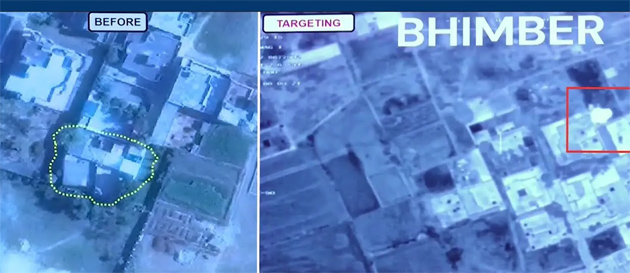
Retired Army Officer including several Chiefs reiterated that Operation Sindoor was not just another retaliatory strike but it was a declaration of India’s evolved strategic clarity. For decades, India’s response to Pakistan-sponsored terrorism vacillated between restraint and symbolic escalation. This operation on the intervening night of May 7-8 broke that cycle. With the deployment of BrahMos supersonic cruise missiles for the first time in live combat conditions and precision drone strikes on military installations deep within Pakistani territory, India demonstrated doctrinal assertiveness.
Experts in the military warfare say that this was not an emotional reaction but a calibrated use of hard power, timed and executed to impose punitive costs on the adversary without triggering uncontrolled escalation. Indian Air Force and Army operated under joint command protocols claiming to have degraded key Pakistani air defense infrastructure, confirmed by New York Times report.
Perhaps the most significant takeaway from Operation Sindoor was how India effectively recalibrated the escalation threshold. And when Prime Minister Narendra Modi talked about “Pakistan’s Nuclear Blackmail,” he meant that no longer does New Delhi perceive nuclear shadow as a ceiling on retaliatory options. Instead, the operation has institutionalized the idea that if Pak-sponsored Terror groups strike inside India, whether in Kashmir or in the hinterland, limited, high-impact kinetic actions are not only possible but politically and strategically viable.
Pakistan’s rapid resort to nuclear signalling, convening National Command Authority within hours of suffering blows on Air Bases and other installations, underscored how rattled Rawalpindi was and how ineffective their response had been. For the first time, Pakistan’s conventional deterrence proved inadequate forcing it to rely on nuclear sabre-rattling which, according to several experts revealed weakness rather than strength.
India maintained firm control over diplomatic messaging throughout the crisis. By refusing to formally acknowledge third-party mediation after US President Donald Trump helped India and Pakistan to resolve the Kashmir Issue, pending for centuries, New Delhi stuck to its traditional position of bilateral conflict resolution. While USA may have helped cool tensions, India dictated the terms of its military posture and refused to rollback economic and diplomatic pressure points which includes suspension of the Indus Waters Treaty talks and closure of Wagah-Attari border for all kind of trade. The message was loud and clear to Pakistan and to the Global Community: We are not ready to outsource our red lines when it comes to fighting terror.
The successful use of indigenous and joint-developed weapon systems such as the BrahMos alongwith drone and electronic warfare capabilities validated India’s defense and procurement policies. Operation Sindoor reinforced India’s case as responsible military power; a power that uses force judiciously with a clear objective. In an increasingly volatile global landscape, this lends credibility to India’s bid for greater roles in multilateral security frameworks.
Despite fears of distraction, India has not diluted its maritime posturing. In fact, parallel to Operation Sindoor, India conducted naval surveillance drills in the Arabian Sea and maintained robust presence in the Indo-Pacific under Quad. India’s partnerships with Australia, Japan and the US are deepening through defense tech-sharing, cyber coordination and joint command exercises.
However, despite claiming military success, Prime Minister Narendra Modi’s domestic image of being “a strongman and close friend of US President Donald Trump” has taken a considerable beating. Modi’s supporters, long conditioned to expect overwhelming, televised retribution viewed the swift ceasefire as anti-climactic. The Government’s emphasis on strategic messaging over spectacle created a vacuum in the nationalist narrative, which was quickly filled by accusations of a “soft approach” from even within Modi’s ideological base. Online harassment campaigns targeted diplomats and military leadership, reflecting a dangerous decoupling between national interest and partisan fervor.
Operation Sindoor accomplished what previous responses failed to do. It established credible deterrent against low-cost proxy warfare, showcased Indian military capabilities and redefined contours of escalation between India and Pakistan. It revealed the ability of the strategic establishment to think beyond the flash of headlines toward long-term consequences.
Yet, in a political culture where symbolic revenge often outweighs substantive gains, the Modi Government faces a recalibration of its domestic communication strategy. The operation succeeded on the battlefield and in military innovation. The only battleground on which it stumbled was domestic perception. And that has more to do with Modi Government’s obsession with managing headlines, preferring pomp and show over strategic maturity and not reigning-in the right wing “Influencers and Twitter trolls” baying for blood of anyone criticizing the Government’s failures.
(The author is a Journalist and Co-Founder of Straight Line News Private Limited)
 Follow our WhatsApp channel
