

Prof Suresh Chander
For decades, the Kashmir issue has occupied a central place in South Asian politics, drawing the attention of diplomats, scholars, and journalists alike. From the flood of academic papers and media commentary to the multitude of seminars-often funded by a maze of known and unknown sources-the subject has grown into an ecosystem of its own. Rather than serving the cause of resolution, this industry often seems to sustain itself on stalemate and repetition.
India and Pakistan have fought four wars since independence. Thousands have died, particularly along the Line of Control. Yet, the core issue remains unresolved-not because the solution is elusive, but because the problem itself remains ill-defined.
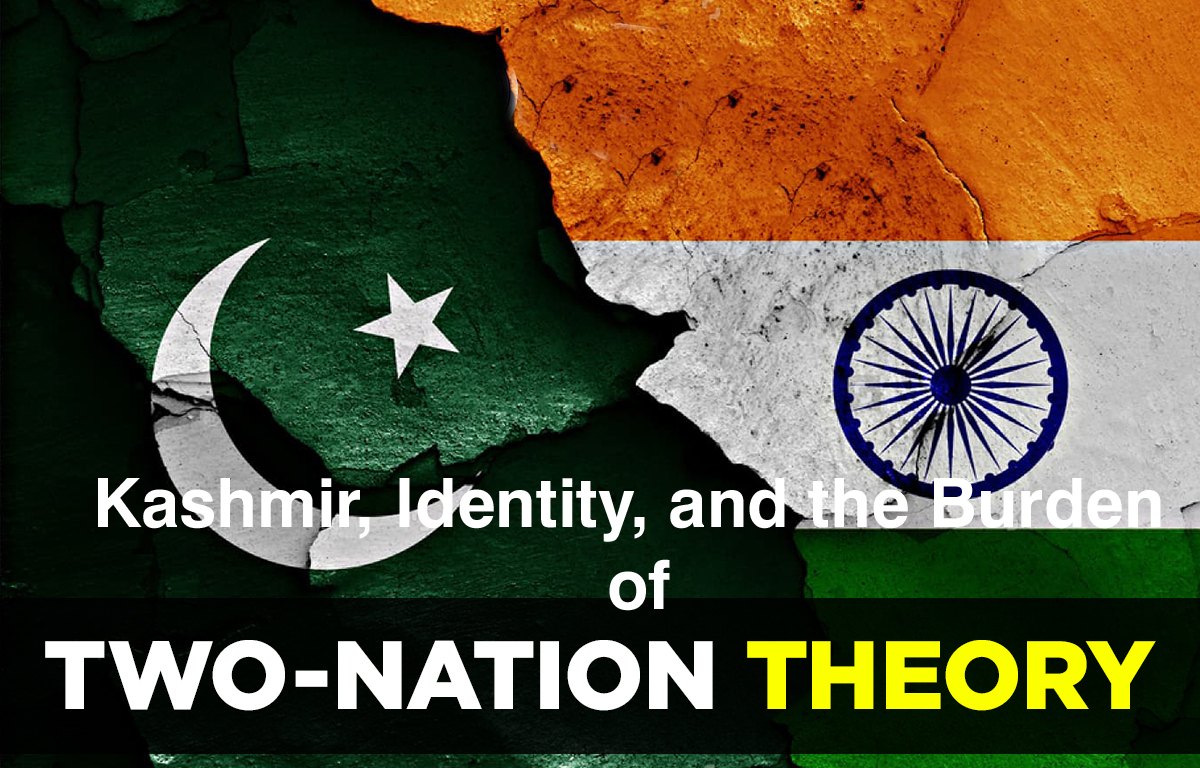
Much of the conventional narrative locates the conflict in the events of 1947: the indecision surrounding Jammu and Kashmir’s accession, the Pakistan-backed invasion by tribal raiders, and Maharaja Hari Singh’s eventual decision to accede to India. Pakistan’s claim has rested on Kashmir’s Muslim-majority character, aligned with the ideological logic of the Muslim League’s two-nation theory-the foundation upon which Pakistan was built.
But it is worth asking: is Kashmir truly the root cause of hostility between the two nations, or is it merely a symptom?
If one applies the lens of causality, it becomes apparent that the deeper driver is the two-nation theory itself. The idea that Hindus and Muslims constitute inherently separate civilizations-not just religious groups-remains a potent undercurrent in Pakistan’s national narrative.
This ideological divide did not dissolve with the creation of Pakistan. Instead, it has been continually reinforced, particularly through the country’s educational curriculum. Pakistani schoolchildren are often taught that their ancestry lies not in the Indian subcontinent, but in Arab or Turkic origins. This narrative effectively erases historical and cultural ties with the broader Indian past.
Such ideas are not confined to textbooks. In a recent public address, Pakistan’s Army Chief, General Asim Munir, reiterated this line of thinking, reminding Pakistanis that their identity is rooted in being different from Hindus in every way-religion, customs, traditions, even aspirations. He urged citizens to carry this belief into future generations. This is not merely a historical interpretation; it is a political project aimed at sustaining a distinct and oppositional identity.
So where do we go from here?
If any meaningful thaw in Indo-Pak relations is to occur, the ideological underpinnings of hostility must be addressed. Reforming Pakistan’s education system to replace adversarial narratives with a more inclusive and historically grounded perspective would be a crucial first step. This is not about erasing religious or cultural differences, but about rejecting the idea that difference necessitates enmity.
India, for its part, must remain consistent in affirming its respect for Pakistan’s sovereignty and in wishing its people well. When the time is right for a new declaration, peace process, or bilateral initiative, India should insist on the removal of anti-India rhetoric from institutional frameworks in Pakistan. At the same time, Pakistan must be encouraged to rediscover and celebrate its own rich, diverse heritage-not in opposition to India, but in continuity with the subcontinent’s shared past.
A political resolution to the Kashmir conflict may eventually emerge. But if the deeper ideological divide remains unaddressed, any resolution will be superficial at best. The challenge, then, is not just to settle borders-but to confront the boundaries built in minds.
(The author is a retired Professor of Electrical and Computer Engineering and a Ph.D. from IIT Delhi.)
 Follow our WhatsApp channel
