

Prof Suresh Chander
This region appears to be cursed – unable to coexist peacefully when united, and equally unable to manage separation after division. The Partition of India in 1947 was not merely a date on the calendar or a bureaucratic reshuffle. It was a deeply traumatic and dynamic event whose tremors still echo in the psyche of nations, especially India and Pakistan, influencing strategic, defense, and foreign policies even today.
Recent Repercussions: The Pahalgam Killings
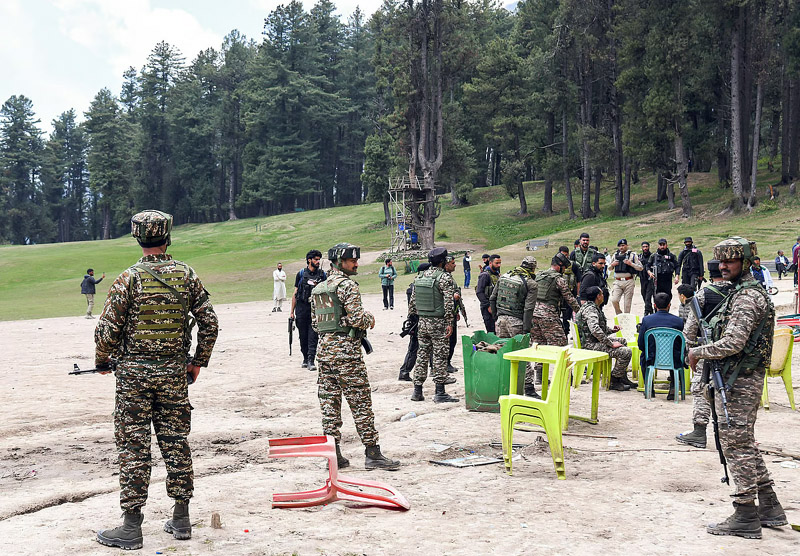
The brutal killings of Indian civilians in Pahalgam in 2025 are a stark reminder that Partition’s legacy remains unresolved. The roots of this tragedy can be traced back to the unresolved status of Kashmir-a direct consequence of the 1947 Partition. What was once a princely state caught in the vortex of division has since become the most militarized and disputed zone in South Asia.
Impact on Public Psyche: The Trauma that Endures
The horrors of Partition-including the mass killings in Punjab and Bengal, sexual violence, and forced displacement-created a deep collective trauma. Generations grew up with stories of loss, betrayal, and suspicion. The pain of refugees became intergenerational trauma. The fear of the “other” was institutionalized.
The Pahalgam killings reignite those fears. For many, it reopens wounds passed down through families and communities. Kashmir remains the bleeding border of Partition.
Defense and Strategic Policies: Born from Partition
Militarized Borders: Punjab and Kashmir became defense hotspots. Massive troop deployments began post-1947 and continue till today. Pahalgam’s location in sensitive South Kashmir shows how the ghost of Partition still dictates India’s military focus.
Permanent Threat Perception: Pakistan and India have each other etched as the primary security threat. Pahalgam isn’t seen as an isolated incident but part of a broader Pakistan-linked strategy.
Nuclear Brinkmanship: Both nations have developed nuclear arsenals under the shadow of Partition’s unresolved tensions. Each flare-up, like the recent Pahalgam killings, raises concerns of escalation.
Doctrinal Shifts: Strategies like India’s “Cold Start” or Pakistan’s “Full-Spectrum Deterrence” are informed by Partition-era hostilities and fears of infiltration, sabotage, and asymmetric warfare.
Foreign Policy in Partition’s Shadow
India’s diplomatic policy of strategic autonomy and Pakistan’s reliance on the U.S. and later China were both shaped by Partition.
Pahalgam killings reflect the continued relevance of these alignments as India seeks global support to counter cross-border terror.
Conclusion: Pahalgam as a Reminder of Unfinished History The 1947 Partition is not history-it is a living fault line. The Pahalgam killings are not just a tragedy but a manifestation of an unresolved trauma. Until the core issues birthed in 1947 are addressed with empathy, justice, and clarity, the subcontinent will continue to bleed-sometimes in headlines, always in hearts.
(The author is former Head of Computer Engineering Department in G B Pant University of Agriculture & Technology)
 Follow our WhatsApp channel
