

A Dwindling Natural Resource
Neha Jamwal, Dr Arti Sharma
Varied geographical realms in India favors vast ecological systems of which wetlands are an integral part. These are the most prolific and beneficial ecosystems and often designated as “Kidneys of Landscape”.
Placed transitional between land and aquatic ecosystems, these contribute to 6% of the total land surface of the earth, aiding in about 40%-47% ecological services which include, nutrient recycling, flood checking, water purification, groundwater recharge, stream flow maintenance, carbon sequestering, atmospheric gases regulation.In addition to offering a range of goods that humans need like,providing fuel, fodder and drinking water, these also serve as biological hotspots, harboring unique indigenous biota.
Despite contributing a meagre share in the landscape, yet they are able to sustain 40 per cent of all plant and animal species. The 19th century witnessed a great loss of wetlands while the 20th and early 21st centuries alone witnessed degradation of whopping87% wetlands across the globe, raising matter of concern towards the existence of these ecosystems.To address this issue for the need for their conservation and immense importance of wetlands, a global framework in the name of “Ramsar Convention” was established in 1971 and India being bestowed with a plethora of wetland ecosystems,became a part of it on 1st February 1982. Since then, a grand total of 89 wetlands have been identified as ‘Wetlands of International Importance’with an estimated area of about 1,328,068 hectares.
The UT of J&K is globally recognized for a significant number of wetlands and the services provided by them like ecological, cultural, tourism and biodiversity significance, are closely associated to local inhabitantsfor subsistence. According to Asian Water Bird Census (2022), there are a total of 22 protected waterbodies of ecological interests in J&Kof which five are recognised as Ramsar sites i.e., Surinsar-Mansar Lakes in Jammu Province while Wular Lake, Hokersar Lake, Shallabugh Wetland and Hygam Wetland Reserve in Kashmir Province. A few others like Gharana (R.S. Pura), Pargwal (Akhnoor), Nanga (Ramgarh), Sangral (RS Pura) and Kukrian (Gho-Manhasan), have been notified as wetlands of Jammu province by the Forest Department in 1981. Among these, except Gharana wetland, all others are craving desperately for attention due to their constant dwindling status due to incessant exploitation. Although, much focus has been paid on the restoration of Gharana wetland an ‘Important Bird Area’ [accredited by Birdlife International (UK) and Bombay Natural History Society (BNHS)] is located close to the International Border in RS Pura. This waterbody acts as a “Home” to the distant winter visitors where one can witness nature’s grandeur at it best with birds hovering in majestic flocks. During their visit, some of the birds also opt for nearby water bodies/wetlands for sustainable use of feeding resources. One of such preferred habitats is Pargwal Wetland, which isone of the largest wetlands in Akhnoor tehsil of Jammu, located along the banks of river Chenab with an estimated area of approximately 12154 acres.
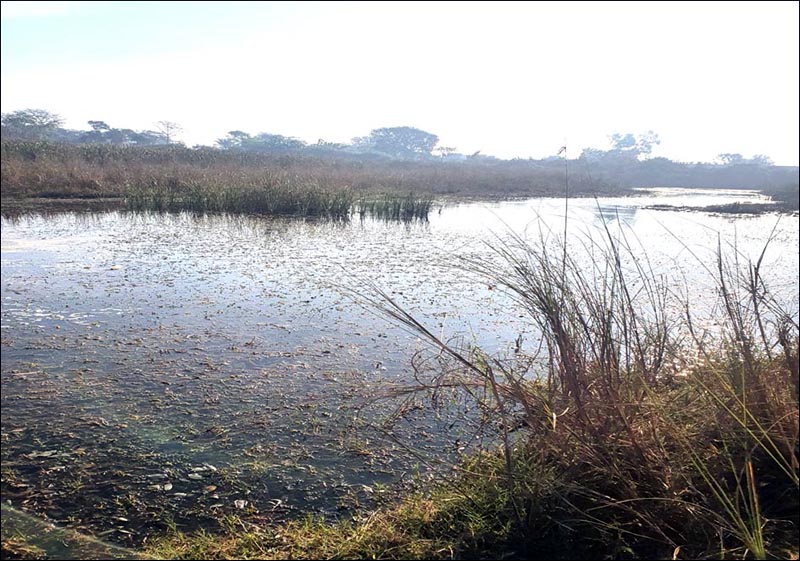
Pargwal wetland used to be one of the favored site for the migratory birds but over the period, a drastic decline in their population has been witnessed. To decipher the plausible cause for their decline the ecology of this wetland has been evaluated. The findings clearly revealed very poor water quality with mild to moderate pollution, along with organic pollutants primarily from household waste, agricultural runoff and vehicle traffic in the wetland premises. This has led to a drastic impact on the terrestrial and aquatic biota. Hence, it can be inferred that its destiny has been lost in the demands of unlawful human activities and deterioration mostly because of the fast-growing population, accompanied by intensified agriculture, the use of pesticides, insecticides and fertilizers, surface runoff, illegal encroachment and the discharge of household waste. Over-exploitation in form of illegal sand mining, conversion of wetland areas into agricultural areas, hunting of wetland birds and animals has drastically affected the faunal population and productivity of this wetland.
The important birds visiting this wetland include; Northern Shoveler, Egyptian vulture, White-tailed lapwing, Black-winged stilt, Spotted dove, European roller, Asian Koel, Grey-headed swamphen, Common Chiffchaff, White wagtail, Grey Wagtail, Rosy Pipit, Purple Sunbird, Common Starling, Brahminy Starling, Grey Bush Chat, Long-tailed Shrike, Great Egret, Wire-tailed swallow, Eurasian chiffchaff and Little cormorant. But intensive human interference and negligence from competitive authorities has led to its vanishing status thereby leading to a big question mark on the existence of migratory bird population.
Pargwal Wetland
Fisheries, farming and Eco-tourism greatly rely on healthy wetland ecosystems. Wetland loss directly affects food security, cultural practices and economic opportunity especially in rural and indigenous communities.Wetlands, often treated as wastelands or development sites, are in fact ecological powerhouses as they exhibit remarkable levels of biodiversity and because of the ideal environment and plenty of food, many different kinds of animals complete their life cycles in and around wetlands, maintaining the food chain. Yet, these critical ecosystems are disappearing at an alarming rate globally and the consequences are far-reaching. According to local folklore, Pargwal wetland, that was once rich in diverse migratory bird fauna has now become a lone some art of nature with polluted surroundings.If such remains the case, fate of migratory birds is doomed which, if not paid heed, will soon be vanquished.
What Can Be Done?
Governments, various organizations and communities around the world have started recognizing the value of wetlands and the urgency of protecting them which include passing of stronger environmental laws, funding restoration projects and educating the masses on the role wetlands play in their lives.Although, international agreements like the Ramsar Convention on Wetlands have brought attention to the issue, but enforcement and action at the national and local levels remain critical. Landowners can also play a crucial role by adopting sustainable practices and taking advantage of incentive programs for wetland conservation as per the norms set up by the authorities along various regions of the globe.
A small initiative was also done on our part by raising mass awareness to the students of various government and private schools with an aim to foster deeper understanding of the crucial role of wetlands in sustaining biodiversity, their importance and sense of responsibility towards local environment. By discussing the ecological, economic and social aspects of wetlands we tried to enhance critical thinking of students and respective problem-solving skills regarding environmental issues.By conducting interactive sessions and active participation of the students, we tried to inculcate a sense of stewardship in young minds with a belief that we can cultivate a generation that values and protects natural resources.
A Call to Action
The silent loss of wetlands is a global crisis hiding in plain sight. It affects our water, our climate, our safety and our future. Preserving and restoring wetlands is not just an environmental issue it is a social, economic and public health imperative. As climate challenges mount, protecting these natural allies may be one of the smartest investments we can make.
Whispers of water, roots that bind, Wetlands hold the Earth’s design
 Follow our WhatsApp channel
