

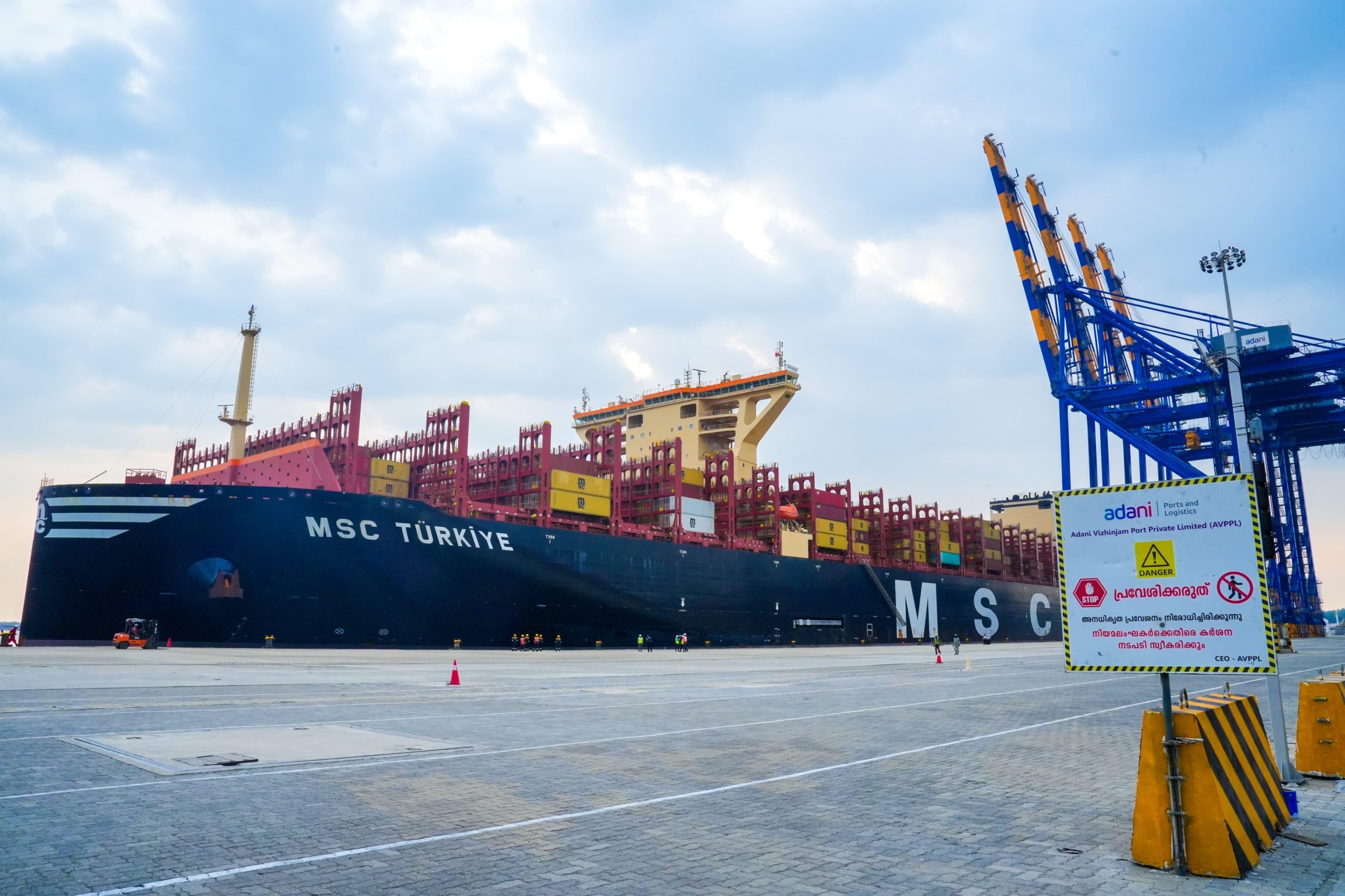
The commissioning of the Vizhinjam International Seaport by PM marks a pivotal moment in India’s maritime and economic trajectory. Developed for Rs 8,867 crore under a public-private partnership led by the Adani Group, the port represents not just an infrastructural milestone but a strategic reorientation of India’s place in global shipping. Vizhinjam’s location-at the southern tip of the Indian peninsula, near major international shipping routes-offers a natural depth conducive to hosting ultra-large cargo vessels. This geostrategic advantage positions Vizhinjam to emerge as a leading transhipment hub, potentially reducing India’s dependency on foreign ports like Colombo, Singapore, and Dubai. India currently channels 75 percent of its transhipment cargo through such ports, leading to substantial foreign expenditure. Vizhinjam could significantly reverse this flow, ensuring economic gains are retained within national borders.
Politically, the inauguration had undertones of broader national narratives. The bipartisan presence on stage and the state’s collaboration with a major private conglomerate highlighted a pragmatic convergence of ideology and economics, a subtle nod to evolving political realities where development often transcends party lines. The project’s completion is also emblematic of India’s larger maritime ambitions. Over the past decade, the country has doubled its port capacity and improved operational efficiency. Vizhinjam’s operationalisation strengthens India’s aspiration to be a central node in global maritime trade. It echoes the country’s historical maritime prowess, especially that of Kerala, once a thriving port hub during ancient times.
However, success will depend on effective integration with hinterland logistics, timely execution of subsequent phases, and ensuring inclusive local development. Environmental and community concerns-often overlooked in mega projects-must also be addressed to secure long-term sustainability. In essence, Vizhinjam is not just a port; it is a symbol of India’s maritime resurgence and economic recalibration. Mega infrastructure has been raised, and in the coming years, everyone will get their share of the pie from the project. Money saved is always money earned. As it steers the nation into deeper waters of global commerce, its true success will lie in balancing economic ambition with equitable growth and strategic foresight.
 Follow our WhatsApp channel
