

Prof Rajni Kant
The Indian Knowledge Systems (IKS) comprise of Jnan, Vignan, and Jeevan Darshan that have evolved out of experience, observation, experimentation, and rigorous analysis. Since time immemorial, this tradition of validating and putting into practice the experience, observation, and experimentation has impacted our education, arts, administration, law, justice, health, manufacturing, and commerce. The concept of “IKS” has gained significant popularity recently, especially following its inclusion as a huge founding pillar in the National Education Policy (NEP)-2020. This policy mandates the incorporation of IKS as a subject in schools, colleges, and higher education institutions (HEIs). The IKS is vast and diverse, spanning various Indian languages and dialects. A considerable portion of IKS knowledge resides within our oral traditions accessible in all Indian languages. It prioritizes language proficiency by promoting regional languages, preserving linguistic diversity, and enriching students with a deep appreciation for their cultural heritage. Bilingual education further enhances communication skills, recognizing their crucial role in a global context.
The Indian theory of knowledge or Indian epistemology attempts to provide a rational basis for an intelligible discourse on matters of common and everyday experience. For centuries, people in India derived knowledge from close observation of nature and the environment, such as insights into sustainable agricultural practices, herbal medicine, ecosystem management, etc. IKS encompass a wealth of knowledge, practices, and innovations amassed over ages in India, covering various disciplines, including mathematics, astronomy, medicine, philosophy, and ecology. These knowledge systems have often been neglected in the Indian education system, even though their potential contribution to advancing contemporary science is important. By applying scientific methodologies to study IKS and its associated practices, we can unlock their underlying principles, demonstrate their efficacy, and investigate their potential applications in addressing present-day challenges.
IKS has a lot to offer in motivating modern innovations across various disciplines and there is visible recognition of IKS getting impregnated with modern approaches to address contemporary challenges. By integrating IKS with modern scientific knowledge, we can delve into developing better sustainable technologies, innovative healthcare solutions, urban planning approaches, etc., that prioritize environmental balance and human flourishing in all possible ways. The initiatives like the National Innovation Foundation (NIF) and the Honey Bee Network (HBN), in India, aim to document, validate, and promote grass-root innovations rooted in Indian Knowledge Systems. To quote an example, the innovations like the Mitticool refrigerator, using traditional clay cooling technique, indicates the importance of harmonizing IKS with modern technology to design sustainable solutions for rural communities. By recognizing the value of IKS and involving local communities in research and development processes, initiatives can promote cultural preservation, foster community resilience, and address intellectual property rights issues.
Some may contend that IKS is extraneous to contemporary challenges and that modern scientific knowledge is more helpful in addressing them. However, this viewpoint overlooks the extra-beneficial contributions and insights that IKS offers in tackling present-day issues. While modern scientific knowledge has advanced greatly in recent centuries, dismissing the wealth of expertise ingrained within IKS would be short-sighted. One of the strengths of IKS lies in its holistic approach, which integrates multiple dimensions of knowledge, including empirical observations, theoretical frameworks, experiential wisdom, and spiritual insights. Furthermore, many elements of IKS have been validated through empirical research and scientific inquiry. For example, Ayurveda, the ancient Indian system of medicine, has been subject to numerous scientific studies, offering holistic approaches to healthcare that emphasize preventive care, lifestyle modifications, and personalized treatment strategies. Further, the utility of yoga has been supported by a growing body of evidence-based research, highlighting its multifaceted advantages for physical health, mental wellbeing and quality of life, and that is how that more than one hundred eighty five countries on the globe now celebrate UN’s International Day of Yoga.
Evidence-based research has confirmed that traditional Indian agricultural practices are sustainable and offer valuable lessons for addressing contemporary challenges such as climate change, soil degradation, and food insecurity. By integrating IKS with modern scientific knowledge, the potential to develop innovative and holistic approaches to agriculture that promote environmental sustainability, food security, and rural prosperity is immense. For example, conventional Indian agricultural techniques, such as mixed cropping, crop rotation, rain water harvesting and organic farming, align closely with modern sustainable agriculture practices to preserve soil health, enhance biodiversity, and mitigate climate change impacts. Several aspects of Indian astronomy, including mathematical calculations, astronomical observations, and predictive models, have stood the test of time and have been validated through empirical evidence and modern scientific methods. There are many more such examples.
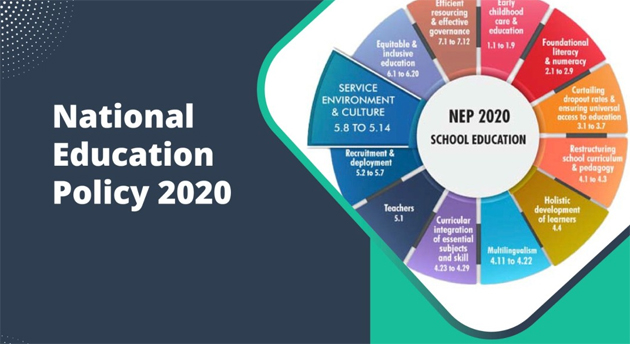
The National Education Policy 2020 emphasized integrating IKS in school and higher education in different disciplines. Education infused with the perspective of IKS can offer students a holistic world-view that encompasses various facets of life. One such example is the emphasis on sustainable living practices, which are deeply ingrained within IKS. These
practices focus on environmental protection and emphasize societal resilience and harmonious co-existence with the natural world. Incorporating the principles of IKS into education enables students to grasp the interconnectedness between human actions and their impact on the environment and society. By delving into the wisdom of IKS and contextualizing it within modern realities, students gain insights into the importance of adopting sustainable lifestyles. Besides this, the teachings of IKS encourage students to seek solutions to contemporary challenges faced by human societies. Whether it’s addressing climate change, resource depletion, or social inequality, the holistic perspective of IKS equips students with a deeper understanding of these complex issues. It inspires them to take proactive measures for positive change. Through a comprehensive exploration of IKS, students can emerge as informed and empowered individuals ready to tackle the challenges of the twenty-first century with resilience and creativity.
Indian higher education institutes (HEIs) are working on incorporating IKS into higher education, an ongoing endeavour which might take few years for final merger with the regular academic curriculum at the school, college and university level. It necessitates meticulous planning, comprehensive teacher training programmes, and the procurement of credible study materials available in various Indian languages. The initiative to introduce IKS courses has gained traction, with few dozen universities and many colleges across India already offering such programmes. For instance, IIT Kanpur has established a study centre for IKS for its holistic advancement. This initiative aims to delve into and seamlessly integrate IKS into academic curricula and interdisciplinary research endeavours. Similarly, an enterprising hub been created at IIT Madras for multi-faceted research exploring India’s rich scientific, technological, and cultural heritage. Such examples underscore the concerted efforts of HEIs’ in India to embrace and promote IKS. Through collaborative initiatives, innovative research, and periodic curriculum development, these institutions can play a pivotal role in advancing the integration of IKS into higher education, enriching academic discourse, fostering a deeper appreciation for India’s intellectual legacy, and bringing in better knowledge harmony for a sustainable ecosystem.
The University Grants Commission (UGC), in collaboration with the IKS division of the Ministry of Education, has undertaken initiatives to strengthen dedicated faculty in this area as the capacity-building of teachers through training in imparting IKS in various disciplines is essential to prevent the dissemination of inaccurate information to students, which could undermine the integrity of IKS education. These trained educators will receive comprehensive support, including access to reliable resource materials and well-structured course curriculum. The aim of the ministry of education and its bodies like University Grants Commission and national funding agencies is to enhance student learning and empower faculty members across HEIs with the requisite expertise in IKS. By empowering educators with the necessary resources and knowledge, HEIs, thus can effectively deliver IKS education that is comprehensive, accurate, and culturally inclusive.
Thus, rather than viewing IKS as incompatible with modern scientific methodologies, we should study its potential to contribute to a more inclusive, diverse, and dynamic scientific landscape. It is essential to recognize that integrating IKS into education is approached in a manner that promotes inclusivity, diversity, cultural appreciation and subsequently ensures the richness and diversity of India’s knowledge systems, based on traditions, are preserved and appreciated for the future generations.
(The author is a former Vice-Chancellor of Rabindranath Tagore University, Bhopal, and presently a Professor of Physics @ University of Jammu)
 Follow our WhatsApp channel
