

Sadaket Ali Malik
Frederick Drew’s exploration and understanding of Padar, a remote valley in the region of Jammu and Kashmir, are among the earliest comprehensive accounts of this isolated and rugged area.
Drew’s work, primarily centered around the region’s geography, culture, and society, provides a rare glimpse into the way of life in Padar during the late 19th century, particularly before it became more accessible due to infrastructure development in later years. His account is especially important because it sheds light on a region that had been largely neglected in the wider historical narratives of Jammu and Kashmir. Below is an expanded look at how Drew understood Padar.
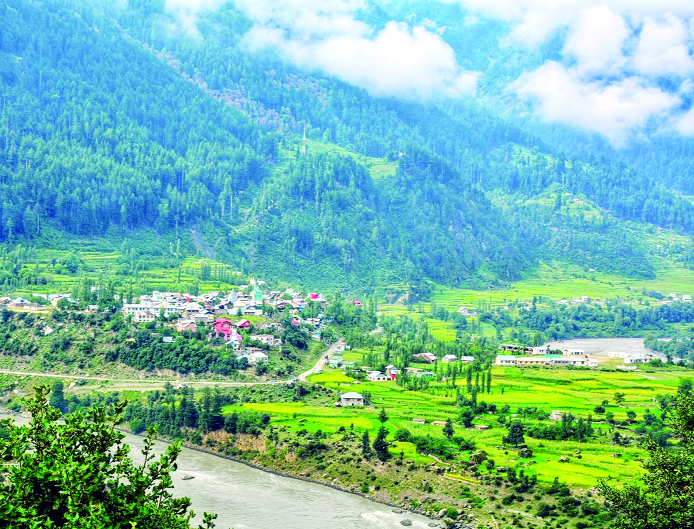
Drew’s descriptions of Padar focus heavily on the region’s rugged and difficult terrain. He notes that Padar is a high-altitude valley, with steep mountains and difficult landscapes. Nestled in the Chenab River basin, the valley is bordered by towering mountains, making access to the region difficult. According to Drew, these geographical features made Padar somewhat of a “hidden” valley, isolated from the rest of the Jammu and Kashmir region. The valley is tucked away between the Pir Panjal Range to the north and the Kishtwar Range to the south.
The Chenab River flows through the valley, providing a lifeline to the people who lived there. Drew’s description of the river reflects its importance not only for agriculture and irrigation but also as a trade route, albeit a challenging one due to the difficult topography. Drew highlights the difficulties of travel, noting that despite the river’s strategic value, the treacherous mountain passes made it hard to navigate, with most travelers relying on local knowledge to find safe routes.
One of the defining aspects of Padar, as described by Drew, is its isolation. He noted that the valley was far from the central administrative hubs of Jammu and Kashmir, making it difficult for officials and traders to reach. The absence of developed roads and communication networks meant that Padar remained largely disconnected from the rest of the region. Drew acknowledged this geographical isolation as a double-edged sword-it protected the valley from external interference, but it also stagnated development and limited the exchange of cultural and technological advancements.
The physical barriers to reaching Padar are evident in Drew’s account of the local population’s reliance on traditional methods of transportation. He mentions the use of mules and horses, which were essential for transporting goods and people across the mountainous terrain. These animals played a central role in the local economy, facilitating trade, agriculture, and the movement of nomadic herders who lived in the area.
Drew’s insights into the people of Padar reveal much about their society and lifestyle. The valley’s population primarily consisted of Gujjars, Bakarwals, and other tribal communities, who followed a semi-nomadic lifestyle. The Gujjars, who are traditionally known for their herding and agricultural practices, made up a significant portion of the population in Padar. Drew noted their herding of cattle, sheep, and goats, with many of them migrating between the higher and lower altitudes depending on the seasons.
Drew described the Padaris, as the local people were referred to, as a resilient and resourceful community. He observed their traditional pastoral life, noting that the people were deeply connected to the land, and their lives revolved around the care of livestock, as well as agriculture, which was limited due to the terrain. The valley’s forests provided timber and fuel, while its rivers supported a modest fishing industry. Drew was impressed by the self-sufficiency of the people in this harsh environment.
The nomadic lifestyle was particularly prominent among the Bakarwals, who moved their flocks between the valley’s higher and lower altitudes in search of fresh pasture. Drew remarked on the seasonal migrations, noting that the Bakarwals would often travel with large herds, setting up temporary camps along their routes. This movement created a unique rhythm to life in Padar, where the inhabitants adapted their work and activities to the seasons.
Despite their isolation, Drew observed that the people of Padar retained a sense of cultural distinctiveness. Their language, customs, and traditions were unique to the region and had been preserved due to the lack of outside influence. He found that local communities were bound by deep family ties and tribal allegiances, and their social structure was largely based on kinship. In many ways, Padar’s inhabitants appeared to live in a state of relative autonomy, with a strong reliance on tribal governance and community cooperation.
In his account, Drew was frank about the economic challenges facing the people of Padar. He emphasized the difficulty of farming in the region, where arable land was scarce and largely confined to narrow strips of valley floor along the riverbanks. The terrain was not conducive to large-scale agriculture, and the people relied heavily on livestock for their livelihood. In his descriptions, Drew notes the limited agricultural output due to the lack of irrigation infrastructure and the rocky soil.
The valley’s environmental conditions, including its harsh winters, contributed to these economic difficulties. Drew observed that the long winters were especially difficult for the locals, who were cut off from the rest of the region for several months due to snow and difficult mountain passes. During this time, the people would often rely on stored food and resources, which made the struggle for survival even more pronounced. Drew mentioned that trade with the rest of the state was limited, and the inhabitants were often self-sufficient, relying on barter rather than cash-based transactions.
Drew’s account of Padar cannot be divorced from the larger political context of Jammu and Kashmir. He recorded how the region had been affected by the Dogra rule and the influence of Kashmiri and Jammu rulers, who had limited direct control over remote areas like Padar. The Dogra administration, which had extended its rule over Jammu and Kashmir in the mid-19th century, was still in the process of consolidating power in more distant and mountainous areas such as Padar.
Drew noted that the valley was often a point of contention between different tribal factions and local rulers. The political landscape was fluid, with various groups vying for control over the resources of the region. Drew also remarked that despite being officially part of the larger Jammu and Kashmir state, Padar often operated with a degree of local autonomy due to its geographical isolation. He highlighted how the valley’s tribal chiefs and leaders held significant sway in the day-to-day governance, with the state’s administrative presence being minimal.
Frederick Drew’s account of Padar provides a detailed and nuanced understanding of a region that, at the time of his writing, was largely unknown to the outside world. His observations reveal a rugged and self-sufficient valley whose inhabitants, though facing significant economic and environmental hardships, maintained a strong sense of community and cultural identity. Drew’s writings also provide an important historical context, showing how the region was shaped by geography, isolation, and the broader political dynamics of Jammu and Kashmir. His account remains a valuable resource for understanding the early history and cultural landscape of Padar.
 Follow our WhatsApp channel
