

From “makan-dukan-bhatha” economy to knowledge hubs
Dr. Ashraf Zainabi
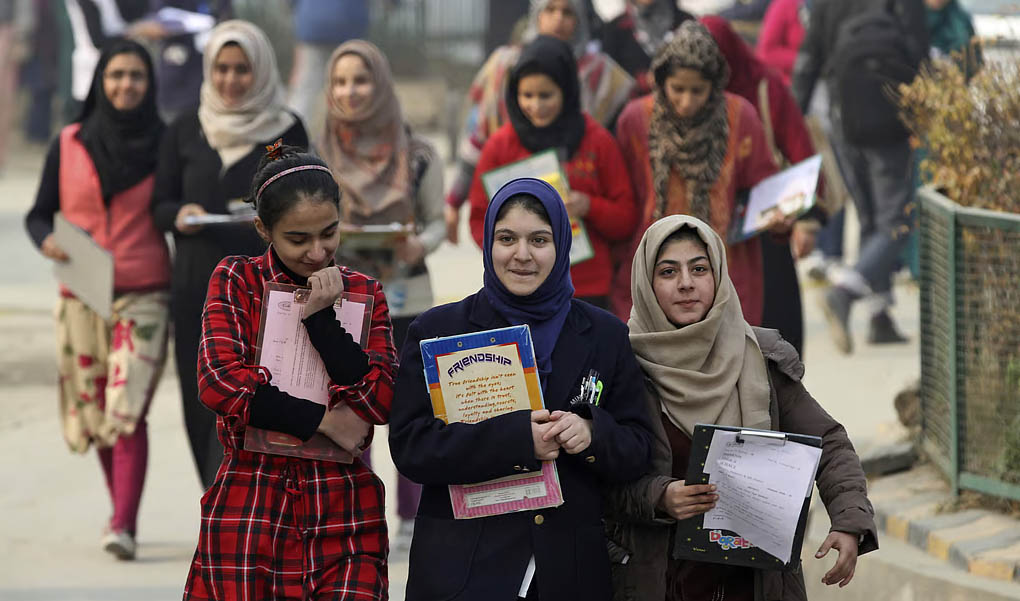
The maiden address of LieutenantGovernor Shri Manoj Sinha to the assembly of UT of J&K on 3rd March 2025 highlighted that his government is committed to make J&K an educational hub. While this statement seems overrated, but as always, where there is a will there is a way, is the answer.
J&K has long struggled with two major challenges: environmental degradation and the outflow of talent and capital. While private industries like brick kilns (bhatha) and dukan (shops)continue to generate economy but they also pollute the environment and harmpublic health, private higher education sectorhas remained an untapped opportunity. If cities like Chandigarh, NCR-Delhi, Jaipur, Pune and Chennai can become global education hubs, why can’t J&K, especially Kashmir?
Instead of allowing polluting industries which under-employee locals, to dominate, why not channel private investment into universities, medical colleges and research institutions of international standards? Such a shift would not only preserve Kashmir’s fragile ecology but also address the pressing issue of unemployment while ensuring that the enormous sums spent on education outside the region remains within J&K’s economy.
Several thousands of students from J&K migrate to other states and even abroad in pursuit of quality education every year. This exodus costs families billions, enriching other states while depleting Kashmir’s economy. If this capital is invested locally, J&K can build institutions rivaling the best in the country, and even abroad.
A well-planned private education sector can generate substantial revenue, create a self-sustaining ecosystem where students, faculty, and businesses will thrive together. It will also attract students from outside Kashmir and even from foreign countries, further boosting the local economy.
Unemployment remains a critical issue in J&K, and allowing private educational sector to flourish can be a game-changer. Several PhD scholars who study in top notch national and international institutions ultimately land up serving outside Kashmir, thus a huge brain drain. A mandatory 50% local employment cap for faculty and staff will ensure that these institutions contribute directly to the region’s economic upliftment and progressive education system.
Beyond direct employment, these institutions can drive growth in allied sectors—hostels, transportation, bookstores, food services, and even local research and innovation hubs. A knowledge-driven economy is far more sustainable and lucrative than makan-dukan-bhatha economy.
Despite the clear benefits, private universities remain rare in J&K. The reasons are both structural and psychological. The government must realize this without wasting time. A policy in this direction can be framed, wherein the regulatory frameworks are made simple and attractive. Present complex regulatory frameworks may be discouraging private investors who face negligible hurdles elsewhere in India. Further, the situation in Kashmir (political or otherwise) has improved significantly, outdated perception of halaat kharab hai continue to deter big investments. Tax breaks, land grants and some funding incentives can encourage private investors to turn the tide.
Encouraging collaborations between local universities and global institutions can fast-track quality private education. In private education sector policy, universities and other educational institutions can be encouraged or conditioned tolink with industries, ensuring that students find employment instantly and locally instead of looking at limited government sector or elsewhere.
The time has come to rethink our priorities. Do we continue with makan-dukan-bhatha economy that degrade our environment, or do we invest in a knowledge economy that ensures prosperity without destruction?
Kashmir has all the ingredients to become a premier educational hub—natural beauty that can attract students worldwide, a rich intellectual tradition, and a desperate need for sustainable economic alternatives. What’s missing is the right policy push.
If Pune can be Oxford of east and Chennai can do it, so can Kashmir. The question is: are we ready to embrace a future where knowledge, not pollution, becomes our biggest asset?
 Follow our WhatsApp channel
