

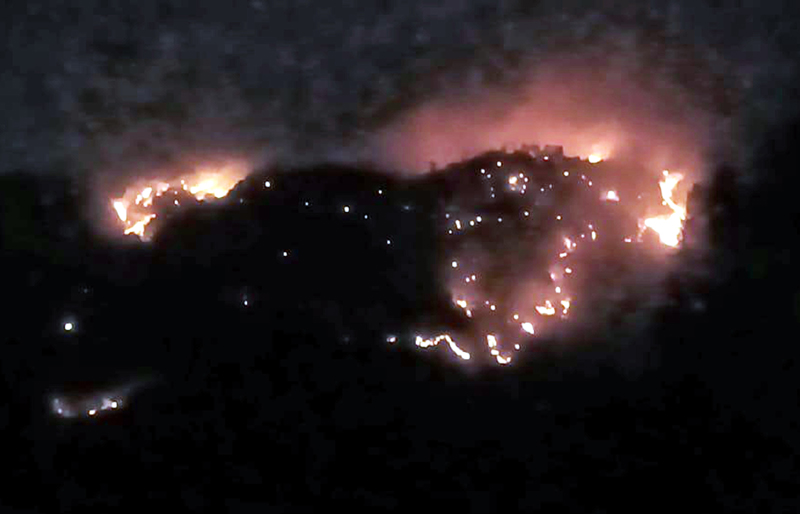
The data shared on forest fires in Jammu and Kashmir presents a distressing reality: the Union Territory has witnessed 307 major wildfires since 2024, with the Jammu region alone accounting for over 93 percent of these incidents. This rapid surge in forest fires, particularly in ecologically sensitive areas, calls for immediate and robust intervention. The destruction of green cover not only threatens biodiversity but also exacerbates climate change, disrupts local livelihoods, and endangers human settlements. Continuous wildfires have severely damaged the region’s rich biodiversity. By 2023, an estimated 112 hectares had been lost, contributing to the release of approximately 68.8 kilotons of carbon dioxide into the atmosphere. This alarming statistic underscores the severity of the problem and its impact on the environment and human health.
The Forest Survey of India reports that 284 major forest fires were recorded in 2024, with an additional 23 in the first two months of 2025. These fires, some of which have remained active for an entire year, highlight the growing vulnerability of the region to forest blazes. The highest incidence occurred in the peak summer month of June 2024 (130 fires), followed by May (79) and January (39). Interestingly, no major fires were reported in April, July, August, September, and October of last year, indicating that extreme summer months and winter dry spells are the most susceptible periods for wildfire outbreaks. Among the 307 recorded incidents, the Jammu region alone saw 286 cases, an overwhelming 93 percent of the total. This suggests a concerning trend of increased vulnerability in the region’s forests, possibly due to a mix of natural and human-induced factors. In contrast, Kashmir had a significantly lower number of incidents. This disparity between the two regions raises questions about differences in climatic conditions, vegetation types, and human activities contributing to fire incidents.
Forest fires can be attributed to multiple factors, including natural causes such as lightning strikes, extreme heat waves, and prolonged dry spells. However, human activities, such as deliberate burning for agricultural expansion, illegal logging, negligence, and encroachment, play a significant role in exacerbating the problem. Whatever the reasons, the consequences of these fires are devastating. They destroy flora and fauna, deplete the region’s rich biodiversity, and contribute to soil erosion. The loss of forest cover affects watershed areas, leading to water scarcity in downstream regions. Moreover, the release of large amounts of carbon dioxide intensifies climate change, worsening the already fragile environmental conditions in the Himalayan region. In addition, forest fires pose serious threats to human settlements near forested areas. The destruction of natural barriers increases the risk of landslides and flash floods, which have already been a recurring problem in many districts of Jammu and Kashmir. The disruption of local ecosystems also impacts communities that rely on forests for their livelihood, including nomadic tribes and forest-dependent rural populations.
The alarming situation necessitates a multi-pronged approach involving policy interventions, community participation, and technological advancements. Deploying satellite-based fire monitoring systems, drone surveillance, and artificial intelligence-based early warning mechanisms can help detect and control fires before they spread uncontrollably. Equipping Forest Department with modern firefighting equipment, setting up more fire lookout towers, and establishing rapid response teams can significantly reduce fire damage. Conducting awareness campaigns, training local volunteers in fire management, and involving villagers in afforestation efforts can be effective in mitigating risks. The Government must enforce stricter regulations against deliberate burning, illegal deforestation, and encroachment into forest lands. Penalties for violations should be severe enough to deter negligent actions. Introducing climate-resilient afforestation techniques and sustainable land-use policies can help restore degraded areas and reduce fire-prone conditions. Controlled burning under expert supervision can also help manage dry biomass and prevent large-scale wildfires.
Addressing a crisis of this magnitude requires a long-term commitment from the Government, environmental agencies, and the people of J&K. Only through coordinated and sustained efforts can we hope to safeguard the region’s forests, ensuring a greener and more sustainable future for generations.
 Follow our WhatsApp channel
