

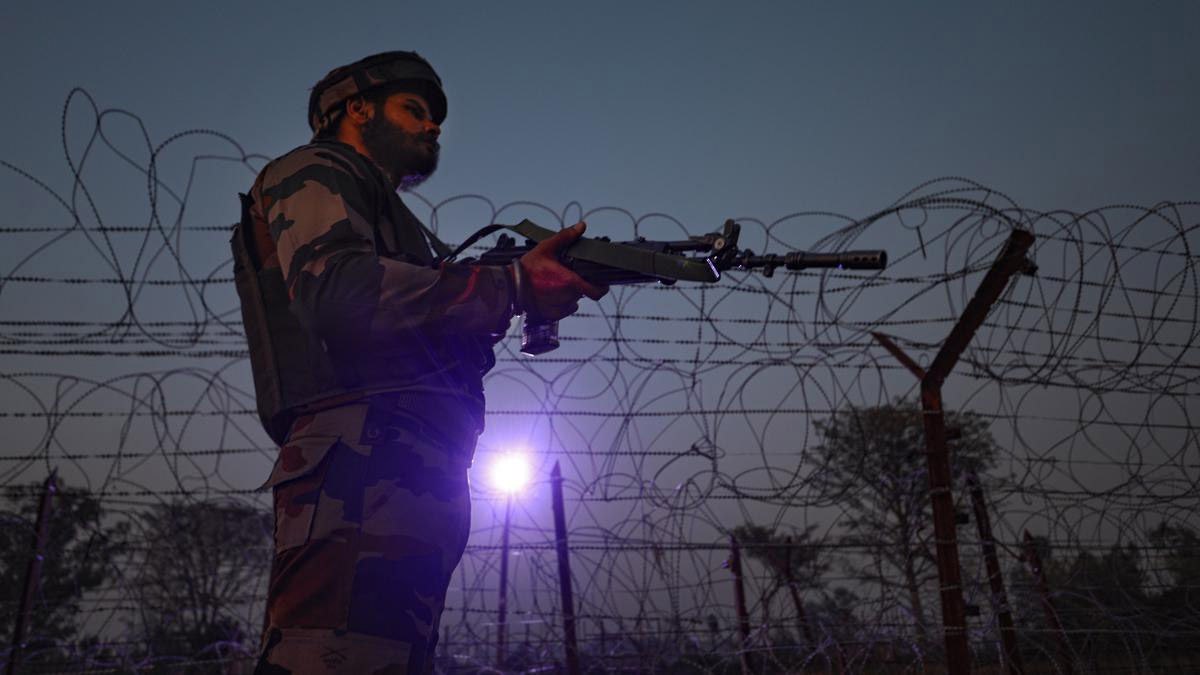
In the face of increasing security threats along the India-Pakistan border, the BSF has implemented critical measures to bolster overall defences. Recently, the BSF announced its decision to mobilise additional troops and set up nine tactical headquarters along the borders of Jammu and Punjab. These steps come in the wake of heightened concerns over cross-border infiltration, drone activities, and the smuggling of ammunition and drugs. The tactical headquarters, strategically located closer to the border, are intended to improve operational efficiency. These forward bases will be equipped with intelligence and operational paraphernalia, and they will operate under the monitoring of a newly established control room. The idea behind this decentralisation is to enhance the responsiveness of the BSF to potential threats, allowing for quicker decision-making and action. Senior officers, including the Commanding Officer of the battalion, will be stationed at these tactical HQs to ensure coordination and quick response to any incidents.
However, the setup of these tactical HQs brings with it certain complexities. The presence of Commanding Officers around the clock at these bases could potentially lead to operational and administrative challenges. Another critical issue this move highlights is the vulnerability of the Jammu and Punjab borders. The western frontier of India, which includes 2,289 km-long India-Pakistan International Border, is not just a physical line but a zone of constant strategic pressure. In particular, the Punjab and Jammu sectors have become hotspots for illegal activities, including the infiltration of militants and the smuggling of narcotics. In Punjab, for example, the BSF has had significant success in thwarting attempts at cross-border smuggling and infiltration. Last year, the force recovered 294 drones, seized 283 kg of heroin, and neutralised several intruders. Despite these efforts, the threat continues to evolve. Drones, particularly those made in China, have become a prominent tool for smugglers and terrorists, carrying everything from arms and ammunition to narcotics. These unmanned aerial vehicles have posed an unprecedented challenge to border security, as they can be deployed at night and are difficult to detect. The presence of tactical HQs will presumably allow for more targeted anti-drone operations, but the rapidly evolving nature of this technology makes it an ongoing cat-and-mouse game.
Furthermore, the BSF’s efforts in the region have led to the killing of four Pakistani intruders and the arrest of 161 Indian smugglers, as well as 30 Pakistani nationals involved in illicit activities. While these numbers are a testament to the diligence of the force, they also underscore the magnitude of the threat faced by the BSF daily. The fact that these operations involve not only militant groups but also criminal organisations highlights the multifaceted nature of the security challenges on the border.
The decision to mobilise additional manpower is also a crucial step. The BSF has tasked its personnel to strengthen border guarding units across the Jammu and Punjab sectors, shifting resources from battalion headquarters to more vulnerable areas. This measure is essential to ensure that the force is adequately equipped to deal with the ever-increasing threats. However, the logistical challenges of managing such a large-scale mobilisation cannot be ignored. The shifting of personnel and resources may stretch the capabilities of the BSF, requiring enhanced coordination and logistical support.
The initiative is also a reflection of the broader security environment in India. With escalating tensions along the India-Pakistan border, especially in the context of Jammu and Kashmir, it is clear that traditional border security measures must evolve. The threats of terrorism, drone surveillance, and cross-border smuggling require a more adaptive and technologically savvy security apparatus. The BSF’s new measures, including the creation of tactical HQs, are an important step toward enhancing India’s security infrastructure, but they must be part of a larger, comprehensive strategy that incorporates advanced technology, intelligence-sharing, and robust inter-agency cooperation. Innovative tactical moves are most important. The stakes are high, and the road ahead will require both determination and flexibility in equal measure.
 Follow our WhatsApp channel
