

Dr Harmeet Singh Soodan
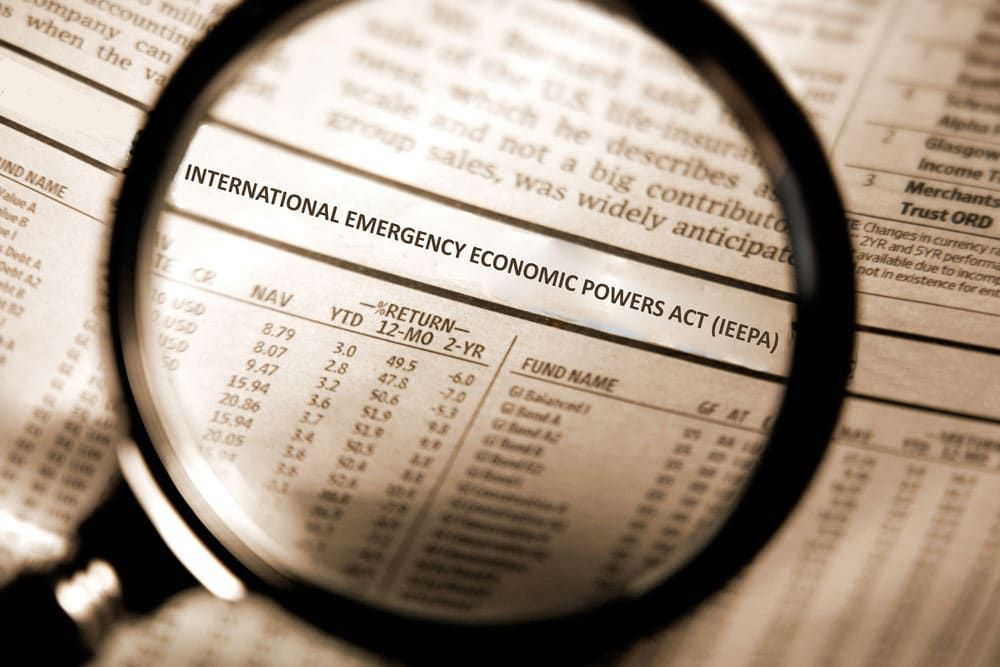
The United States, once a champion of globalization and free trade, has embarked on a radical shift toward protectionism. President Donald Trump’s new tariff plan, imposing a 10% duty on all imports and a 25 percent levy on goods from Mexico and Canada, marks a significant escalation in global trade tensions. By invoking the International Emergency Economic Powers Act (IEEPA), the U.S. is weaponizing trade policy to force other nations into compliance with its immigration and drug control demands.
This aggressive economic stance raises critical questions about the future of globalization. The increasing reliance on tariffs, rather than diplomacy or multilateral agreements, signals a shift toward economic nationalism that could unravel decades of economic interdependence. In this article, we will explore the implications of Trump’s tariff war, its impact on global supply chains, the geopolitical consequences, and whether it truly signals the end of globalization as we know it.
The Rise of Protectionism: A Shift from Free Trade
Globalization has long been driven by the principles of free trade and economic cooperation. The establishment of institutions like the World Trade Organization (WTO) and trade agreements like NAFTA (now USMCA), the European Union, and the Trans-Pacific Partnership (TPP) aimed to reduce trade barriers, increase economic integration, and foster international economic growth.
However, the last two decades have seen growing discontent with globalization. The 2008 financial crisis, the outsourcing of manufacturing jobs, and the increasing economic dominance of China have fueled protectionist sentiments. Trump’s first term in office saw the imposition of tariffs on Chinese goods, triggering a U.S.-China trade war. His latest tariff plan marks an even harsher economic stance, expanding tariffs beyond China and into North America.
By imposing a 25 percent levy on goods from Canada and Mexico, the U.S. is effectively undermining the principles of the United States-Mexico-Canada Agreement (USMCA), which was designed to replace NAFTA and ensure smooth North American trade. This move demonstrates that trade agreements are no longer seen as binding economic pacts, but rather as negotiating tools subject to political agendas.
The most immediate impact of Trump’s tariffs will be felt in global supply chains. Over the past 30 years, supply chains have become highly interconnected, with raw materials, intermediate goods, and finished products moving seamlessly across borders.
Here’s how the tariffs will disrupt global commerce:
Increased Costs for Consumers and Businesses
* A 10 percent tariff on all imports means higher costs for American businesses that rely on foreign raw materials, components, and finished goods.
* These costs will be passed on to consumers in the form of higher prices, leading to inflation.
* Industries like automobiles, electronics, and retail will suffer as they depend on cheap imports to remain competitive.
Job Losses and Economic Uncertainty
* While Trump claims that tariffs protect American jobs, history shows that higher import costs hurt businesses, leading to job losses in manufacturing and retail sectors.
* In the 2018-2019 trade war, American farmers and manufacturers were hit hard by retaliatory tariffs from China, causing economic distress in rural states.
Supply Chain Disruptions and Manufacturing Decline
* Many American manufacturers rely on parts from Canada, Mexico, and China. Higher tariffs will force them to redesign supply chains, leading to production delays and inefficiencies.
* Some companies may move production offshore to avoid tariffs, counteracting Trump’s goal of bringing jobs back to the U.S.
Energy Market Volatility
* The partial exemption of Canadian oil, natural gas, and electricity from the 25% tariff (taxed at only 10%) may prevent immediate disruptions in energy supplies.
* However, long-term uncertainty in U.S.-Canada energy relations could lead to higher fuel prices and investment hesitations in cross-border energy projects.
Geopolitical Consequences: The Erosion of U.S. Alliances
The tariff war is not just an economic battle-it is a geopolitical maneuver that risks alienating America’s closest allies.
Strained Relations with Canada and Mexico
By imposing tariffs on North American neighbors, the U.S. is effectively disregarding decades of economic cooperation. This could:
* Weaken U.S.-Canada ties, historically among the strongest economic and political partnerships in the world.
* Push Mexico closer to China and other economic powers, as it seeks alternative markets to offset losses from the U.S. tariffs.
Strengthening of China’s Global Position
While the U.S. increases tariffs on imports, China is expanding its influence through trade agreements like the Regional Comprehensive Economic Partnership (RCEP) and the Belt and Road Initiative (BRI).
* By alienating allies, the U.S. may push more countries toward deeper economic ties with China, reducing American influence in global trade.
Weakening of the WTO and Global Trade Institutions
The World Trade Organization (WTO) was established to regulate global trade disputes and prevent unilateral tariff wars. However, Trump’s move to impose tariffs under IEEPA, rather than negotiating through the WTO, signals a broader disregard for international trade rules.
* If the U.S. no longer adheres to WTO regulations, other countries may follow suit, leading to an era of economic nationalism and trade fragmentation.
The End of Globalization?
Trump’s tariff warfare raises an important question: Is globalization coming to an end?
While some argue that the world is too interconnected for globalization to collapse entirely, the following trends suggest that we are entering a new era of economic nationalism:
The Rise of Economic Blocs
Instead of a single, globalized economy, the world may split into regional trade blocs, such as:
* The U.S. and its allies (Europe, Japan, Australia)
* China-led Asia (RCEP, Belt and Road Initiative)
* Russia and its economic partners (BRICS, Eurasian Economic Union)
This fragmentation could lead to higher costs, inefficiencies, and economic slowdowns.
The Decline of Multilateral Trade Agreements
* With Trump’s tariffs overriding USMCA, it is clear that trade deals are becoming less reliable.
* Countries may shift towards bilateral agreements rather than large multilateral pacts.
Reshoring and De-Globalization of Supply Chains
* Companies may move production closer to home markets to avoid future tariff risks.
* While this could create some domestic jobs, it will also reduce efficiency and increase costs, potentially leading to slower global economic growth.
To sum up, we can say that Trump’s tariff warfare marks a turning point in global economic policy. By prioritizing economic nationalism over free trade, the U.S. is setting a precedent that could encourage other countries to adopt similar protectionist measures.
While the immediate goal is to pressure China, Mexico, and Canada into compliance, the long-term consequences could be far more severe-weakening alliances, disrupting global supply chains, and accelerating the decline of globalization.
If the world moves toward a protectionist economic order, the global economy may become less efficient, less cooperative, and more fragmented-a reality that could reshape international trade for decades to come.
The question remains: Will other nations follow same protectionism mechanism or will they push back against this new era of tariff warfare?
(The author is Assistant Professor, Cluster University Jammu)
 Follow our WhatsApp channel
